
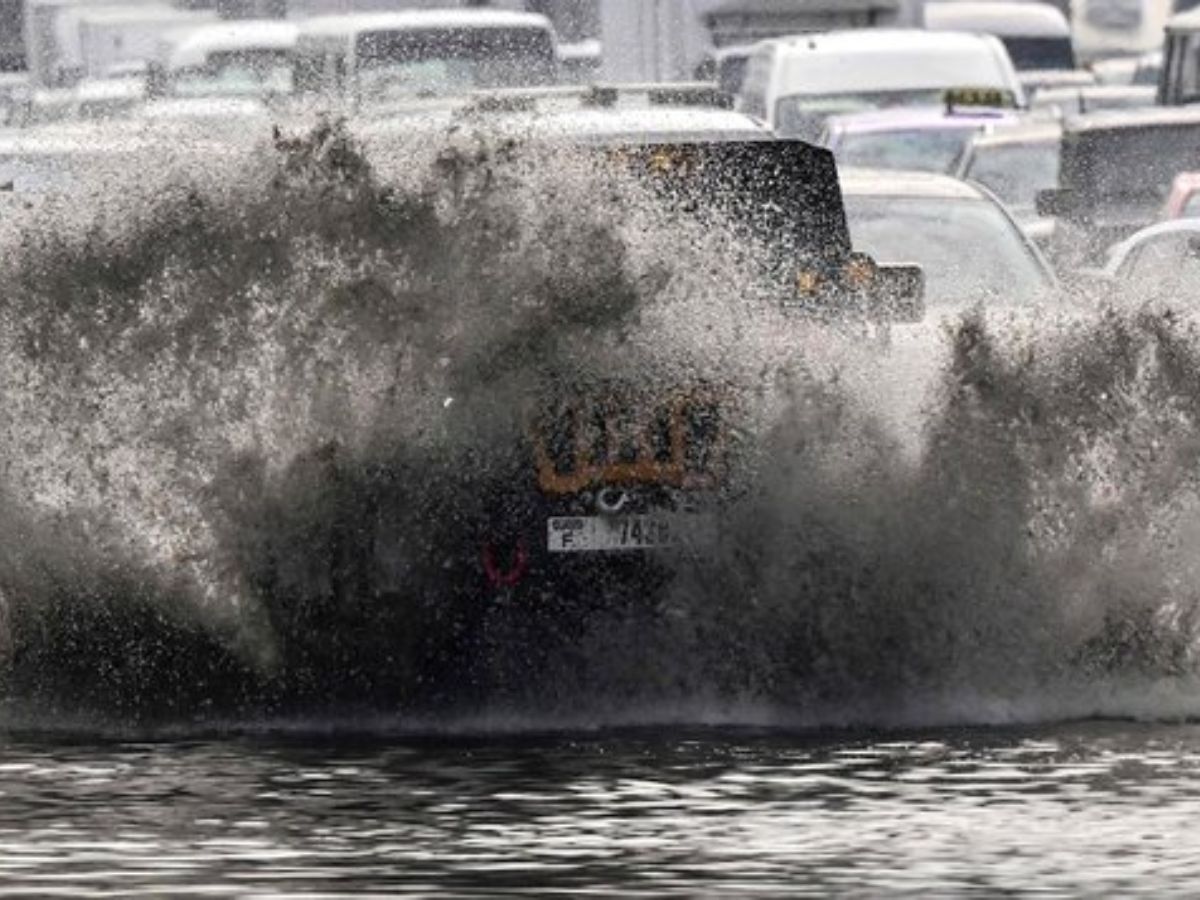

The UAE, a nation known for its vast deserts and arid climate, has been witnessing unusually heavy rainfall, triggering floods in major regions, including Dubai and Abu Dhabi.
From submerged roasts to overflowing wadis, the rare downpour led to widespread advisories urging residents to remain indoors. Residents and experts are asking the same question: why is a desert country seeing such intense rain?
What Happened in UAE?
Dubai was hit by heavy rainfall late Thursday, followed by an intense overnight storm in the capital, Abu Dhabi.
By Friday morning, several low-lying areas reported waterlogging. In the northern emirates, social media is filled with videos showing rapidly flowing floodwaters rushing through valleys that can become hazardous within minutes, prompting authorities to advise motorists to steer clear.
Heavy flooding due to extreme rainfall in Al Karama, Dubai, UAE 🇦🇪 (19.12.2025)pic.twitter.com/w5J9Nd1W3f
— Disaster News (@Top_Disaster) December 19, 2025
The Dubai government instructed all public sector employees to work from home, while the private sector was strongly encouraged to adopt remote work as well. In Abu Dhabi, similar advisories urged residents to remain indoors unless travel was absolutely unavoidable.
As a precautionary measure, public beaches, parks, and major tourist attractions were also temporarily closed.
Why UAE Cities Flood After Heavy Rain?
The UAE generally sees minimal rainfall each year, usually limited to brief and scattered spells. However, such extreme weather episodes are becoming increasingly frequent across the Gulf. Short but intense bursts of rain are proving especially disruptive in desert cities like Dubai
Built primarily for dry conditions, the region’s infrastructure often struggles to cope when sudden cloudbursts release large amounts of water in a short span.
The April 2024 floods had already exposed gaps in urban planning, and Friday’s relatively lighter rain once again showed how quickly roads and underpasses can become inundated. With such events occurring more often, the call for climate-resilient infrastructure is growing stronger and more urgent.
What’s Causing Heavy Rain?
Meteorologists say the prevailing conditions are driven by unstable weather patterns caused by low-pressure systems stretching from the Red Sea and the Arbain Sea. These systems funnel moisture-rich air into the region, triggering the development of towering rain-bearing clouds.
The National Centre of Meteorology (NCM) has cautioned that such conditions can lead to thunderstorms, lightning, hail, and strong winds, resulting in brief yet intense spells of rainfall across the country.
Is Climate Shift Behind Heavy Rainfall?
Climate experts note that rising global temperatures are amplifying extreme weather events around the world, including in traditionally arid regions. As warmer air holds more moisture, the chances of heavier rainfall increase when conditions align.
In the Gulf, this shift has meant fewer rain events overall, but with far greater intensity, delivering large volumes of water in short bursts instead of steady, prolonged showers.
Scientists caution that these patterns are expected to occur more often as climate change continues to intensify.
Manisha Chauhan is a passionate journalist with 3 years of experience in the media industry, covering everything from trending entertainment buzz and celebrity spotlights to thought-provoking book reviews and practical health tips. Known for blending fresh perspectives with reader-friendly writing, she creates content that informs, entertains, and inspires. When she’s not chasing the next viral story, you’ll find her diving into a good book or exploring new wellness trends.




