
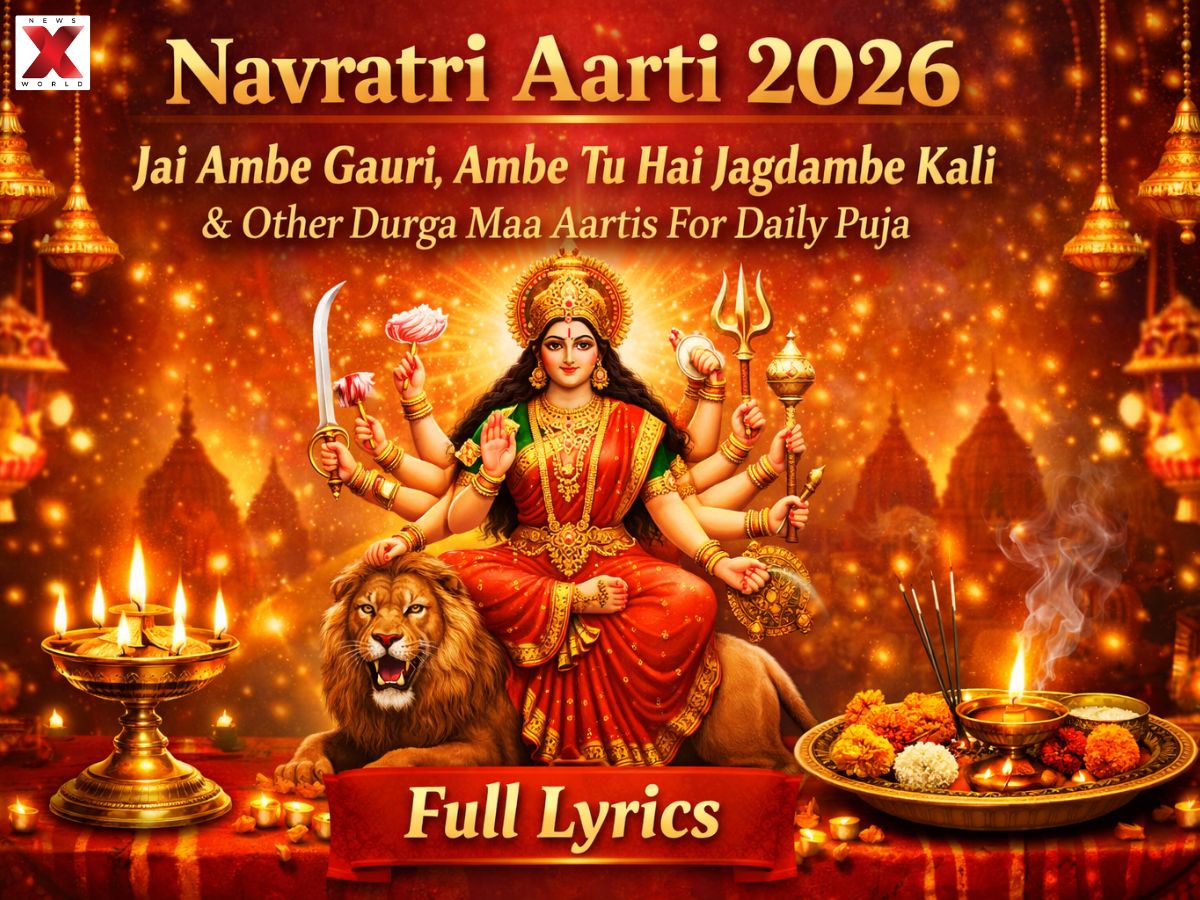

Navratri Aarti: Lyrics, Meaning and Importance
Navratri is one of the most sacred Hindu festivals dedicated to the worship of Goddess Durga and her nine divine forms (Navdurga). The festival lasts for nine nights and is celebrated with fasting, prayers, devotional songs, and special rituals across India. During these days, devotees perform Durga Aarti every morning and evening to seek blessings, protection, and positivity from the goddess.
Performing aarti is considered an important part of Navratri worship. Devotees light a diya with ghee or camphor, ring bells, and sing the aarti in praise of Maa Durga. According to religious beliefs, sincere devotion during Navratri can bring happiness, prosperity, and spiritual growth in life.
Jai Ambe Gauri Aarti
Jai Ambe Gauri, Maiya Jai Shyama Gauri
Tumko Nishdin Dhyavat, Hari Brahma Shivri.
Mang Sindoor Virajat, Tiko Mrigmad Ko
Ujjwal Se Dou Naina, Chandravadan Niko.
Kanak Saman Kalevar, Raktambar Raje
Rakt Pushp Gal Mala, Kanthan Par Saje.
Kehri Vahan Rajat, Khadg Khappar Dhari
Sur Nar Muni Jan Sevat, Tinke Dukh Hari.
Kanchan Thal Virajat, Agar Kapoor Bati
Shri Ambe Ji Ki Aarti, Jo Koi Nar Gave Sukh Sampatti Paave.
Ambe Tu Hai Jagdambe Kali Aarti
Ambe Tu Hai Jagdambe Kali, Jai Durge Khappar Wali
Tere Hi Gun Gaaye Bharati, O Maiya Hum Sab Utare Aarti
Tere Bhakt Jano Par Mata, Bheer Padi Hai Bhari
Daanav Dal Par Toot Pado Maa, Karke Singh Sawari
Sukh Sampatti Ghar Aave, Kasht Mite Tan Ka
Tum Bin Kaun Sahara, Dukhiya Jan Ka
Maa Ke Naam Ki Jyoti, Jo Dil Mein Jalata
Dukh Daridra Mitakar, Jeevan Sukh Pata
Durga Ji Ki Aarti
Jai Durga Mata, Maiya Jai Durga Mata
Tumko Nishdin Sevat, Hari Vishnu Vidhata
Brahma Shivji Dhyaavat, Sur Nar Muni Gata
Tum Ho Jag Ki Mata, Tum Hi Ho Bharata
Bhaktan Ki Dukh Harata, Sukh Sampatti Data
Tere Charno Mein Jo Aave, Pave Mukti Data
Aigiri Nandini (Durga Stuti)
Aigiri Nandini Nandita Medini
Vishva Vinodini Nandinute
Girivar Vindhya Shirodhini Vasini
Vishnu Vilasini Jishnunute
Bhagavati He Shitikantha Kutumbini
Bhoori Kutumbini Bhoori Krute
Jaya Jaya He Mahishasura Mardini
Ramya Kapardini Shaila Sute
Importance of Navratri Aarti
The aarti of Goddess Durga holds deep spiritual significance during Navratri. It is believed that singing the aarti with devotion fills the environment with positive energy and removes negativity. The sound of bells, the fragrance of incense, and the light of the diya create a sacred atmosphere during the prayer.
Religious scriptures also state that even if a devotee does not know the complete rituals or mantras, performing the aarti with faith can make the worship complete and acceptable to the goddess. It symbolizes surrender, gratitude, and devotion toward the divine mother.
During the nine days of Navratri, devotees gather in temples and homes to perform this aarti together, making the celebration more spiritual and joyful. It is believed that Maa Durga blesses her devotees with strength, courage, and prosperity when the aarti is sung with a pure heart.
Conclusion
Navratri aartis hold a special place in the worship of Goddess Durga during the nine sacred nights of the festival. Devotees sing these devotional prayers to express faith, gratitude, and devotion toward the divine mother. The ritual of performing aarti with lamps, incense, and bhajans is believed to fill the surroundings with positive energy and remove negativity from life.
Overall, chanting Durga aartis with devotion during Navratri is believed to bring peace, spiritual growth, and blessings into one’s life while strengthening the connection between devotees and the divine feminine power.
Disclaimer: The information provided in this article about Navratri aartis, rituals, and beliefs is based on religious texts, traditional practices, and publicly available sources. Customs and methods of worship may vary across different regions, families, and communities. The content is intended for informational and devotional purposes only. Devotees are encouraged to follow their local traditions and consult religious guides or elders for specific rituals and practices.
I am a content writer with 2.5 years of experience, currently working at ITV Digital. I specialize in entertainment journalism, covering the latest in Bollywood along with engaging healthy lifestyle stories. With a flair for storytelling and a keen eye for trends, I bring fresh, reader-friendly perspectives to every piece I write.




