
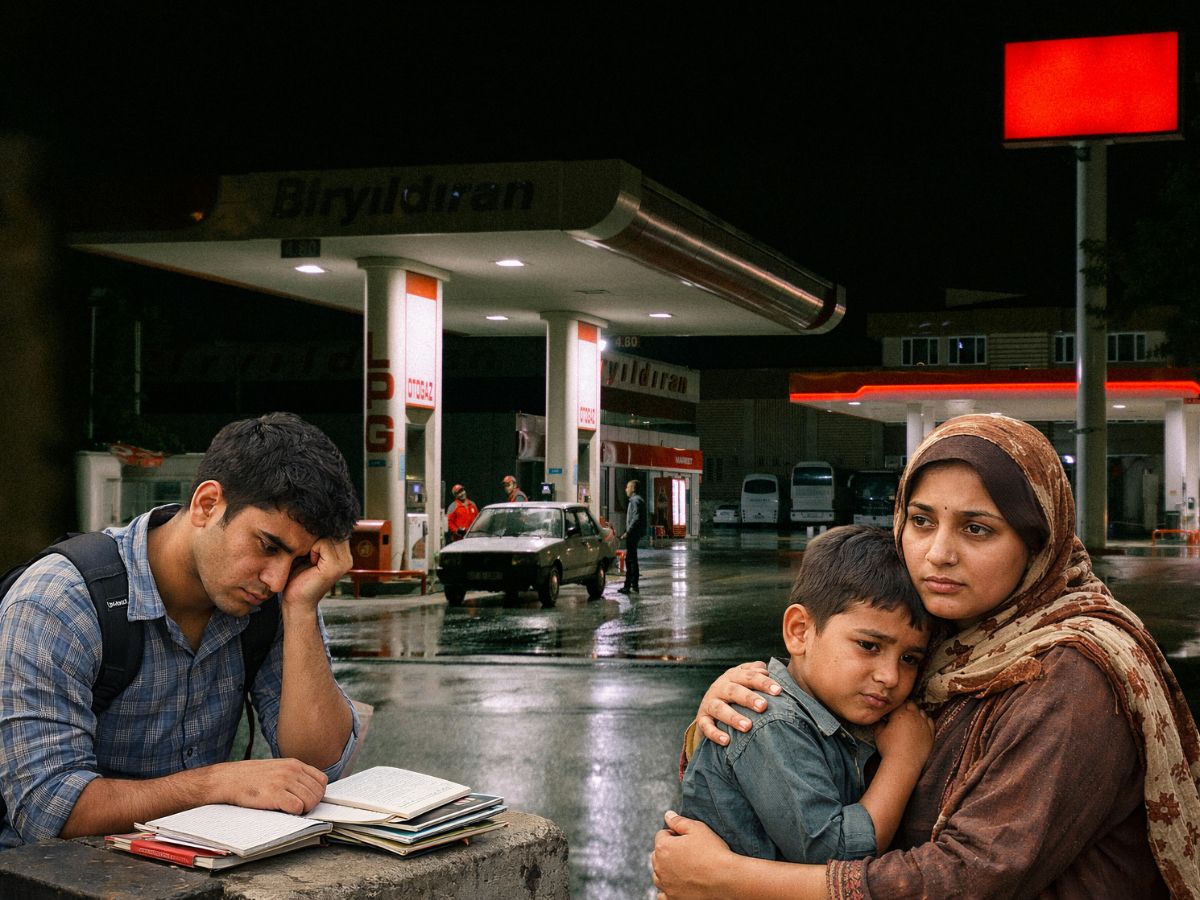

Is Pakistan’s fuel price crisis affecting common people? Pakistan is reeling under a severe fuel price shock, with petrol rates soaring to historic highs and triggering widespread frustration among citizens.
Pakistan government’s recent announcement of a dramatic price hike, pushing petrol to nearly 458 Pakistani rupees per litre, sparked intense public uproar, forcing officials to partially roll back the increase. But for many, the damage has already been done.
The sudden spike has placed enormous pressure on students and low-income households, who say their daily routines and already-tight budgets have become impossible to manage.
Amaad, a local student, voiced his distress: “Petrol prices have reached sky-high. What should we do? We are students. Even if we work, how will we manage everything? We sincerely appeal to the government to take necessary steps to provide some relief. It would be a kind and much-needed support for us.”
The government officials attribute the hike to rising global oil prices driven by geopolitical tensions involving Iran, Israel, and the United States (US).
However, for ordinary Pakistanis, the impact is immediate and severe. Public transport fares have surged, and daily commuting – particularly for students – has turned into a major financial burden.
Another student, Ali Hassan, expressed the growing sense of helplessness: “People have come here just to fill petrol, but if all these people protested together, maybe something could change. But we don’t have that power. In every country, petrol prices rise – but nowhere as much as in Pakistan. The government must look into this.”
Criticism of the government’s economic management is intensifying, with many accusing authorities of failing to protect citizens from inflation and demanding urgent relief measures. For millions across Pakistan, the fuel crisis is no longer an economic indicator – it is a daily struggle impacting mobility, education, and access to necessities.
As frustration mounts, the pressure on the government to act swiftly and decisively continues to grow.
(With ANI Inputs)
Sofia Babu Chacko is a journalist with over five years of experience reporting on Indian politics, crime, human rights, gender issues, and stories about marginalized communities. She believes journalism plays a crucial role in amplifying unheard voices and bringing attention to issues that truly matter. Sofia has contributed articles to The New Indian Express, Youth Ki Awaaz, and Maktoob Media. She is also a recipient of the 2025 Laadli Media Awards for gender sensitivity. Beyond the newsroom, she is a music enthusiast who enjoys singing. Connect with Sofia on X: https://x.com/SBCism




