
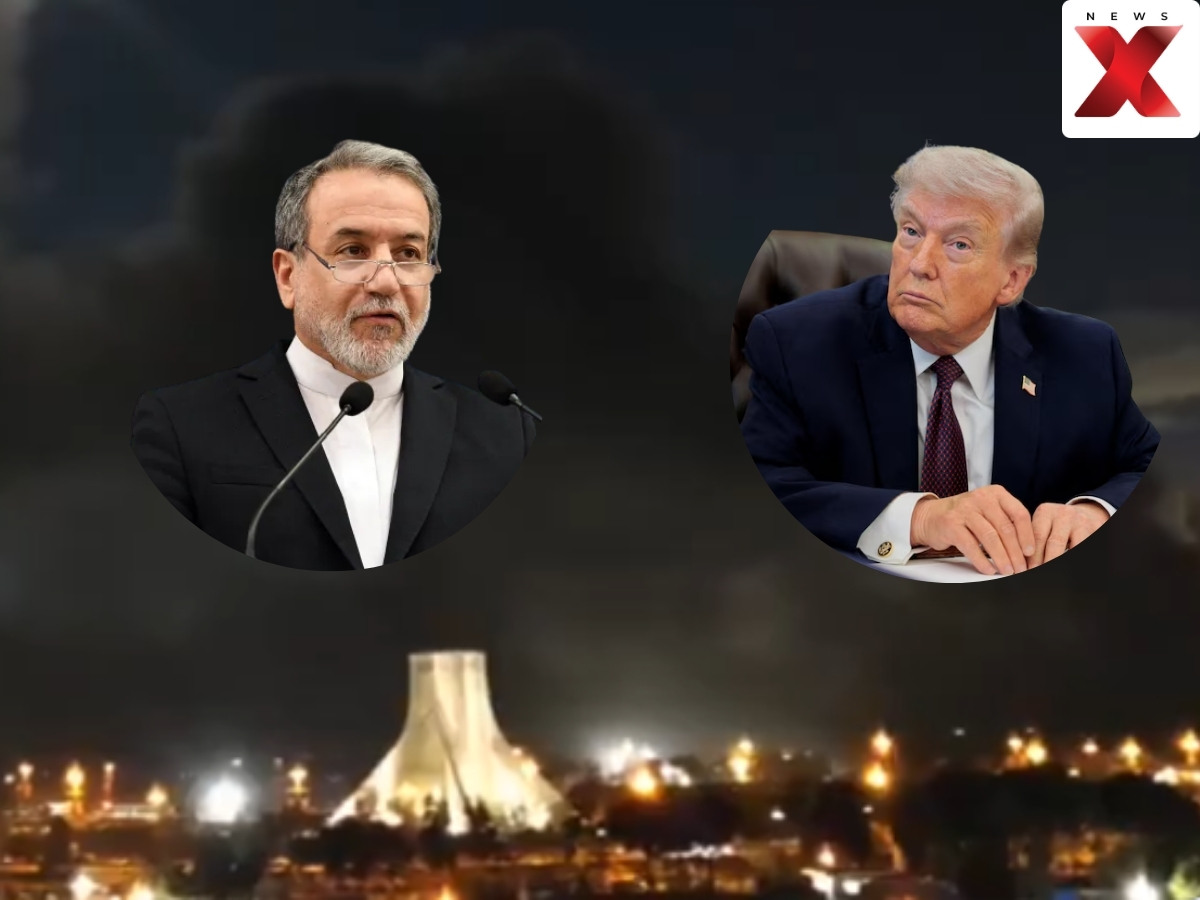
The United States and Iran have received the framework of a plan to end hostilities, a day after President Donald Trump threatened to rain “hell” on Tehran if it did not make a deal, although Iran said it would not reopen the Strait of Hormuz as part of a temporary ceasefire.
The peace plan involves a two-tier approach with an immediate ceasefire followed by a comprehensive agreement.
Pakistan Army Chief Asim Munir Delivers The Peace Plan
Pakistan’s army chief, Field Marshal Asim Munir, has been in contact “all night long” with U.S. Vice President JD Vance, special envoy Steve Witkoff and Iranian Foreign Minister Abbas Araghchi, a source aware of the proposals told Reuters on Monday.
Iran won’t reopen the Strait as part of a temporary ceasefire, a senior Iranian official told Reuters on Monday, adding that Iran won’t accept deadlines as it reviews the proposal.
45-Day Ceasefire Between IUS And Iran
Axios first reported on Sunday that the United States, Iran and regional mediators were discussing a potential 45-day ceasefire as part of a two-phase deal that could lead to a permanent end to the war, citing U.S., Israeli and regional sources.
In a post laden with expletives on his Truth Social platform on Sunday, Trump threatened further strikes on Iranian energy and transport infrastructure if Iran failed to make a deal and reopen the Strait by Tuesday.
IRGC Chief Majid Khademi Killed
Fresh aerial strikes were reported across the region on Monday, more than five weeks since the U.S. and Israel began pounding Iran in a war that has killed thousands and damaged economies by boosting oil prices.
The death of Majid Khademi, the head of the Revolutionary Guards’ intelligence organisation, was announced on Monday by Iranian state media, without additional details.
Iran responded to the attacks by effectively closing the Hormuz waterway, a conduit for about a fifth of the world’s oil and natural gas supply, and attacking Israel, U.S. military bases and energy infrastructure around the Gulf.
Donald Trump Threatens Targeting Civilian Sites, Infrastructure
In a post laden with expletives on his Truth Social platform on Sunday, Trump threatened further strikes on Iranian energy and transport infrastructure if Iran failed to make a deal and reopen the Strait by Tuesday. Later on Sunday, the president in a follow-up post gave a more precise deadline: “Tuesday, 8:00 P.M. Eastern Time! (Wednesday 0000 GMT)”
Fresh aerial strikes were reported across the region on Monday, more than five weeks since the U.S. and Israel began pounding Iran in a war that has killed thousands and damaged economies by boosting oil prices.
Iran responded to the attacks by effectively closing the Hormuz waterway, a conduit for about a fifth of the world’s oil and natural gas supply, and attacking Israel, U.S. military bases and energy infrastructure around the Gulf.
Iranian weekend strikes on petrochemical facilities and an Israeli-linked vessel in Kuwait, Bahrain and the United Arab Emirates underscored the country’s ability to fight back despite Trump’s repeated claims to have knocked out its missile and drone capabilities.
Iranian state media said the head of the Revolutionary Guards’ intelligence organisation, Majid Khademi, has died. Strikes by Israel and the U.S. have killed several high-ranking members of the Iranian regime, including Supreme Leader Ayatollah Ali Khamenei, who was replaced by his son, Mojtaba.
Israeli rescuers retrieved two bodies from the rubble of a residential building in Haifa hit by an Iranian missile on Sunday, Israeli media said.
(With inputs from Reuters)
Also Read: Who Was Majid Khademi? Iran’s IRGC Intelligence Chief Killed Amid Ceasefire Talks
Zubair Amin is a Senior Journalist at NewsX with over seven years of experience in reporting and editorial work. He has written for leading national and international publications, including Foreign Policy Magazine, Al Jazeera, The Economic Times, The Indian Express, The Wire, Article 14, Mongabay, News9, among others. His primary focus is on international affairs, with a strong interest in US politics and policy. He also writes on West Asia, Indian polity, and constitutional issues. Zubair tweets at zubaiyr.amin





