
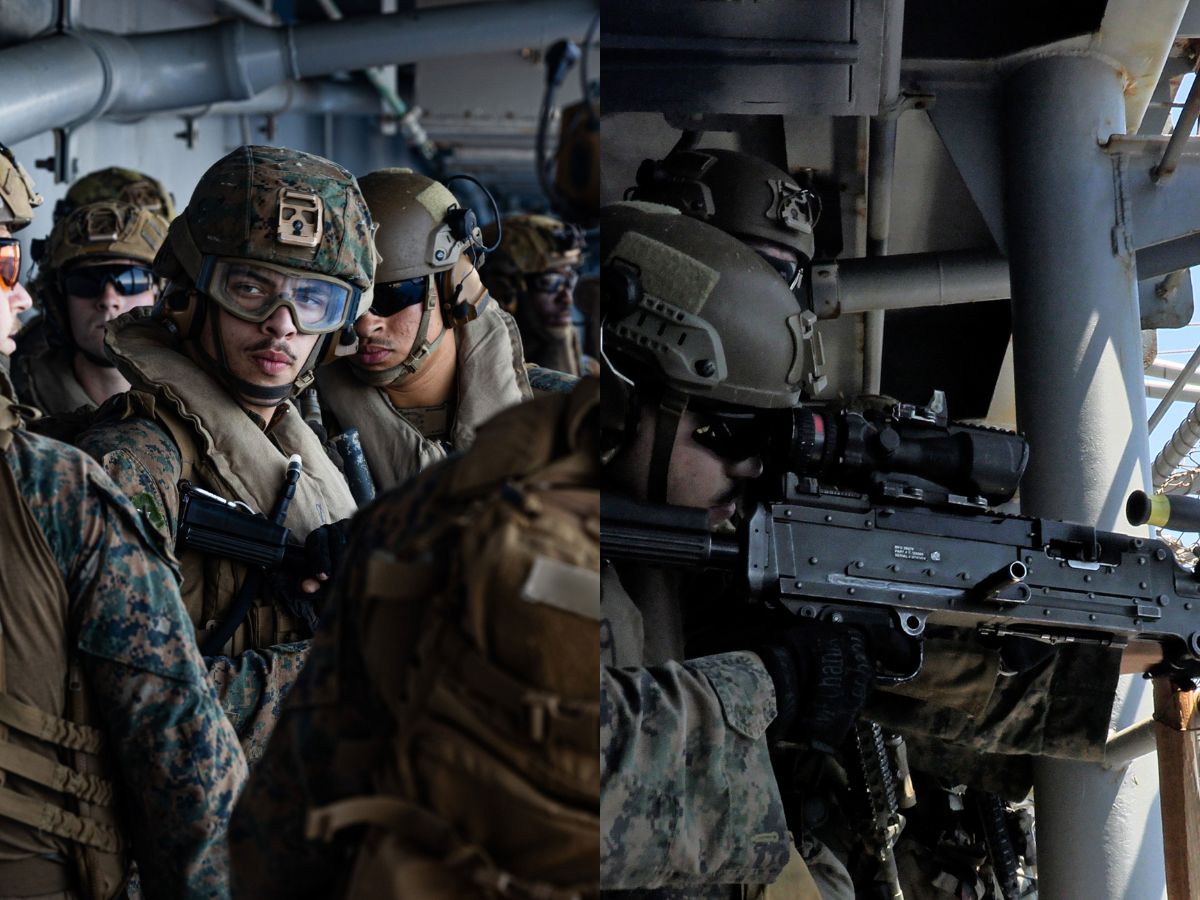

The US is greatly increasing its military force in the Middle East as the war between them and Iran persists, and this has led to apprehensions of a wider regional confrontation. The deployment of more than 3,500 additional American troops to the area in recent days has indicated the flavor of Washington strengthening its strategic position as hostilities were escalating. The USS Tripoli, with its estimated 2500 or so Marines, has now joined its operational zone and it provides substantial fire and fast-response potential, according to the US Central Command. This is in development after the Pentagon considers possibilities of weeks-long ground operations in Iran although the final decision on the deployment of ground troops is pending.
Is The Pentagon Preparing For A ‘Prolonged Ground Operation’ In Iran?
The USS Tripoli, a new amphibious assault ship of big deck type, has the capability of carrying advanced aircraft like F-35 stealth fighter jets and MV-22 ospreys, thus making it a very important vessel towards any high intensity war. The ship had been deployed in Japan previously but was diverted to the Middle East almost two weeks ago as a wider military escalation. Other reinforcements such as the USS Boxer and other naval forces that have been sent out of San Diego are also heading towards the region. Such deployments highlight the magnitude and the severity of the US military response as it gears up towards various contingencies.
U.S. Sailors and Marines aboard USS Tripoli (LHA 7) arrived in the U.S. Central Command area of responsibility, March 27. The America-class amphibious assault ship serves as the flagship for the Tripoli Amphibious Ready Group / 31st Marine Expeditionary Unit composed of about… pic.twitter.com/JFWiPBbkd2
— U.S. Central Command (@CENTCOM) March 28, 2026
Operation Epic Fury: Where It All Started
The Central Command has estimated that the magnitude of operations conducted has been huge since the beginning of the Operation Epic Fury on February 28 with more than 11,000 targets being hit so far. The advert focuses on the vigor of the US military efforts that were intended to make Iran less powerful and the aggression less threatening. Nevertheless, regardless of the air and naval operations, which have been increasing, there has been a focus on the fact that the deployment of ground forces is uncertain. It was reported that though the Pentagon is ready to deploy such an event, President Donald Trump has not officially issued the order to deploy troops in the territory of Iran.
US Ready For Ground Invasion In Iran?
The senior officials of the US have insisted that Washington does not wish to enter into a ground war to attain its strategic goals. Secretary of State Marco Rubio has reiterated that avoidance of boots on the ground is a priority even though he admitted that the situation was dynamic and needed prompt changes. In the meantime, the situation has become even more heated after the Iranian retaliatory attacks such as ballistic missiles and drone attacks on the Saudi Arabian Prince Sultan Air Base. The attack was reported to have injured at least 10 US personnel and this is a sign of the risks that American forces are increasingly exposed to in the region.
‘Strait of Hormuz’ Or ‘Strait of Trump’ Now?
The war has also assumed a wider regional scope as Iran claims dominance over the key Strait of Hormuz which is an important oil transit route in the world. The interruption has already caused the prices of fuel to skyrocket and alarm the markets in the international markets.
In A First, Houthis Launch Missiles Toward Israel
To make matters worse, the Iran supported Houthi group in Yemen has also joined the conflict, claiming to be responsible for the missile attacks on Israel. Their participation has increased security concerns regarding major shipping routes, especially Bab el Mandeb Strait which is the gateway to the Suez Canal and a very important route to international trade.
The diplomatic attempts to calm the situation down have hitherto not borne fruits. The United States, via its envoy Steve Witkoff, offered a ceasefire framework that would help curb nuclear ambitions of Iran and reopen waterways that were of critical importance. The proposal has however not been accepted by Tehran which has instead demanded that it be compensated and the sovereignty of the republic recognized. As talks come to a halt, as military action goes on and intensifies, analysts indicate that the possibility of a wider and longer term regional conflict is increasing. With more actors being part of the confrontation and global supply chains experiencing ever increasing disruptions, there is no end to the situation, and a clear way out is not visible.




