
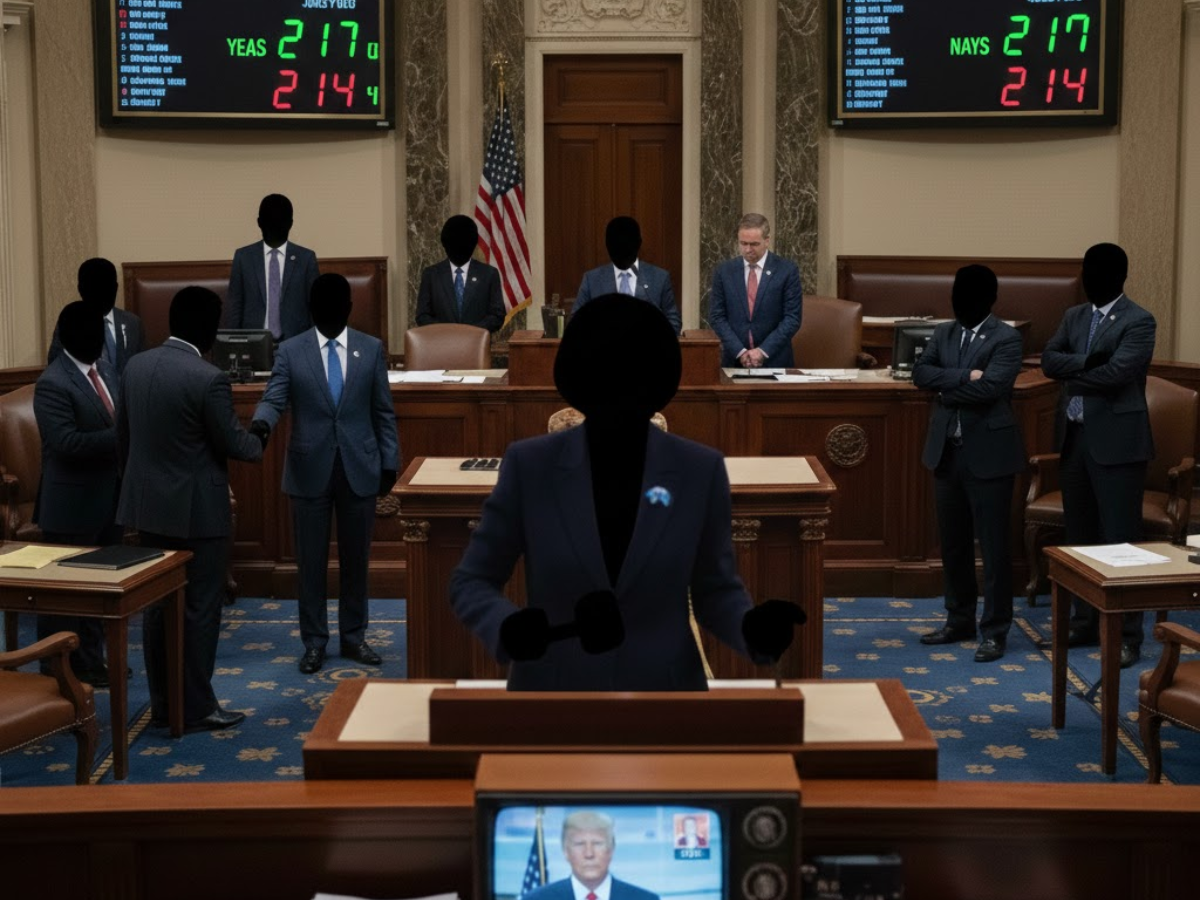

On Tuesday, the US House of Representatives barely managed to pass a bipartisan deal to end the partial government shutdown. The bill is now on its way to President Donald Trump, and he is expected to sign it into law.
Reports say that this new legislation is a big deal because it brings back money for essential services like defense, healthcare, labor, education, and housing. It also keeps the Department of Homeland Security running for a little longer while lawmakers try to figure out what to do about immigration enforcement.
Win by a tiny margin
Things got tense because funding for these agencies actually ran out last Saturday. Luckily, this short lapse didn’t cause huge problems for most government services, but it was a close call. The Senate had already passed the deal with a lot of support from both sides, but the House was a different story.
According to reports, the vote ended at 217-214. It was incredibly tight because the Republicans only have a tiny majority of 218 compared to 214, which meant that they could usually only lose one vote if the Democrats stuck together. In this case, 21 Republicans voted “no,” but 21 Democrats stepped in to vote “yes,” which saved the bill.
Why the Tension?
The drama stems from some very heavy issues. Democrats are pushing for strict new limits on how the government handles immigration. This comes after a tragic incident in Minneapolis last month where federal agents killed two US citizens. Meanwhile, some conservative Republicans tried to add rules to the bill that would make voting requirements much tougher, though that effort didn’t work out this time.
Why This Matters?
There was a shutdown in October and November. which lasted a record-breaking 43 days. It was a mess as hundreds of thousands of federal employees were sent home without pay, and reports say that it drained about $11 billion from the US economy. Nobody wanted a repeat of that disaster, which is likely why just enough people from both parties crossed the aisle to get this deal done.
(With inputs from Reuters)




