
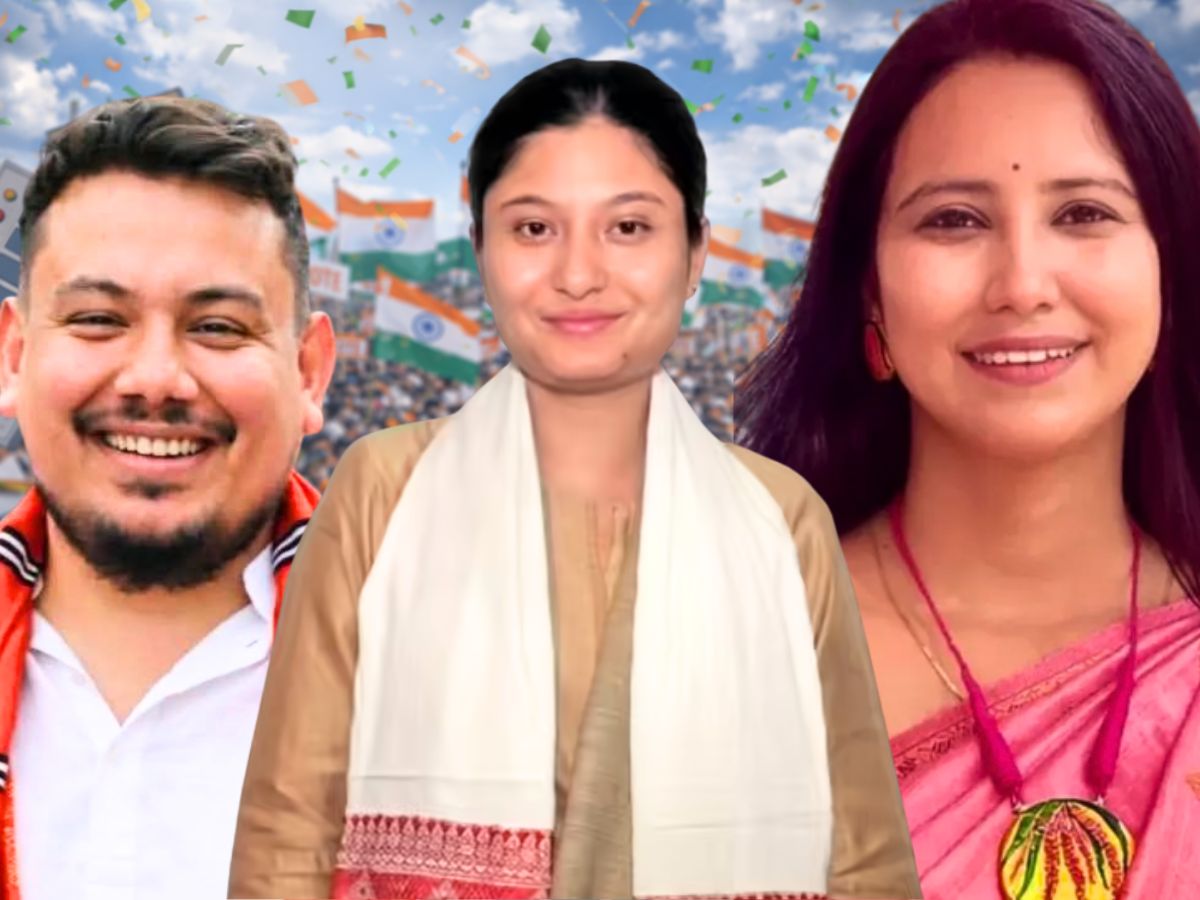

Assam is all set for assembly election. The upcoming Assam Assembly elections on April 9 are shaping up to be more than just a contest for power; they mark a decisive moment of generational transition.
With over 6.28 lakh first-time voters aged between 18 and 19, and nearly 30% of the electorate falling in the 18-29 age group, the state is witnessing a strong youth wave. This growing, informed voter base is not only influencing political narratives but also encouraging a new breed of candidates to step forward and challenge the status quo.
Across all 126 constituencies, a visible shift is underway. Assam’s political scene, often dominated by established leaders and dynastic politics, is now opening up to young, educated, and issue-driven individuals who aim to redefine governance and accountability.
Will this go Beyond Dynasties? A New Breed of Leaders
Unlike traditional candidates, many of the Gen Z and millennial faces entering the fray come from diverse professional and academic backgrounds.
From PhD scholars and architects to grassroots activists and student leaders, these candidates reflect a broader transformation in political participation.
Their campaigns are rooted less in identity politics and more in everyday concerns employment, education, healthcare, and governance. This signals a shift from personality-driven politics to a more participatory and issue-based democratic process.
Young Faces Leading the Change, What can Assam expect?
Kunki Choudhury of Assam Jatiya Parishad
Among the most talked-about candidates is Kunki Choudhury, a 27-year-old debutant contesting from Guwahati Central on an Assam Jatiya Parishad (AJP) ticket. Educated at a London university, she chose to return to Assam and enter public life instead of pursuing a corporate career.
Her campaign focuses on skill development, women’s empowerment, and safety. However, her entry has also sparked controversy after Chief Minister Himanta Biswa Sarma publicly criticised her family, triggering a political storm over ‘beef’.
Tanzil Hussain of Congress
Another young contender, Tanzil Hussain (27), represents the Congress from Samaguri. As the son of senior leader Rokibul Hussain, his candidature has sparked debates around dynastic politics. Despite criticism, he is seen as a key young face attempting to rebuild political credibility.
Pabitra Rabha of BJP
From the BJP camp, Pabitra Rabha (30) has emerged through student politics, rising via ABVP and BJYM ranks. His organisational experience and grassroots connect highlight the structured grooming of youth leaders within party systems.
Rahul Chettri of Raijor Dal
Meanwhile, Rahul Chettri (30), contesting from Margherita on a Raijor Dal ticket, represents activist-driven politics. Emerging from the anti-CAA protests, his campaign revolves around the slogan “people versus power,” focusing on honest leadership and grassroots development.
Gyanashree Bora of Raijor Dal
Adding an academic dimension to the race is Gyanashree Bora (34), a PhD scholar contesting from Mariani. Having left a high-paying career, she is campaigning on issues like healthcare gaps, women’s safety, and local governance.
Her focus on drinking water shortages, poor medical infrastructure, and teacher deficits reflects a deep engagement with ground realities.
Zubair Anam Mazumder of Congress
Another prominent millennial face is Zubair Anam Mazumder (34), an architect and former Youth Congress leader contesting from Algapur-Katlichera. His blend of professional expertise and political experience positions him as a candidate with both vision and organisational strength.
Rupali Langthasa of BJP
In the hill regions, Rupali Langthasa (36) from Haflong represents tribal aspirations. With experience in the Dima Hasao Autonomous Council, she is focusing on governance, education, and development in underserved areas.
What Sets This Generation Apart
What distinguishes these young candidates is their emphasis on accountability, transparency, and public participation. Their campaigns are not just about winning elections but about reshaping how politics is practiced.
There is also a visible push for greater representation of youth, women, and marginalised communities. By addressing local issues and advocating inclusive growth, these candidates are attempting to bridge the gap between governance and citizens.
Are Youth Voters Driving the Narrative?
The rise of Gen Z and millennial candidates is closely tied to the changing voter base. Younger voters in Assam are less influenced by traditional loyalties and more concerned about tangible outcomes jobs, quality education, and effective governance.
Political parties, recognising this shift, are recalibrating their strategies. Campaigns are increasingly focused on development and everyday aspirations rather than identity-driven rhetoric.
Is Election 2026 A Turning Point for Assam’s Political Culture?
As Assam heads into the 2026 elections, the emergence of young candidates signals a broader transformation. The state’s politics appears to be transitioning from dynasty-driven leadership to a more merit-based and activism-oriented model.
Whether this generational shift will translate into electoral victories remains to be seen. However, it has already begun to reshape political discourse in the ‘Tea Garden of India,’ making it more inclusive, issue-focused, and forward-looking.
In many ways, this election could mark the beginning of a new political era one where youth are not just participants, but key architects of Assam’s future.
Sofia Babu Chacko is a journalist with over five years of experience reporting on Indian politics, crime, human rights, gender issues, and stories about marginalized communities. She believes journalism plays a crucial role in amplifying unheard voices and bringing attention to issues that truly matter. Sofia has contributed articles to The New Indian Express, Youth Ki Awaaz, and Maktoob Media. She is also a recipient of the 2025 Laadli Media Awards for gender sensitivity. Beyond the newsroom, she is a music enthusiast who enjoys singing. Connect with Sofia on X: https://x.com/SBCism




