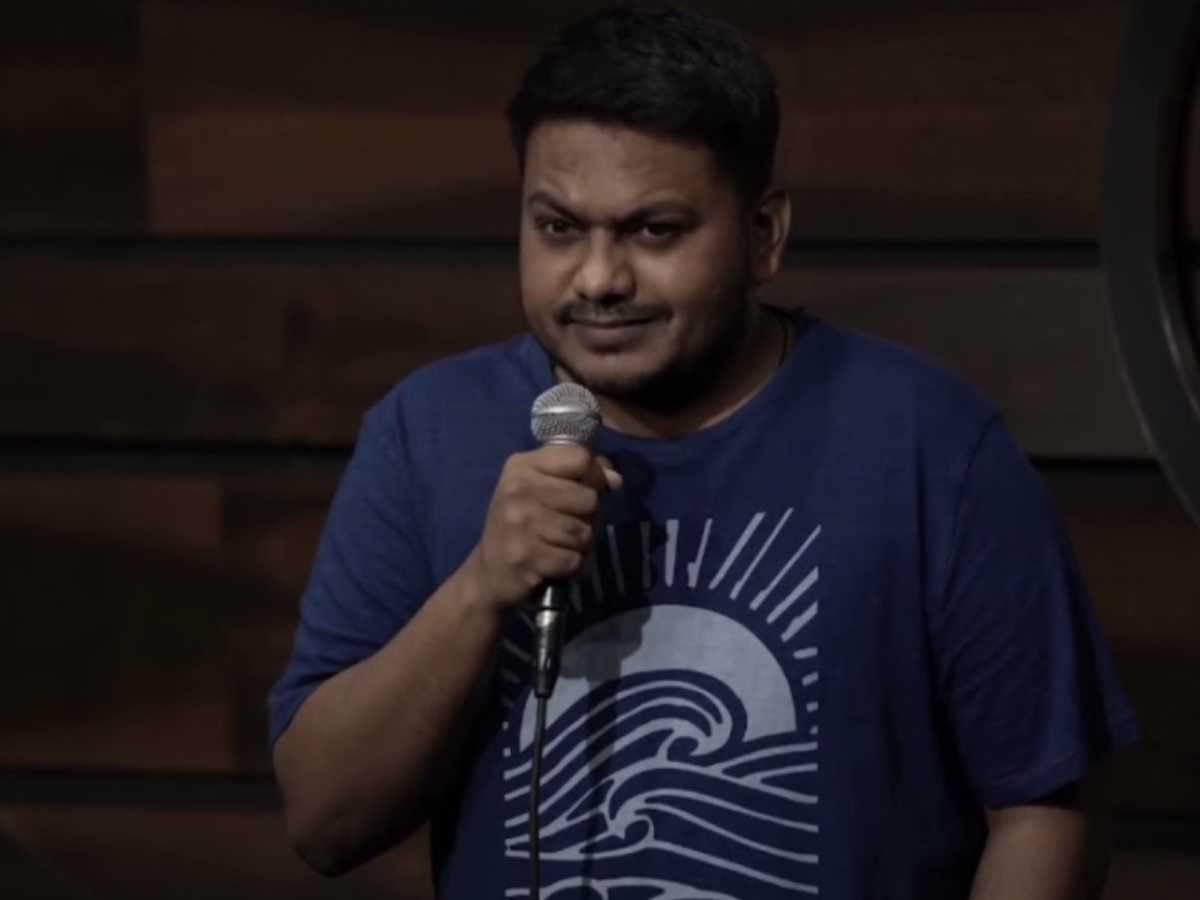

Mumbai based stand-up comedian, Kaviraj Singh is in heavy debate on the internet. People are calling him the “Bill Burr of India” because of his humour filled with provocation. His recent revival of sexist jokes ignited a cancellation campaign and raised a question on the limits of comedy in the ever-changing cultural setting of India.
Who is Kaviraj Singh? From IIT to Stardom in Comedy
Kaviraj Singh, a 39-year-old graduate from IIT Kanpur, swapped coding for comedy in 2016. He has observational and satirical stand-up pieces-in Hindi-that are primarily about relationships and society’s idiosyncrasies. He became popular with his viral clip NAR V/S MAADA of 2022 and a special on YouTube in 2025 coming up Are Women Becoming Men? An expert punchline writer, in Ye Saali Naukri, he also tried his hand at socially driven content which blended humor with reality.
This has however brought him side comparisons to Bill Burr for whose brutally frank treatments of sensitive issues, such audiences usually seem divided. Kaviraj’s destiny mimics that of India’s growing comedy scene, but the controversy he is facing at present damages his ascent.
Kaviraj’s Sexist Jokes That Sparked Outrage
In a recent stand-up special, Kaviraj likened sex workers to influencers, and then ended the bit with what most found to be a very misogynistic punchline. The clip, which was widely circulated by critic Aman Pandey through his Instagram, sparked controversy, with women in comedy accusing Kaviraj of misbehavior offstage too.
Kusha Kapila, unleashed an epic retort to the derogatory stand-up. On Instagram Stories, Kusha called those jokes “disgusting” and “heartbreaking,” lamenting that this kind of casual misogyny is somehow normalized online. Besides criticizing “lazy writing,” she did warn what such humour can actually do in the real world in order to raise “an army” to insult women.
Bollywood actress Swara Bhasker called it “rape-culture incel nonsense” in one of her tweets about it. Defenders like Comicstaan’s Nishant Suri would talk about free speech, but with all the public outcries, it soon focused more on how comedy would push for normalizing bad references.
Cancel Culture vs. Edge in Comedy
This sheds light on the changing culture in India, where audiences expect comedians to be accountable. In those days, satire used to be against the systems rather than getting personal as happens now, one’s humour now amounts to political and social offenses. Defenders of Kaviraj state that comedy survives through boundary-breaking, but critics argue that it is the impact and not that which was intended.
Anyone who hates kaviraj singh is my friend without introduction
— Chimku (@bakchodboiparti) August 1, 2025
While India grapples with the patriarchy in that rising feminist voice, whether provocative humour could survive in the age of heightened sensitivity or whether the “Bill Burr of India” can weather this storm becomes the question on which the saga of Kaviraj hinges.