
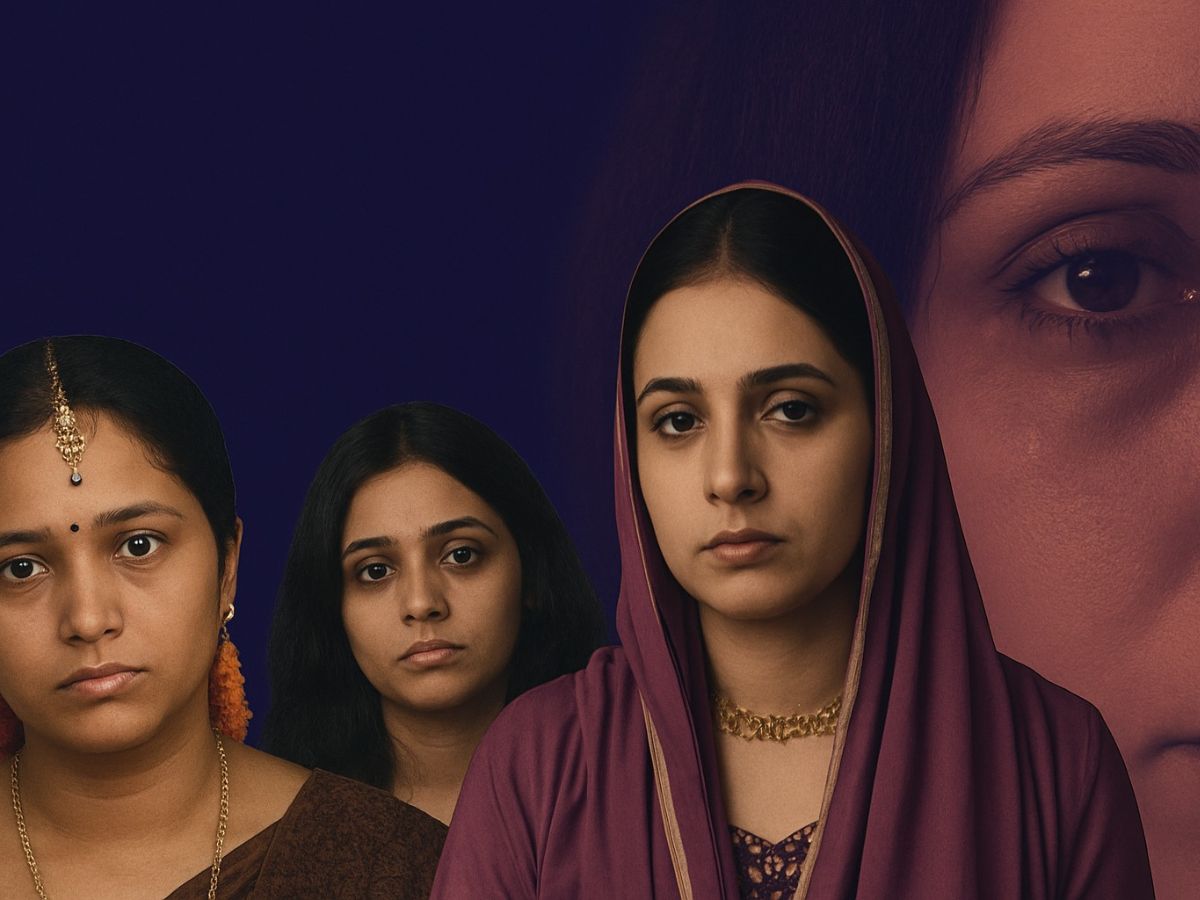

India woke up seeing the dark reality of dowry cases. A young professor immolates herself and her three-year-old daughter in Rajasthan. In Greater Noida, a wife is burned alive by her husband and her in-laws in front of the couple’s child, while in Madhya Pradesh, a wife is tortured with a hot knife leaving her with horrible deformities on her body. These two tragedies tell the same barbaric story, with tragedies in Greater Noida and Madhya Pradesh as the examples. Patriarchy, dowry, and domestic violence are so entrenched and normalized in many families all over the heartland of India, that it can be accepted as just “normal fights.”
Flames in Jodhpur: A Mother and Child Silenced
In Rajasthan’s Jodhpur district, 30-year-old Sanju Bishnoi, a lecturer, came back home one Friday afternoon from school. Suddenly, she sat down on a chair, doused herself and her daughter Yashasvi with petrol, and took the match. Neighbours noticed smoke emanating and dashed in, but by that time the little girl was no more, and her mother died the next morning due to her injuries.
A suicide note, found later by the police, blamed Sanju’s husband, her in-laws, and another male for repeated harassment for dowry. The note stated there had been a history of physical harassment and humiliation to demonstrate that violence is not an action at a specific time, it is the practice of cruelty over time. Her death catalyzed an ugly stewing of anger and conflict between her parents and her in-laws over the custody of her body, illustrating that even in death, she was to be an object of contention and not a person who had been betrayed by the system.
The Horror in Greater Noida: Nikki Bhati’s Last Moments
Only days ahead of Jodhpur, a case of similar horror unfurled in Greater Noida. Nikki Bhati, 28, was burned by her husband Vipin and his relatives. Her six-year-old child wept out for help as her elder sister, Kanchan married into the very same family recorded the assault. Nikki had suffered persistent dowry harassment with the demands going up to ₹36 lakh after her family had already given a car.
The justification itself is a matter of brutality. Just hours prior to his arrest, Vipin had posted smiling selfies with his wife and son on Instagram, portraying himself as a duty-bound and caring family man. Then, when police asked him, he casually said: “I take no responsibility.” Wife and husband fights are very natural.” His sentences show the way domestic violence is downplayed as a part of domestic life, and the way men feel entitled to it even when it results in death.
ALSO READ: ‘She Was Harassed For Running A Parlour’, Says Father Of Dowry Murder Victim In Greater Noida
Madhya Pradesh: Woman Tortured With a Heated Knife
In Madhya Pradesh’s Khargone district, another horror story was heard. 23-year-old Khushboo, married in February, managed to escape with her life only when her drunkard husband allegedly tied her up, tortured her, and applied a hot knife to her body. When she cried out in agony, he allegedly forced the knife into her mouth, causing deep burns.
The attack was sparked by unmet dowry requirements. Her scars on her arms, on her legs and on her body are ongoing reminders of the violence she experienced when she was unable to meet her husband’s expectations of wealth.
Telangana’s dowry horror
Complementing this somber trend is recent case of 33-year-old Lakshmi Prasanna of Telangana. Lakshmi hailed from Vishwannathapuram in the Khammam district but ended up marrying Poola Naresh Babu of Khanakhanpet in 2015. But whereas it should have been a life of companionship, it turned out to be a nightmare of torture and imprisonment.
Lakshmi was starved, regularly physically abused, and held captive for long periods of time by her husband and in-laws, according to police reports. Her condition worsened, and she was transferred to the Government Rajamahendravaram Hospital in East Godavari district. Doctors on Saturday pronounced her dead.
Kerala’s Painful Memories of Dowry Deaths
Kerala, the state popularly acclaimed for its literacy and social progress, has also witnessing dowry-related tragedies. The most poignant among these is the case of 24-year-old medical student Vismaya V. Nair. She was found hanging in 2021 after enduring abuse from her husband for dowry. Her death led to protests all over the state for stringent enforcement of laws.
But the tragedies did not stop there. Ridhanya, 27, took poison after mailing her father desperate audio messages that she could no longer tolerate the daily abuse. No matter what her family presented her with – gold, a fancy car, and a crore in cash it was never enough. Likewise, 22-year-old Lokeshwari took her life when pushed to demand more gold and household items.
ALSO READ: Who Are The Four Behind Bars In Nikki Bhati’s Murder? Inside The Greater Noida Dowry Case
The brutality has accompanied women even outside India’s shores. In Sharjah, UAE, Kerala’s 29-year-old Athulya Sekhar was reportedly beaten and strangled to death by her husband. Her mother subsequently disclosed that she had been subject to constant beatings attributed to dowry demands. These cases show how dowry culture knows no geographical bounds; it travels with Indian families overseas, tormenting women anywhere.
Numbers Reveal the brutality of dowry
The figures say the same dismal picture. In 2022, 6,450 dowry deaths were recorded by National Crime Records Bureau. Among these, 80% cases are being from Uttar Pradesh, Jharkhand, Odisha, Madhya Pradesh, Bihar, Rajasthan, and Haryana. Shockingly, in 2024 alone, 4,383 dowry harassment complaints, and 292 cases of dowry deaths received to the National Commission for Women. Even in metro cities, dowry deaths are still widespread. Delhi alone contributed to almost 30% of dowry deaths in India’s metros, followed by Kanpur, Bengaluru, Lucknow, and Patna. Behind every statistic is a lost life, a sorrowful family, and the fact that laws in books are nothing when social complicity protects the culprits.
Why Does Patriarchy Normalize Domestic Violence?
The most horrific part of such cases is not the violence itself but the way it is justified. Vipin Bhati waved burning his wife alive off as a “normal fight.” Athulya’s husband informed police that both of them physically assaulted each other “out of love.” Such excuses are not personal distortions they are a cultural script penned by patriarchy, where women are treated as property and violence masquerades as discipline, authority, or even love.
Patriarchy prepares families, communities, and even victims to accept the idea that women need to “adjust” to abuse, silence keeps “honour” intact, and dowry is tradition. It is this normalization that renders domestic violence so pernicious it occurs behind closed doors, justified as normal, until it bursts out into tragedy.
India has dowry and domestic violence laws the 1961 Dowry Prohibition Act and Section 304B of the IPC, among others. However, they are weakly enforced, police routinely file “family dispute” complaints away, and survivors are terribly stigmatized. Until society recognizes that dowry is not a present but an offence, and until the patriarchy over marriage is challenged, women will keep dying in the hands of those who took wedding vows to love and safeguard them.
Patriarchy kills, not abstractly, but in flames, bruises, and silence. As the murders of Sanju Bishnoi, Nikki Bhati, Khushboo, and so many others shows, the price of normalizing domestic violence is paid by women and children every single day.
ALSO READ: Greater Noida Woman Death: Why Is Dowry Harassment Becoming A Daily Affair In Indian Households?
Sofia Babu Chacko is a journalist with over five years of experience reporting on Indian politics, crime, human rights, gender issues, and stories about marginalized communities. She believes journalism plays a crucial role in amplifying unheard voices and bringing attention to issues that truly matter. Sofia has contributed articles to The New Indian Express, Youth Ki Awaaz, and Maktoob Media. She is also a recipient of the 2025 Laadli Media Awards for gender sensitivity. Beyond the newsroom, she is a music enthusiast who enjoys singing. Connect with Sofia on X: https://x.com/SBCism




