
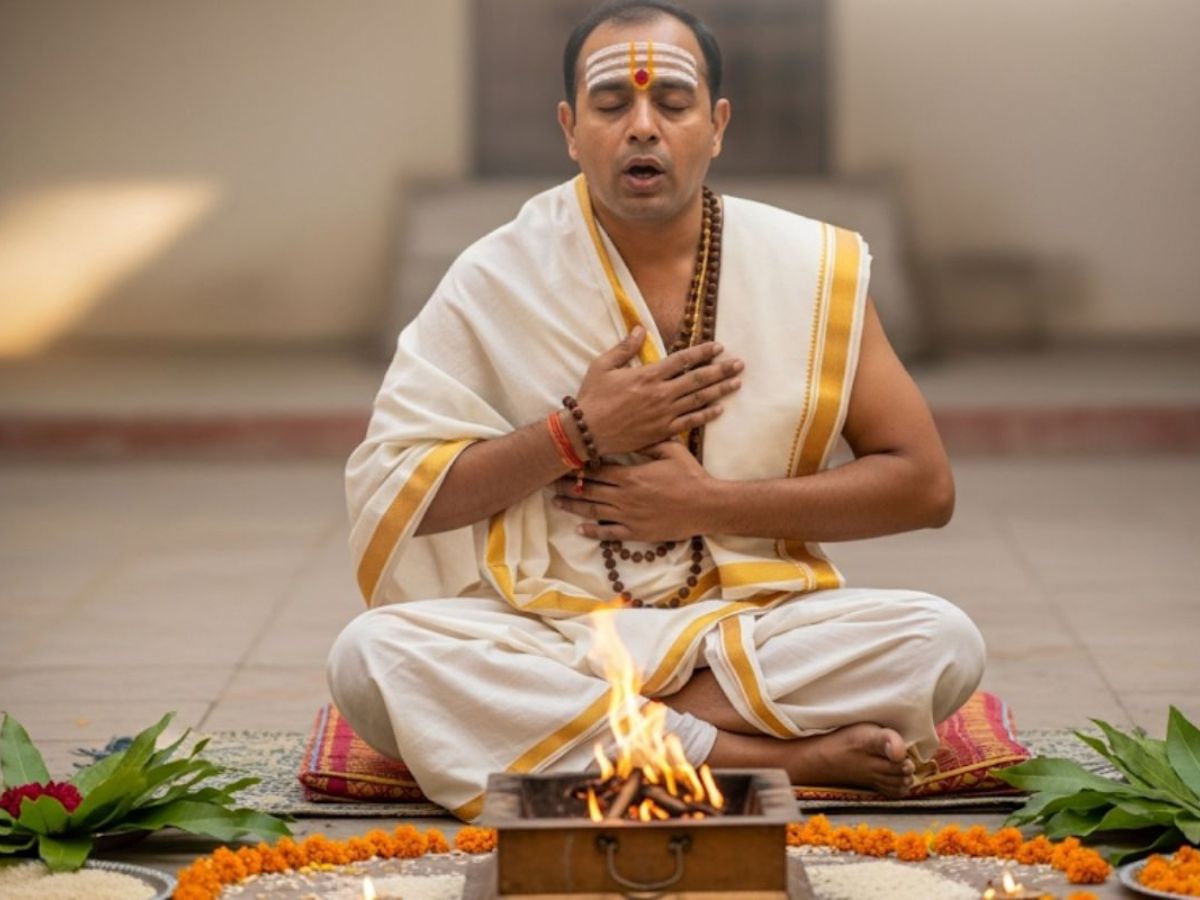

The Pitru Paksha strating from tomorrow (7th Sep) and will continue for 15 days. This time period is dedicated – remembering ancestors and praying for peace of their souls. This is the time considered paying gratitude and seek blessings.
It is also important to know that tomorrow is lunar eclipse is one of the longest of a decade and will be visible across Asia, Africa, Europe, and Australia.
This coincidence holds special significance in Hindu tradition, as eclipses are believed to carry powerful spiritual energy. The combination of Pitru Paksha and the eclipse makes the first day especially important for remembering ancestors.
Rules for Offering Water to Ancestors
Religious texts describe specific rules for offering water during Pitru Paksha rituals. Afternoon is considered the best time for performing Tarpan.
Devotees should face the south direction, which is believed to be associated with ancestors. The sacred thread must be placed on the right shoulder. If there is no sacred thread, the upper body should be covered with a clean cloth.
A copper vessel should be used, filled with water, milk, black sesame seeds, and barley. The offering must be made three times with folded hands, while chanting mantras. Observing purity is important during the ritual.
Mantras hold a significant role in Pitru Paksha rituals. The main chant during Tarpan is “Om Pitribhyah Namah”, which is repeated while offering water. Devotees also invoke and pay obeisance to Lord Krishna during the ceremony.
Chanting mantras with devotion is believed to connect the performer with divine energies and ancestors. Each offering made with the mantra strengthens the spiritual act. Reciting mantras also helps focus the mind and maintain discipline in the ritual. Priests often guide families with the proper pronunciation and methods of chanting to ensure the offerings are made in the correct traditional way.
According to the Vedic calendar, the most auspicious time to perform Tarpan during Pitru Paksha is called Kutup Kaal. This time is considered spiritually powerful for connecting with ancestors. Performing Tarpan during this phase is believed to ensure maximum benefits for the family. The timing allows the offerings to reach the souls of ancestors in the right way.
Things to Keep in Mind During Pitru Paksha
Hindu scriptures also mention several restrictions and practices to follow during Pitru Paksha. People avoid auspicious ceremonies like marriages, housewarmings, or new ventures during this period.
Food cooked at home must be Satvik, without garlic and onion. Devotees also offer food to crows, cows, and dogs after performing Tarpan, as these beings are considered symbolic of ancestors. Performing rituals near a holy river is believed to be especially beneficial. Families maintain purity, devotion, and discipline throughout these 15 days, ensuring that the rituals bring peace to ancestors and harmony to their household.
Must Read: Lunar Eclipse 2025: What Is Blood Moon And What’s The Science Behind It?
Swastika Sruti is a Senior Sub Editor at NewsX Digital with 5 years of experience shaping stories that matter. She loves tracking politics- national and global trends, and never misses a chance to dig deeper into policies and developments. Passionate about what’s happening around us, she brings sharp insight and clarity to every piece she works on. When not curating news, she’s busy exploring what’s next in the world of public interest. You can reach her at [swastika.newsx@gmail.com]




