
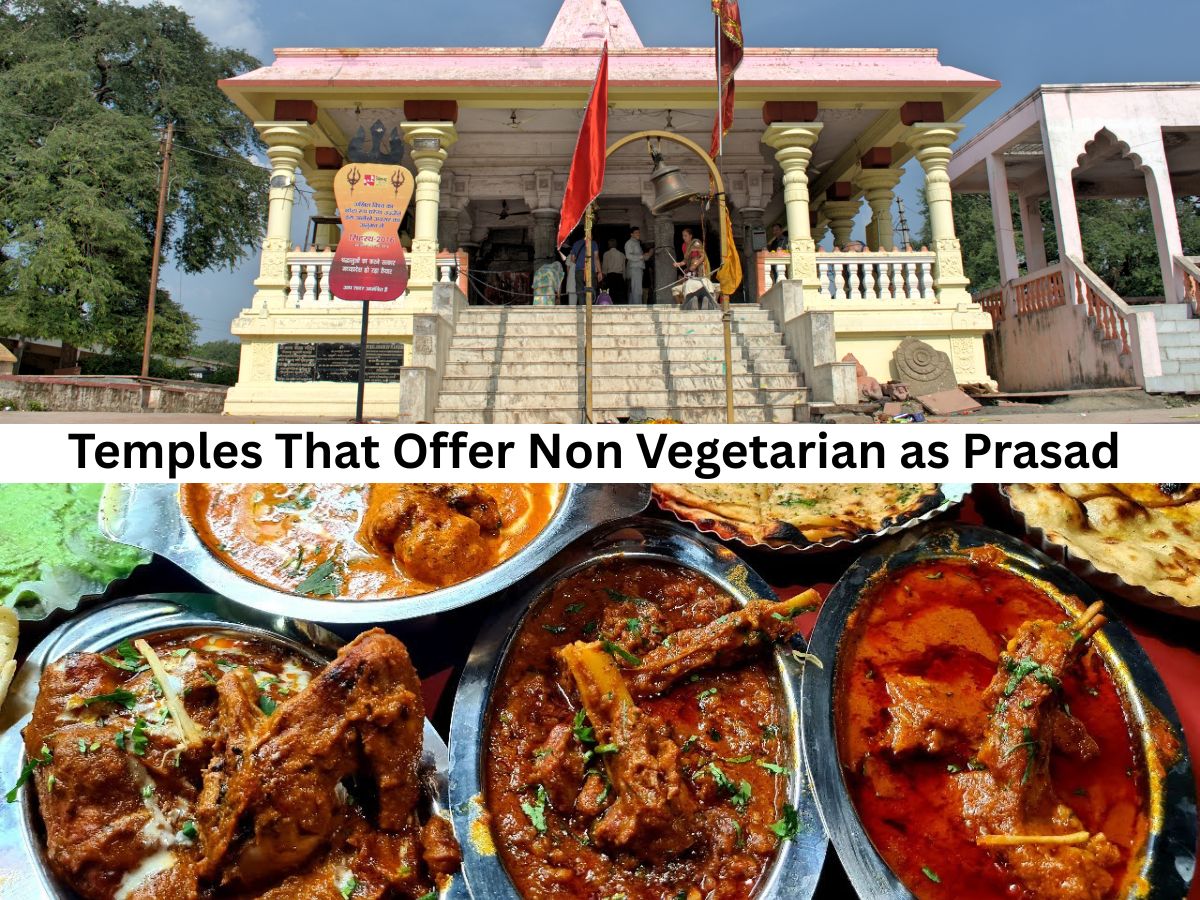

While most Hindu temples follow strict vegetarian traditions, there are a few unique temples in India where non vegetarian food like meat and fish is offered as prasad to deities. These offerings are deeply rooted in ancient rituals, local customs, and regional beliefs, symbolizing the deity’s fierce form or warrior nature.
1. Kamakhya Temple, Assam:- Assam, dedicated to the Goddess Kamakhya, is one of the most famous Shakti Peethas in India. During certain festivals like Ambubachi Mela, devotees offer animals such as hosts to the goddess. After the ritual, the meat is cooked and distributed among devotees as prasad, symbolizing fertility and divine energy.
2. Kalighat Temple, Kolkata, West Bengal- At the Kalighat Temple in Kolkata, devoted to Goddess Kali, goat sacrifice is an age old tradition. The meat of the sacrificed animal is later cooked and served as prasad to devotees. This practice is seen as a way to honor the fierce form of the goddess and to seek her blessings for strength and protection.
3. Kamakhya Devi Temple, Tripura:- This temple, also dedicated to Goddess Kamakhya, is known for its unique rituals involving the offering of fish and meat. Devotees believe that these offerings please the goddess and ensure prosperity. The prepared dishes are later shared as prasad among devotees, reflecting the deep connection between local culture and religious traditions.
4. Sabarimala Ayyappa Temple, Kerala:- While the Sabarimala Temple is largely associated with vegetarian offerings, certain rituals outside the main shrine involve meat preparations. In some nearby temples dedicated to Lord Ayyappa, offerings of fish and chicken are cooked and distributed to devotees as part of specific festivals, symbolizing the warrior aspect of the deity.
5. Hinglaj Mata Temple, Rajasthan:- At the Hinglaj Mata Temple, goat sacrifice and meat offerings are part of traditional rituals performed during special occasions. This practice is rooted in ancient customs where the goddess is worshipped in her fierce form. The cooked meat is later distributed as power to devotees.
6. Kaal Bhairav Temple, Ujjain, Madhya Pradesh:- The Kaal Bhairav Temple in Ujjain is famous for its usual offering of alcohol to the deity. Along with this, during certain rituals, meat is also offered and later shared among devotees as prasad. This unique tradition symbolizes the fierce and protective nature of Lord Bhairav.
Conclusion
These temples showcase the diversity of Hindu traditions across India. While vegetarianism is common practice, these temples reflect the ancient rituals where non-vegetarian offerings symbolize power, protection, and divine energy. Such practices are deeply tied to local customs and the fierce forms of the deities they worship.




