
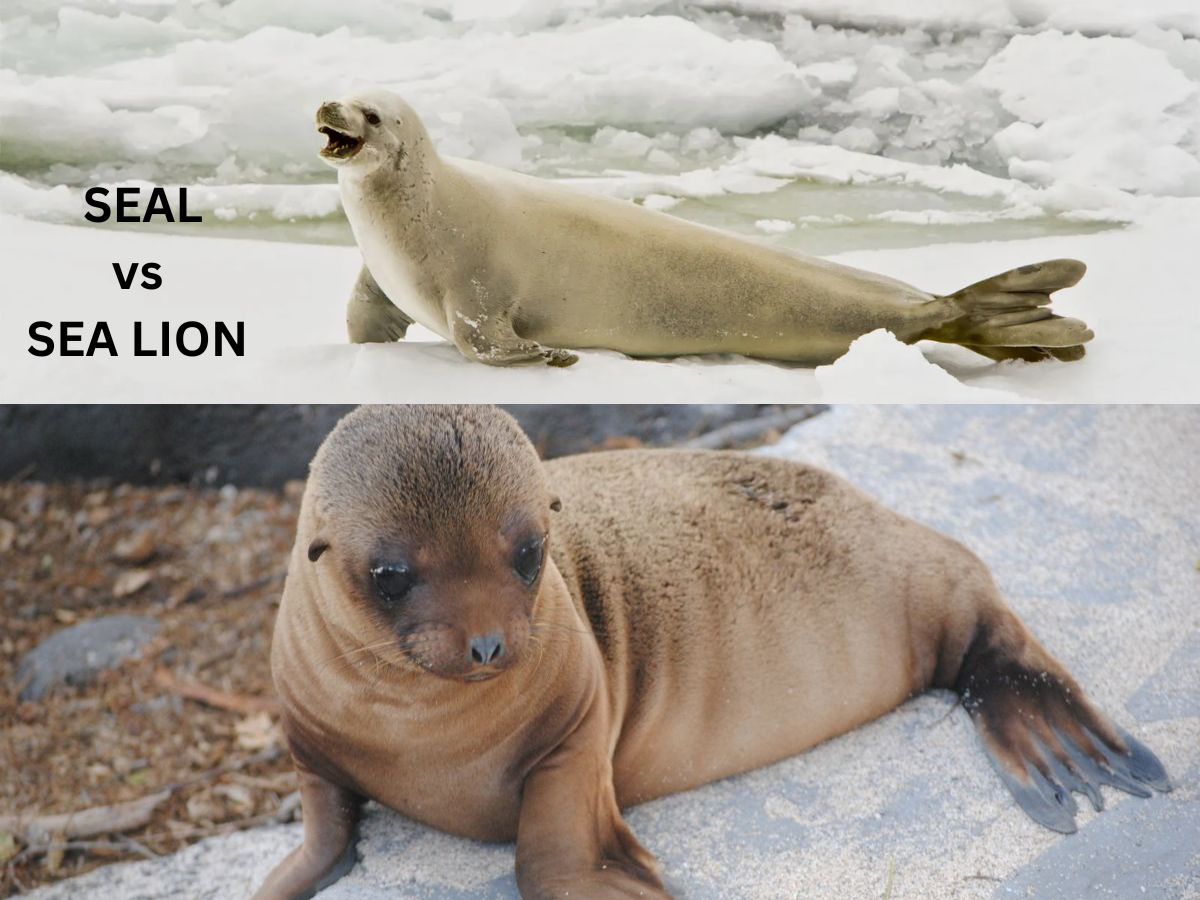

Seals and Sea lions are often mistaken for one another because of their similar looks and shared habitats. The physical characteristics, behaviors, and adaptations of these two intriguing marine differ greatly. Knowing their distinctive traits aids in identifying and provides information about how they flourish in their natural habitats.
Physical Appearance
- Seals have shorter front flippers, a more streamlined shaped body, and lakh external ear flaps. Their small claws and smooth fur give them a sleeker look.
- Sea lions, have long, strong flippers, and visible external ear flaps. There bulkier bodies and coarse fur make them easier to distinguish from seals.
Movement On Land
- Seals are awkward on land because their hind flippers point backward, allowing them to wriggle or crawl using their bellies.
- Sea lions, however, can rotate their hind flippers forward, allowing them to walk or even run on land, giving them a significant mobility advantage.
Swimming Abilities
Both are excellent swimmers, but their techniques differ.
- Seals really primarily on their hind flippers to people forward, making them faster in water.
- Sea lions use their large front flippers to “fly” through water, similar to how Penguins move.
Social Behavior
- Seals are generally solitary creatures, coming together only during mating or pupping seasons.
- Sea lions are highly social and vocal, often seen lounging in groups and communicating with loud barks.
Habitat and Distribution
- Seals are more widespread, living in icy polar regions, temperate zones, and even some tropical waters.
- Sea lions prefer warmer coastal regions, such as the western coasts of North and South America and parts of Asia.
Diet and Feeding Habits
Both feed on fish, squid, and other marine creatures.
- Seals usually hunt alone, diving deep and staying underwater for long periods.
- Sea lions often hunt in groups, using teamwork to catch prey more efficiently.
Conclusion
While seals and sea lions share similarities, their physical structures, behaviors, and habitats make them distinctly unique. Feels are streamline swimmers built for icy solitude, while sea lions are agile, social, and adaptable both in water and on land. Knowing these differences helps Marine enthusiasts, researchers, and casual observers appreciate the rich diversity of ocean wildlife.




