
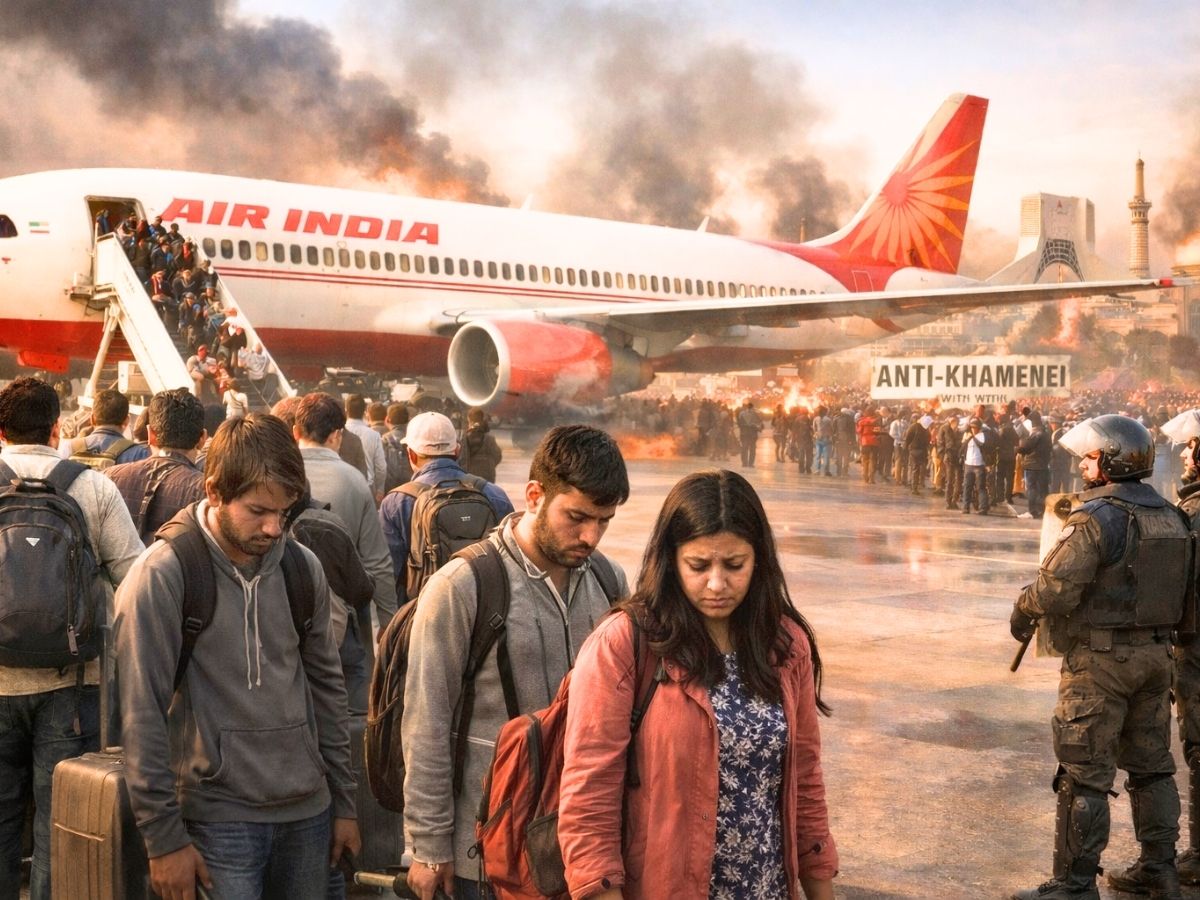

US-Iran tensions: India is set to begin evacuating its citizens stranded in Iran from Friday amid escalating security concerns triggered by widespread and deadly anti-government protests.
According to government sources, the first batch of Indian nationals is likely to be flown out as early as tomorrow morning.
The move comes as protests against Iran’s theocratic leadership, led by Supreme Leader Ayatollah Ali Khamenei, intensify across the country, raising fears of further instability and violence.
Embassy Reaches Out to Students Amid Iran Internet Shutdown
Government sources said that the Indian Embassy in Tehran has begun reaching out to Indian students and other nationals across various regions to assess who wishes to leave.
Due to severe internet restrictions and unreliable telecommunication services in several parts of Iran, embassy officials are conducting the exercise physically on the ground.
“Embassy officials are moving locally to identify students and collect details as internet connectivity is unavailable and phone lines are intermittent,” a government source said.
Advisory Issued; Indians Asked to Leave Iran
The evacuation plan follows an advisory issued by the Indian Embassy in Tehran on Wednesday, urging all Indian nationals including students, pilgrims, businesspersons, and tourists to leave Iran by available means, including commercial flights.
The embassy also asked Indians currently in Iran to register with it. However, the registration process has been slow due to the internet shutdown. Family members of Indians stranded in Iran have been allowed to register on their behalf through the Ministry of External Affairs portal.
First Batch Told to Be Ready by Friday Morning
Sources said that Indians identified for the first evacuation phase have been informed to be prepared to leave at 8 am on Friday. Government agencies are finalising logistics to ensure a smooth and safe exit as the situation continues to deteriorate.
According to official estimates, over 10,000 Indians, including a large number of students, are currently residing in Iran.
Iran Protests Turn Deadly, Spread Across All Provinces
Iran has been affected by nationwide protests for more than two weeks, initially sparked by public outrage over the collapse of the Iranian rial and worsening economic conditions.
The demonstrations have since evolved into a full-scale revolt against the country’s clerical regime, with protesters openly demanding regime change.
The unrest has spread to all 31 provinces, with demonstrations reported at over 600 locations. Slogans such as “Mullahs must go” have become common, reflecting growing anger against the ruling establishment.
Rising Death Toll and Brutal Crackdown in Iran
Human rights groups have reported a sharp escalation in violence, with estimates of the death toll ranging from over 2,600 to as high as 12,000.
Thousands more have reportedly been arrested as security forces launch a brutal crackdown on protesters.
Rights organisations claim the ongoing protests represent the greatest threat to Iran’s theocratic regime in over five decades.
Iran Regional Tensions Add to Fears
The evacuation decision also comes amid heightened regional tensions, including warnings from US President Donald Trump that raised the possibility of an American attack on Iran.
Analysts warn that any external military escalation could further destabilise the country and the wider region.
Reports have also emerged of Iraqi Shia militias entering Iran, coinciding with a sudden spike in fatalities. These developments have added to concerns about the safety of foreign nationals, including Indian students.
Is India Monitoring Situation Closely?
Government sources said India is closely monitoring the evolving security situation and remains prepared to take additional steps if required.
“The safety and security of Indian nationals remains our top priority,” a source said, adding that contingency plans are in place for further evacuations if conditions worsen.
Sofia Babu Chacko is a journalist with over five years of experience covering Indian politics, crime, human rights, gender issues, and stories about marginalized communities. She believes that every voice matters, and journalism has a vital role to play in amplifying those voices. Sofia is committed to creating impact and shedding light on stories that truly matter. Beyond her work in the newsroom, she is also a music enthusiast who enjoys singing.




