
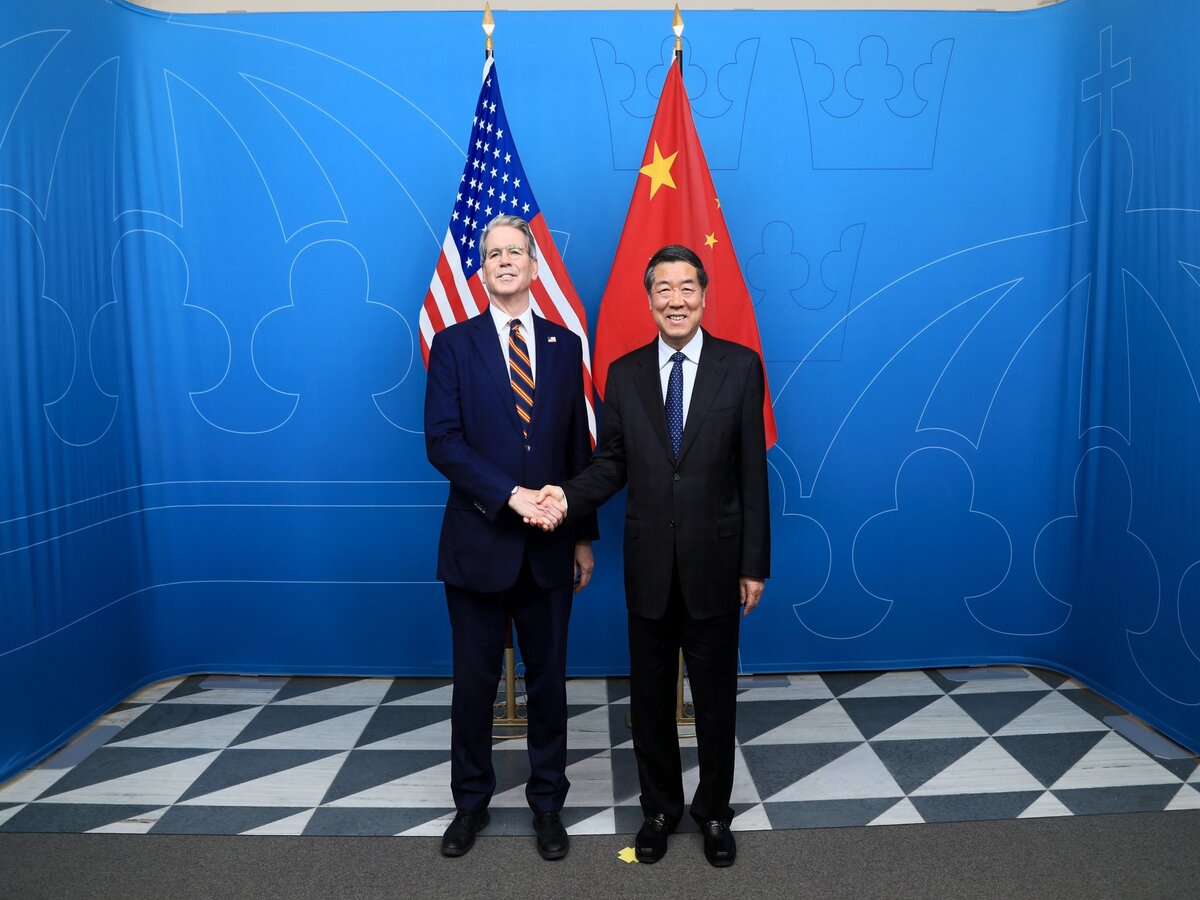

China has accused the United States of “unilateral bullying” after Washington called on its allies to place tariffs on China for buying oil from Russia. The move has added fresh tension just as Chinese and U.S. officials meet in Spain to discuss ways to ease trade disputes.
On Saturday, U.S. President Donald Trump said the Russia-Ukraine war could end if NATO members stopped importing Russian oil and placed tariffs of 50–100% on China for its oil trade with Moscow. While Washington has already imposed tariffs on India for purchasing Russian oil, it has not taken similar action against China.
US Asks G7 and NATO to Impose Sanctions on China
US asked G7 and NATO members to impose sanctions on Chinese goods, a demand which Beijing objected to. Calling Russia an “all-weather” friend, Chinese officials said the US is practising “economic coercion.”
The U.S. and Chinese officials continued discussion in Madrid on Monday. The groups reportedly talked on issues such as tariffs and America’s demand that Bytedance should sell its stake in the TikTok app. At the same time, China’s market regulator said a preliminary probe had found that U.S. chipmaker Nvidia violated the country’s anti-monopoly law. This could result in another sign of growing friction.
Trade Tensions Rise Between China and US
Relations between the two biggest economies have worsened, despite a fragile tariff truce agreed in May and extended in August. That truce had prevented tariffs on each other’s goods from rising to extreme levels. But key disputes remain unresolved, including U.S. restrictions on Chinese technology and chip imports, China’s close ties with Russia, and American complaints that Beijing is not doing enough to stop the flow of fentanyl chemicals into the U.S.
Beijing Seeks ‘Equal Dialogue’ with US
In its official statement, China’s commerce ministry urged Washington to be “prudent in words and deeds” and to resolve disputes through “equal dialogue.”
Meanwhile, U.S. Treasury Secretary Scott Bessent said the two sides are “very close” to an agreement on TikTok. Speaking to reporters before Monday’s talks in Madrid, he stressed that even if a TikTok deal is not finalized, it will not harm overall U.S.-China relations, which remain “strong at the highest levels.”
Also Read: Will TikTok Make a Comeback in the US? Washington and Beijing “Very Close” to a Deal!




