
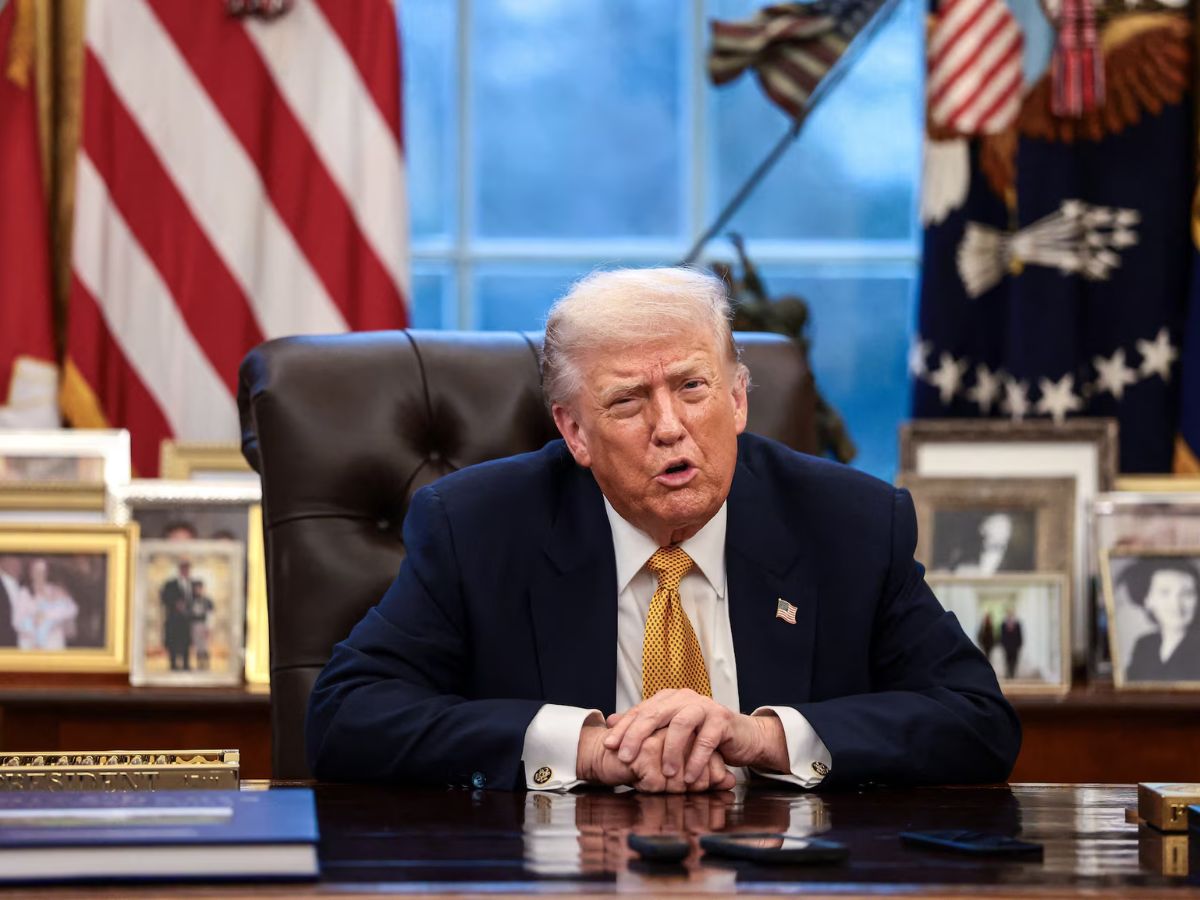

US President Donald Trump on Monday announced a steep hike in tariffs on South Korean imports, raising duties to 25 percent on key goods including automobiles, lumber and pharmaceuticals.
The decision marks a sharp escalation in trade tensions between Washington and Seoul, coming months after the two sides finalised a trade and security pact.
Trump accused South Korea of failing to honour the agreement, triggering what he described as a necessary reversal of earlier tariff concessions.
Why Trump Raised Tariffs on South Korea
In a post on his Truth Social platform, Trump said South Korea’s legislature had failed to enact a “historic trade agreement” negotiated with Washington. He said Seoul was “not living up to its deal with the United States,” directly blaming lawmakers for delaying implementation.
Trump added that because the Korean legislature had not enacted the agreement, he was increasing tariffs on autos, lumber, pharmaceuticals and all other reciprocal tariffs from 15 percent to 25 percent.
What the Original US-South Korea Trade Deal Promised
The agreement, finalised after Trump met South Korean President Lee Jae Myung in October, was meant to cap months of tense negotiations between the two allies. Under the deal, Washington had agreed to maintain levies of up to 15 percent on South Korean goods including vehicles, car parts and pharmaceutical products, while South Korea pledged investments and closer security cooperation.
Crucially, the pact had reduced US tariffs on South Korean cars from 25 percent to 15 percent, a major relief for Seoul’s export-driven auto sector. Trump’s latest move effectively undoes that concession.
How the Tariff Hike Impacts South Korea’s Auto Industry
The tariff reversal is expected to hit South Korea’s auto industry the hardest. Automobiles account for nearly 27 percent of South Korea’s exports to the United States, which absorbs almost half of the country’s total car shipments.
A return to 25 percent tariffs significantly weakens the competitiveness of South Korean vehicles in the American market and threatens to disrupt production, pricing and export strategies of major carmakers.
Why South Korea Now Faces a Trade Disadvantage
The move also puts South Korea in a less favourable position compared to other major exporters. Economies such as Japan and the European Union have secured trade arrangements that keep US tariffs at around 15 percent, allowing their exports to remain more competitive in the US market than South Korean goods.
This shift could divert trade flows and impact South Korea’s share in key sectors like automobiles and pharmaceuticals.
When the New Tariffs Take Effect
The White House confirmed that the higher tariffs would take effect immediately. South Korea had been working to implement the November trade deal, but Trump’s decision has now stalled that process. Seoul is yet to announce any retaliatory measures or seek emergency negotiations.
Other Issues Adding Strain to US-South Korea Ties
In recent weeks, South Korean officials have also been engaged with Washington over a probe into US-based e-commerce firm Coupang following a major data leak. While not officially linked to the tariff hike, these developments have added to the strain in bilateral relations.
What It Means for Global Trade and Consumers
Trump has increasingly leaned on tariffs during his second term, using them as a central tool in both trade and foreign policy. Economists warn that higher tariffs could raise costs for American consumers and disrupt global supply chains at a time when markets remain fragile.
The policy is also under legal scrutiny, with parts of Trump’s tariff regime expected to face challenges before the US Supreme Court.
With tariffs now raised, attention will turn to how South Korea responds and whether fresh negotiations can salvage the stalled trade pact. Global markets will also closely watch whether Trump extends similar pressure tactics to other allies.
For now, the move signals a tougher, more confrontational phase in US trade policy even toward close partners with far-reaching implications for Asia and the global economy.
Sofia Babu Chacko is a journalist with over five years of experience covering Indian politics, crime, human rights, gender issues, and stories about marginalized communities. She believes that every voice matters, and journalism has a vital role to play in amplifying those voices. Sofia is committed to creating impact and shedding light on stories that truly matter. Beyond her work in the newsroom, she is also a music enthusiast who enjoys singing.




