
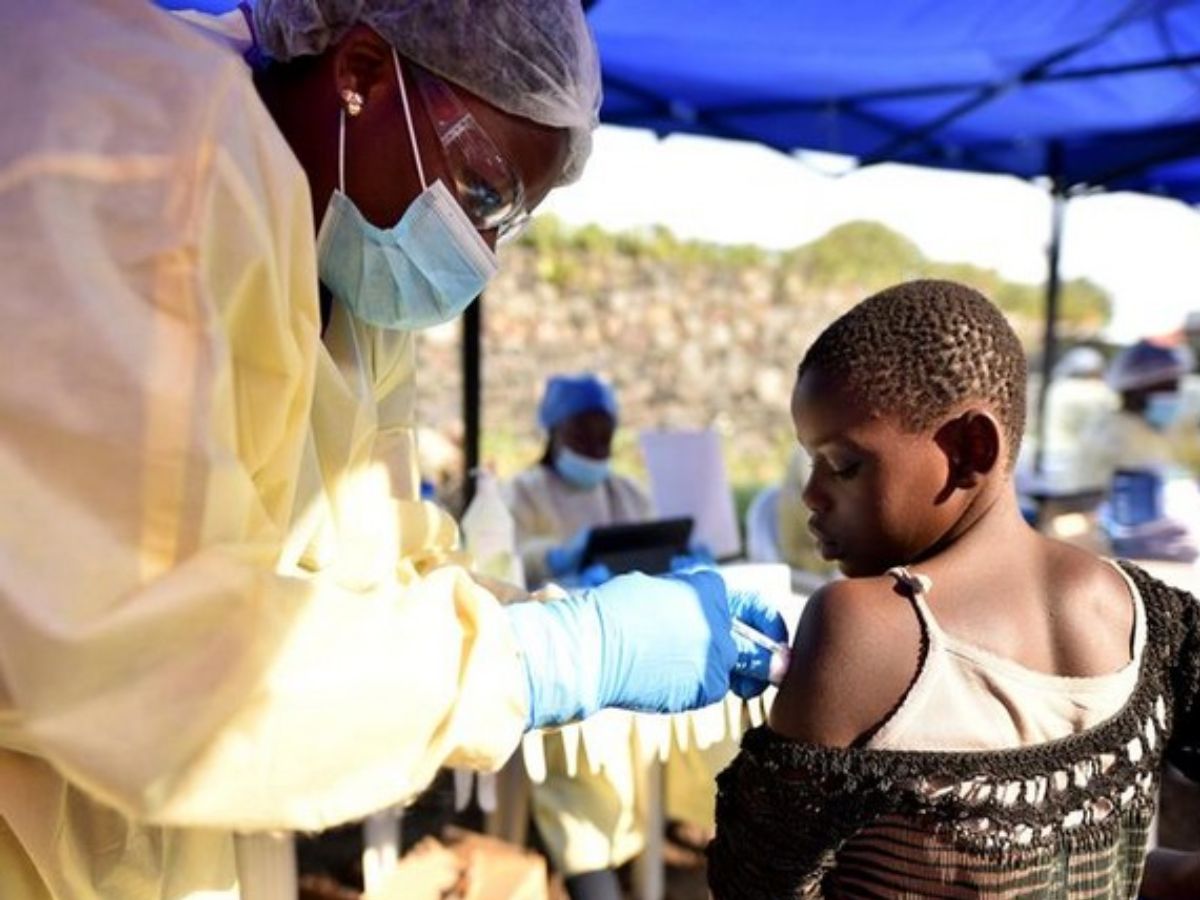
An Ebola epidemic in Uganda and the Democratic Republic of the Congo was deemed a ‘public health emergency of international concern’ by the World Health Organization on Sunday, endangering nearby nations. The WHO stated that although the Bundibugyo virus-caused epidemic does not fit the definition of a pandemic emergency, nations that share land borders with the DRC are very vulnerable to its spread. According to a statement from the U.N. health agency, as of Saturday, at least three health zones Bunia, Rwampara, and Mongbwalu in the DRC’s Ituri province have reported 80 suspected deaths, eight laboratory confirmed cases, and 246 suspected cases.
International Spread Documented, WHO Says
On Friday, the DRC health ministry said that the current outbreak in the eastern region had claimed 80 lives. Given the high positive rate of the initial samples and the growing number of probable patients being reported, the outbreak the 17th in the nation since Ebola was first discovered there in 1976 may be substantially larger, according to the WHO. Unlike Ebola-zaire variants, the outbreak is ‘extraordinary’ since there are no licensed treatments or vaccinations specific to the Bundibugyo virus. The Zaire strain was responsible for all but one of the nation’s prior epidemics.
What More Did WHO Say?
The agency advised nations to activate their national disaster and emergency management mechanisms and conduct cross border screening as well as screening at major internal roads because the DRC-Uganda outbreak poses a public health risk to other nations, with some cases of an international spread already documented. Two seemingly unconnected laboratory confirmed cases, including one fatality, were reported from travellers from the Democratic Republic of the Congo on Friday and Saturday in Uganda’s capital, Kampala, according to the WHO.
Do’s And Don’ts
The WHO also reported a laboratory confirmed case from a person returning from Ituri in Kinshasa, the capital of the Democratic Republic of the Congo. According to the WHO, contacts or cases of the Bundibugyo virus should not travel abroad unless they are part of a medical evacuation. The agency recommended that confirmed patients be isolated right away, that contacts be monitored every day, that travel within the country be restricted, and that travel outside of the country be avoided for 21 days following exposure.
However, out of concern, the WHO advised nations not to seal their borders or impose restrictions on travel and trade, as this could result in unmonitored crossings of people and products. The Ebola virus naturally exists in the DRC’s deep tropical woods. According to the Africa Centers for Disease Control and Prevention, the frequently fatal virus that causes fever, body pains, vomiting, and diarrhoea is spread by direct contact with the bodily fluids of infected individuals, contaminated things, or individuals who have passed away from the illness.
(With Inputs From Reuters)
Also Read: Ex-Government Researcher Claims 4 Alien Species Were Recovered From Crashed UFOs





