
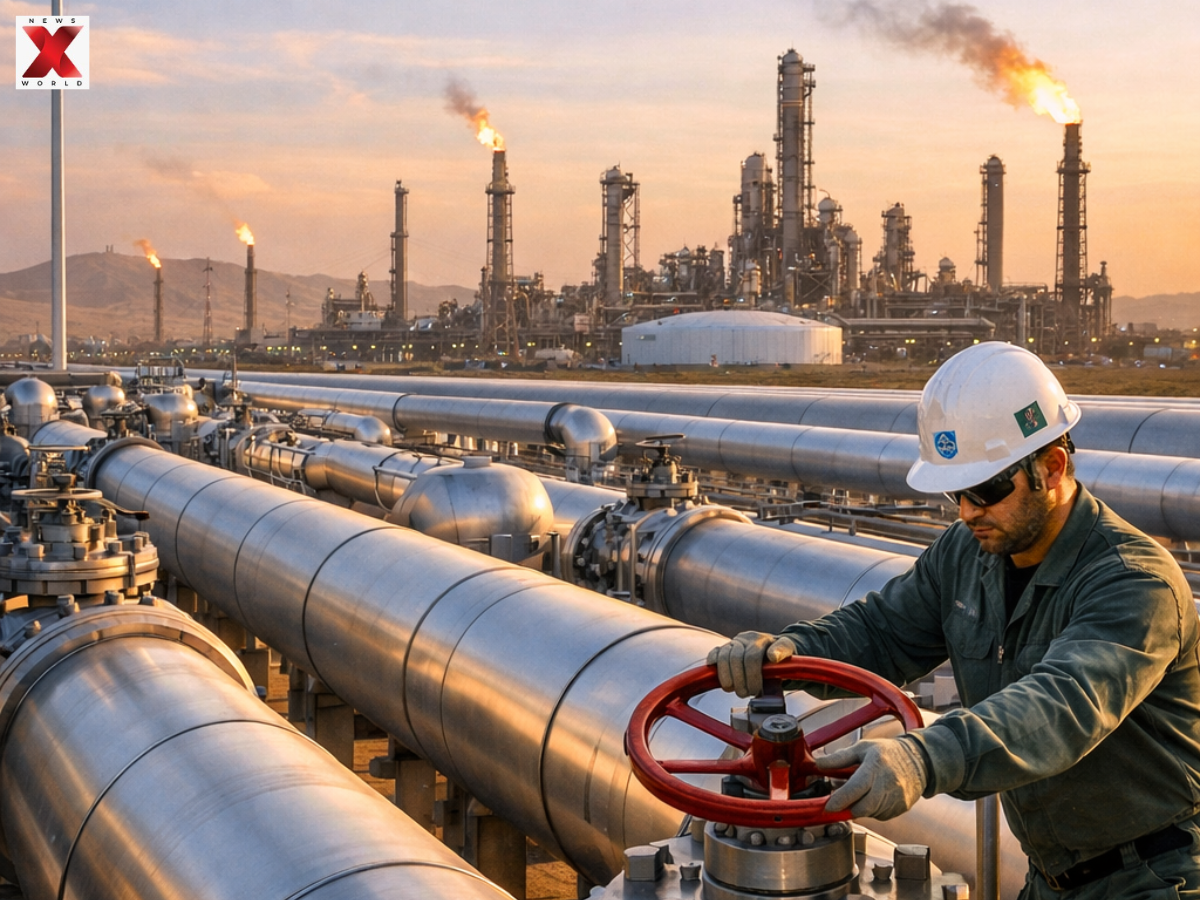

UAE-IRAN CONFLICT: Saudi Arabia just maxed out its East-West crude pipeline, sending about 7 million barrels a day from its eastern oil fields over to the port of Yanbu on the Red Sea.
Saudi Arabia Maxes Out East-West Pipeline at 7 Million BPD
This move suddenly matters a lot: with the Strait of Hormuz all but choked by conflict, this pipeline has become the world’s big backup plan.
Instead of sending oil through the risky waters of the Gulf, Riyadh sped up rerouting efforts, making sure the oil still gets to global buyers.
It’s a throwback to why they built the thing in the first place, back in the 1980s: bypass conflict, avoid trouble, keep oil flowing.
With the Strait mostly locked down, the East-West pipeline is now centre stage. Flows to Yanbu have shot up, especially in March, as the kingdom leaned hard on the system.
Even though some of that oil stays in-country for refining, the pipeline at full blast still pushes millions of barrels a day to the Red Sea. It’s a crucial workaround just when the world needs it most.
East-West Pipeline Becomes Lifeline as Strait of Hormuz Faces Shutdown
The Hormuz Bypass plays a pretty big role in Saudi Arabia’s oil strategy. It links the massive Abqaiq oil facility in the east straight over to the port city of Yanbu on the Red Sea.
That way, when things heat up near the Strait of Hormuz, a choke point notorious for being a geopolitical hotspot, Saudi oil can take a safer route out to global markets.
Back in March 2026, this pipeline really justified its existence. Thanks to a regional conflict that shut down the Strait of Hormuz, Saudi officials cranked the bypass pipeline up to its maximum of 7 million barrels per day.
That’s the first time in 45 years they ever ran it full tilt. Out of those 7 million barrels, around 5 million headed overseas for export. The other 2 million supplied refineries in Saudi Arabia’s western province.
What you need to know about East-West Pipeline
A little history: Saudi Arabia built this pipeline in 1981, right in the thick of the Iran-Iraq “Tanker War.” It was basically an insurance policy against exactly the sort of supply crisis that hit in 2026.
The system itself isn’t just one pipe but two: a 48-inch line and an even bigger 56-inch line. Together, they cut across harsh deserts and wind their way through the rocky Hijaz Mountains before reaching the coast. When it was first built, the pipeline could move 1.85 million barrels per day.
A series of upgrades in the 1990s, including converting some natural gas liquid lines, eventually let it hit today’s 7 million barrel capacity.
Although the pipeline will enable the much needed relief, it will not be a total replacement of Hormuz.
Middle East Tensions Escalate
The strait usually transports about 5th of all oil in the world and that is much more than the available bypass infrastructure.
Despite full utilisation, analysts estimate that Saudi Arabia and other Gulf producers can only partially offset the disruption, and world markets remain vulnerable to the threat of supply shocks and price volatility.
However, the issue is made even more difficult by the logistical challenges at Yanbu, where loading capacity and security may limit the amount of crude that can eventually be exported.
The pacing describes how the energy producers are scurrying to converge to a new geopolitical reality.
The action of Saudi Arabia is not an isolated effort in the region, since other countries in the Gulf region are also looking to find another route that will allow them to continue exporting.




