
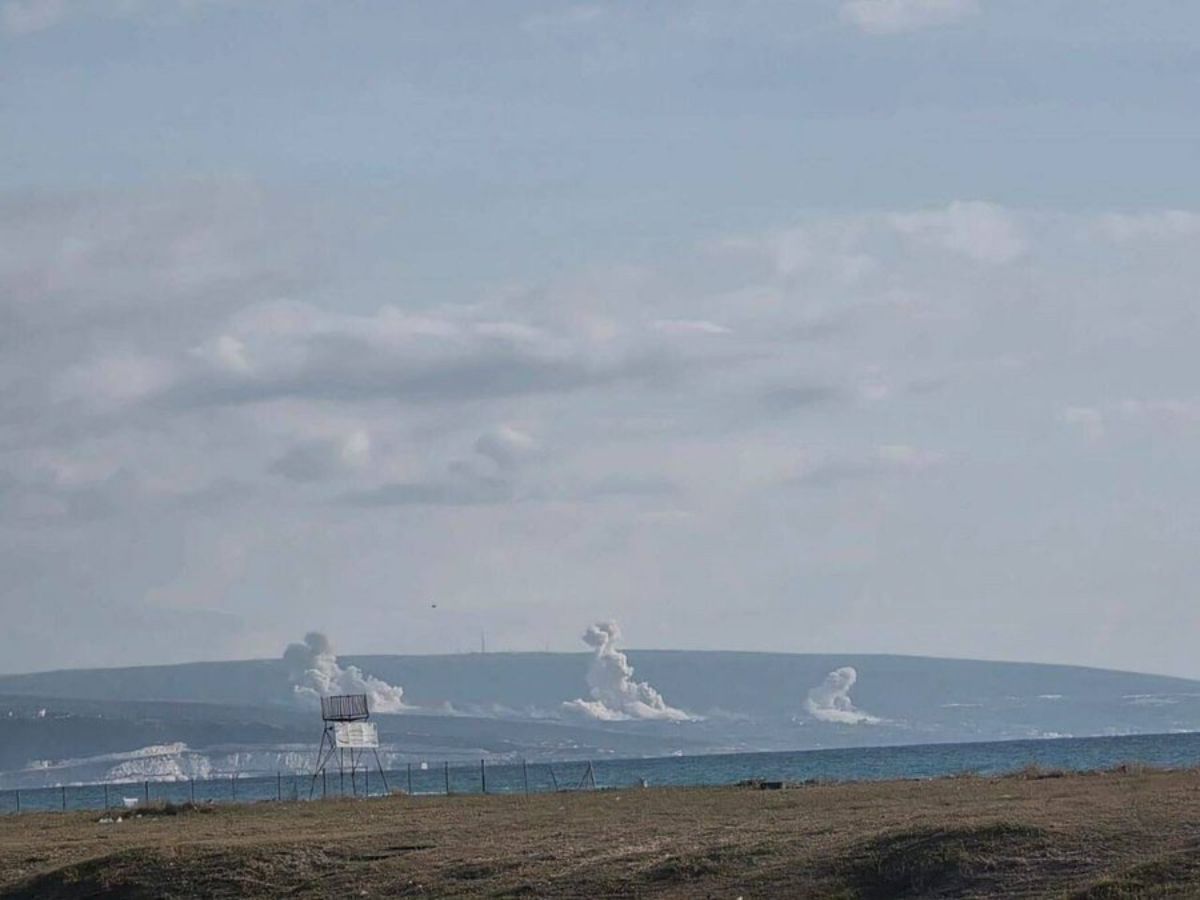

The Israeli military has said its forces struck more than 200 Hezbollah sites across Lebanon in the past 24 hours, marking a sharp escalation in its ongoing operations. In a post on X, the military said its air force will continue targeting “Hezbollah infrastructure” in southern Lebanon as part of its campaign.
As tensions persist in the area due to ongoing cross-border incidents and military campaigns, the interception of recent attacks supports this view and demonstrates Israel’s willingness to put continued pressure on Hezbollah despite the fact that negotiations are being held for a ceasefire.
Israeli strikes intensify amid ongoing conflict
Amid the continued military action, Iran has linked the situation in Lebanon to broader diplomatic negotiations. Iranian Foreign Ministry spokesperson Esmaeil Baghaei said the ceasefire in Lebanon was part of discussions with the United States, according to Iranian state media Press TV.
Press TV also reported that the remarks were confirmed by the Pakistani side, adding that the Iranian delegation is in contact with Hezbollah to take necessary decisions. This suggests that developments on the ground are closely tied to behind-the-scenes negotiations.
Ceasefire talks gain momentum in Islamabad
These developments are unfolding alongside high-level ceasefire talks involving the United States, Iran, and Pakistan in Islamabad. According to Al Jazeera, these are the highest-level discussions between Washington and Tehran since the 1979 Islamic Revolution.
Before the formal talks began, the Iranian delegation held internal meetings in Islamabad to prepare its strategy. The discussions have been described as high-stakes, with both sides looking to shape the outcome of what are being called “peace talks.”
Key meetings and diplomatic activity at Serena Hotel
Ahead of the main engagement, US Vice President JD Vance met Pakistani Prime Minister Shehbaz Sharif, according to the White House. At the same time, Iran’s Parliament Speaker Mohammad Bagher Ghalibaf and Foreign Minister Abbas Araghchi also held talks with Sharif to discuss the diplomatic roadmap.
The Serena Hotel has become the centre of this intense diplomatic activity, with both American and Iranian delegations arriving under tight security. Visuals showed heavy security presence and continuous movement as global representatives gathered for the talks.
High-stakes negotiations and uncertain outcomes
The American delegation, led by JD Vance, includes Steve Witkoff and Jared Kushner. Prime Minister Shehbaz Sharif has described the ongoing discussions as “make-or-break” negotiations, highlighting their importance.
Iran’s Vice-President Mohammad Reza Aref earlier said the outcome depends on the US approach. He wrote that if Iranian representatives meet those representing “America First,” a deal beneficial to both sides and the world is possible. But he warned that if they face “Israel First” representatives, “there will be no deal,” adding, “we will inevitably continue our defence even more vigorously than before, and the world will face greater costs.”
What this means for US-Iran ceasefire talks
Recent Israeli attacks may hinder the current negotiations between Iran and the United States, as ground realities often impact negotiations. While diplomats are taking steps to improve their relationship, the increased tensions will cause a decrease in trust and increase difficulty in finding common ground between the two countries. However, the increased urgency to resolve the dispute caused by the escalation of fighting may also cause the parties to reach an agreement before there is any additional conflict.
(With inputs from ANI)
Khalid Qasid is a media enthusiast with a strong interest in documentary filmmaking. He holds a Master’s degree in Convergent Journalism from AJK MCRC. He has also written extensively on esports at Sportsdunia. Currently, he covers world and general news at NewsX Digital.




