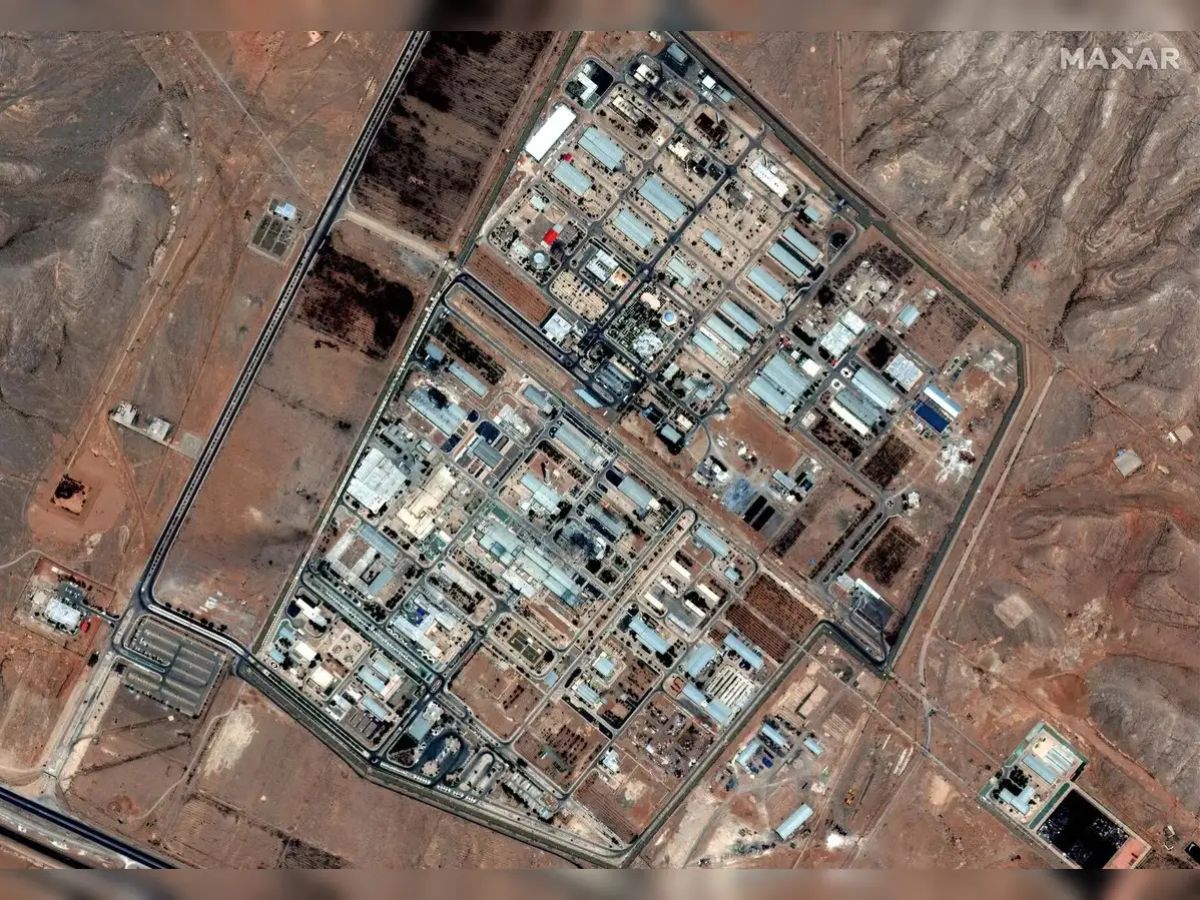

The International Atomic Energy Agency (IAEA) confirmed on Wednesday, June 18, that Israeli airstrikes hit two of Iran’s key nuclear centrifuge production sites. This official statement from the UN nuclear watchdog backed earlier claims made by the Israel Defense Forces (IDF), according to a report by CNBC TV.
The Tesa Karaj workshop and the Tehran Research Centre were the two targeted sites, both crucial to Iran’s nuclear development programme.
What Exactly Was Damaged?
According to the IAEA, the airstrikes caused serious destruction. At Karaj, two buildings were completely destroyed. These facilities were being used to produce parts for centrifuges, which are critical machines used to enrich uranium.
In Tehran, a building where advanced centrifuge rotors were being made and tested was also hit.
These rotors are central to building faster, more efficient centrifuges—equipment that can enrich uranium far beyond what is needed for peaceful energy purposes.
Israel Launched a Major Air Operation
The IDF said that over 50 fighter jets from the Israel Air Force took part in the coordinated mission on June 18.
According to the military’s statement on X (formerly Twitter), the airstrikes hit:
-
A facility that produces centrifuges capable of enriching uranium beyond civilian use
-
Sites that make parts for surface-to-surface missiles fired at Israel
-
A location involved in building surface-to-air missile components used to shoot down aircraft
The IDF described these facilities as key parts of Iran’s military and nuclear infrastructure.
Natanz Also Took a Direct Hit
The IAEA also gave an update on Natanz, one of Iran’s most important nuclear sites. While early reports said Natanz may have only been impacted indirectly, new high-resolution satellite images show that the underground enrichment halls were actually directly hit during the attacks.
This marks a serious blow to Iran’s uranium enrichment capability.
However, the IAEA noted that there was “no change to report” at other major Iranian nuclear facilities, such as those in Isfahan and Fordow.
IAEA Still Waiting to Inspect On-Site
Even though damage has been confirmed via satellite, the IAEA has not yet been allowed to visit the bombed sites in person. Since Israel began its airstrikes on June 13, inspectors have not been granted access for a direct assessment.
This limits the agency’s ability to fully verify the extent of the damage and understand what it means for Iran’s nuclear program moving forward.
Tensions Continue to Rise
These latest strikes and confirmations from the IAEA come at a time of extremely high tension between Israel and Iran. The two countries have exchanged sharp warnings, and military activity has escalated in recent weeks.
While Israel insists its actions are aimed at preventing Iran from developing a nuclear weapon, Iran maintains that its nuclear work is for peaceful purposes.
With talks stalled and airstrikes increasing, many fear the region is edging closer to a broader conflict—one that could have global consequences if diplomacy fails to bring both sides back to the negotiating table.
Also Read: Operation Rising Lion: Which Iranian Nuclear Sites Did Israel Target And Why?