
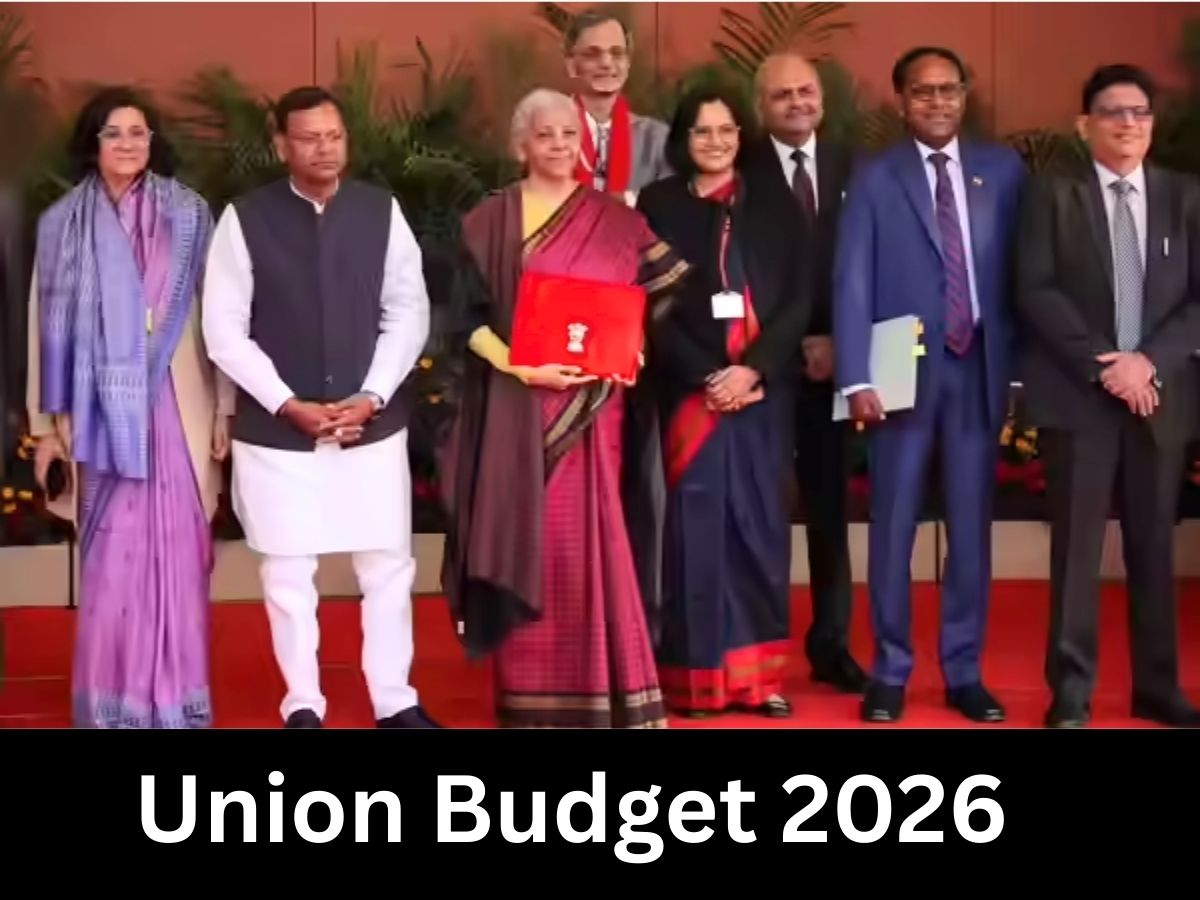

As Finance Minister Nirmala Sitharaman presents her record ninth consecutive Union Budget on February 1, 2026, a core group of senior bureaucrats has been working behind the scenes to frame India’s fiscal roadmap for 2026–27.
Amid global economic volatility, geopolitical tensions, and trade pressures, this team of top officials has played a crucial role in shaping policy priorities, tax measures, expenditure discipline, and reform direction for the Modi 3.0 government’s third full budget.
Here’s a closer look at the key officials who form the backbone of Budget 2026.
Anuradha Thakur: The Architect of the Budget Framework
As Economic Affairs Secretary, Anuradha Thakur leads the Budget Division and oversees the entire macroeconomic framework of the Union Budget. A 1994-batch IAS officer from Himachal Pradesh, she assumed charge on July 1, 2025, becoming the first woman to head this crucial department.
She is responsible for resource allocation, fiscal strategy, and coordination across ministries, making her the primary architect of Budget 2026-27.
Arvind Shrivastava: Steering Tax Policy and Revenue Strategy
Revenue Secretary Arvind Shrivastava heads the department that formulates tax proposals presented in Part B of the Budget Speech. His role covers both direct taxes such as income and corporate tax, and indirect taxes including GST and customs duties.
With previous experience as Joint Secretary (Budget) and a stint in the Prime Minister’s Office, Shrivastava is expected to focus on customs duty rationalisation and TDS reforms aimed at improving revenue mobilisation.
Vumlunmang Vualnam: Ensuring Fiscal Discipline in Spending
As Expenditure Secretary, Vumlunmang Vualnam acts as the guardian of government spending. He oversees subsidy rationalisation, implementation of central schemes, and monitors fiscal deficit targets.
His inputs ensure that expenditure priorities align with macroeconomic stability while maintaining efficient utilisation of public funds.
M Nagaraju: Driving Financial Inclusion and Banking Stability
Financial Services Secretary M Nagaraju supervises public sector banks, insurance companies, and pension institutions. His department plays a vital role in promoting credit growth, strengthening digital finance, and ensuring the financial health of state-owned financial institutions.
He also contributes to policies linked to social security and financial inclusion.
Arunish Chawla: Managing Disinvestment and Non-Tax Revenue
As Secretary of the Department of Investment and Public Asset Management (DIPAM), Arunish Chawla is responsible for disinvestment and privatisation targets in Budget 2026–27.
He oversees stake sales in Central Public Sector Enterprises (CPSEs), supporting the government’s non-tax revenue goals and fiscal consolidation plans.
K Moses Chalai: Monitoring CPSE Performance and Asset Monetisation
Department of Public Enterprises Secretary K Moses Chalai monitors capital expenditure by CPSEs and ensures effective utilisation of allocated funds. His department also tracks asset monetisation and financial performance of state-owned enterprises to align them with national economic priorities.
V Anantha Nageswaran: Providing the Macroeconomic Blueprint
Chief Economic Adviser V Anantha Nageswaran provides the analytical backbone for the Budget. His office forecasts GDP growth, assesses sectoral trends, and evaluates global risks.
He advises the Finance Minister on fiscal policy, economic reforms, and long-term strategy, ensuring data-driven decision-making.
Budget 2026 Framed Amid Global and Domestic Challenges
This year’s Budget comes at a time when India faces a complex global environment marked by geopolitical tensions, economic uncertainty, and trade pressures, particularly from higher US tariffs imposed last year.
At the same time, officials point to steady domestic growth as a strong foundation for fiscal planning under the Modi 3.0 government.
Economic Survey 2025–26 Sets the Tone
Ahead of the Budget, the Economic Survey tabled on January 29 projected India’s GDP growth between 6.8% and 7.2% for FY27. The Survey provides a comprehensive assessment of India’s macroeconomic health and serves as the analytical base for budgetary decisions.
It outlines the government’s broader roadmap and sets the stage for policy measures announced in the Budget.
As the nation watches the Union Budget unfold, this team of senior bureaucrats remains central to shaping India’s economic vision, balancing reform, fiscal prudence, and inclusive growth for the year ahead.
Sofia Babu Chacko is a journalist with over five years of experience covering Indian politics, crime, human rights, gender issues, and stories about marginalized communities. She believes that every voice matters, and journalism has a vital role to play in amplifying those voices. Sofia is committed to creating impact and shedding light on stories that truly matter. Beyond her work in the newsroom, she is also a music enthusiast who enjoys singing.




