
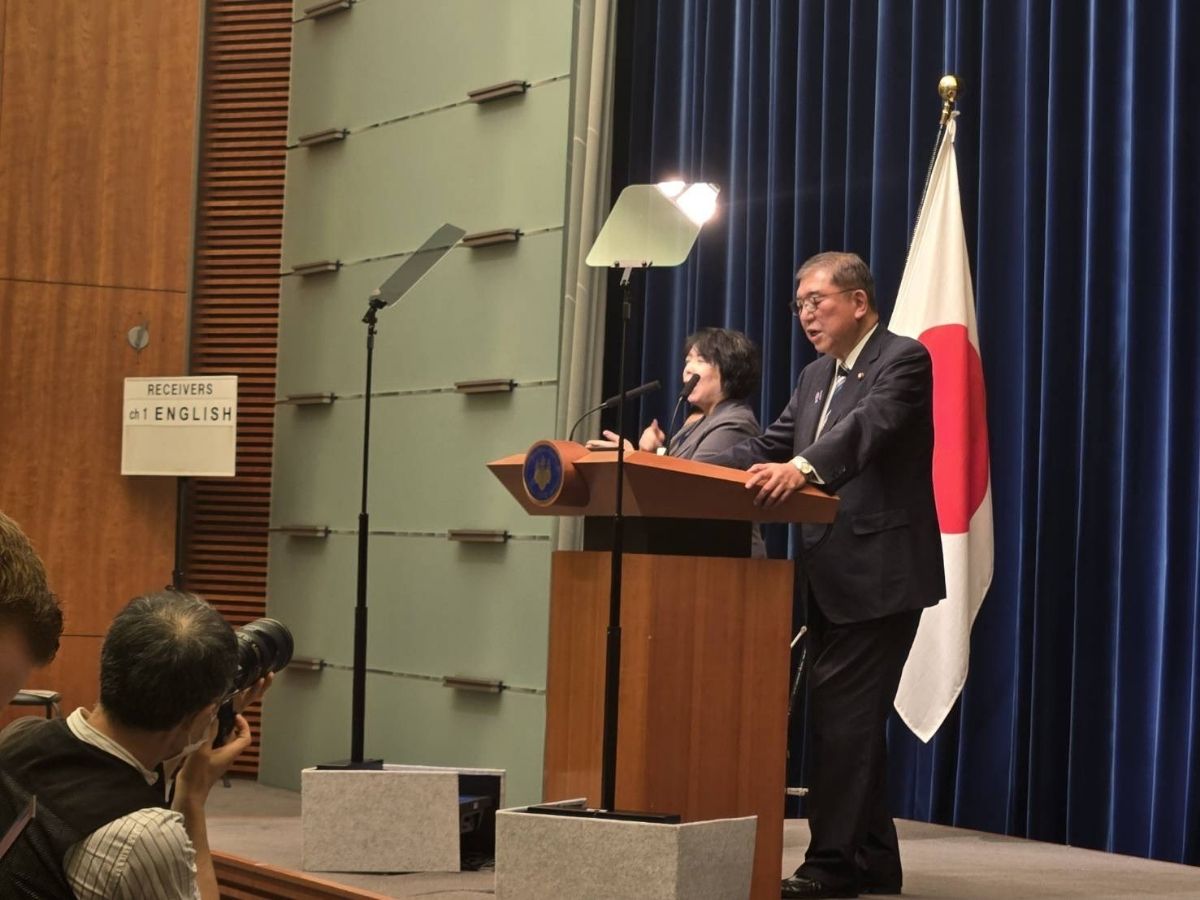

Japanese Prime Minister Ishiba Shigeru announced his resignation on Sunday, following major election losses for his party, news agency Reuters reported. Given the latest development, here’s what we know about how Japan will choose its next leader, especially amid shifting political dynamics.
Why Ishiba Resigned
NHK World first reported that Ishiba – who has been at the helm since last year – decided to step down after his Liberal Democratic Party (LDP)-led coalition lost its majority in both houses of parliament. Reports suggest increasing costs of living and voter frustration played a key role in the electoral setback.
Despite the political turbulence, Ishiba’s government recently finalised details of a trade deal with the US in what analysts believed showed that key policies continued even amid uncertainty.
Picking a New Party President: The First Step
The immediate task for the LDP, the report said, is to select a new party president who will likely become Japan’s next prime minister, even though it is no longer guaranteed.
In the last leadership race in September 2024, candidates needed at least 20 nominations from party lawmakers to qualify, the report further said. Ishiba won after a crowded field of nine candidates, ultimately taking victory in a run-off.
This time, the candidates will engage in debates and campaign across Japan, hoping to win support from both lawmakers and other party members.
How the LDP Leadership Vote Works
The party’s election system combines votes from LDP lawmakers and the rank-and-file party members.
Each lawmaker casts one vote, while the total votes from regular members are distributed evenly. To win in the first round, a candidate must secure a simple majority. If no one does, a run-off takes place between the top two contenders.
In the second round, lawmakers still vote one each, but the rank-and-file vote shrinks to 47 votes – one for each prefecture. If the two candidates end up in a tie, the winner is decided by lot method.
Parliamentary Confirmation: Becoming PM Is Not Automatic
Given that the LDP no longer holds a majority in either house, the party’s new leader is not guaranteed to become prime minister, observers say.
Historically, the lower house votes first on who should lead. Candidate(s) can be anyone from the chamber, including opposition leaders. A simple majority is needed to win. If no majority emerges, a subsequent run-off is organised between the top two candidates.
Then the upper house votes, though only members from the lower house are eligible to assume the role of a prime minister.
If the two houses disagree, the lower house decision prevails – this happened in 2008 when the lower house picked the LDP candidate but the upper house backed an opposition figure.
After becoming prime minister, the new leader may call a snap general election to try and secure a national mandate amid the fragile parliamentary balance.




