
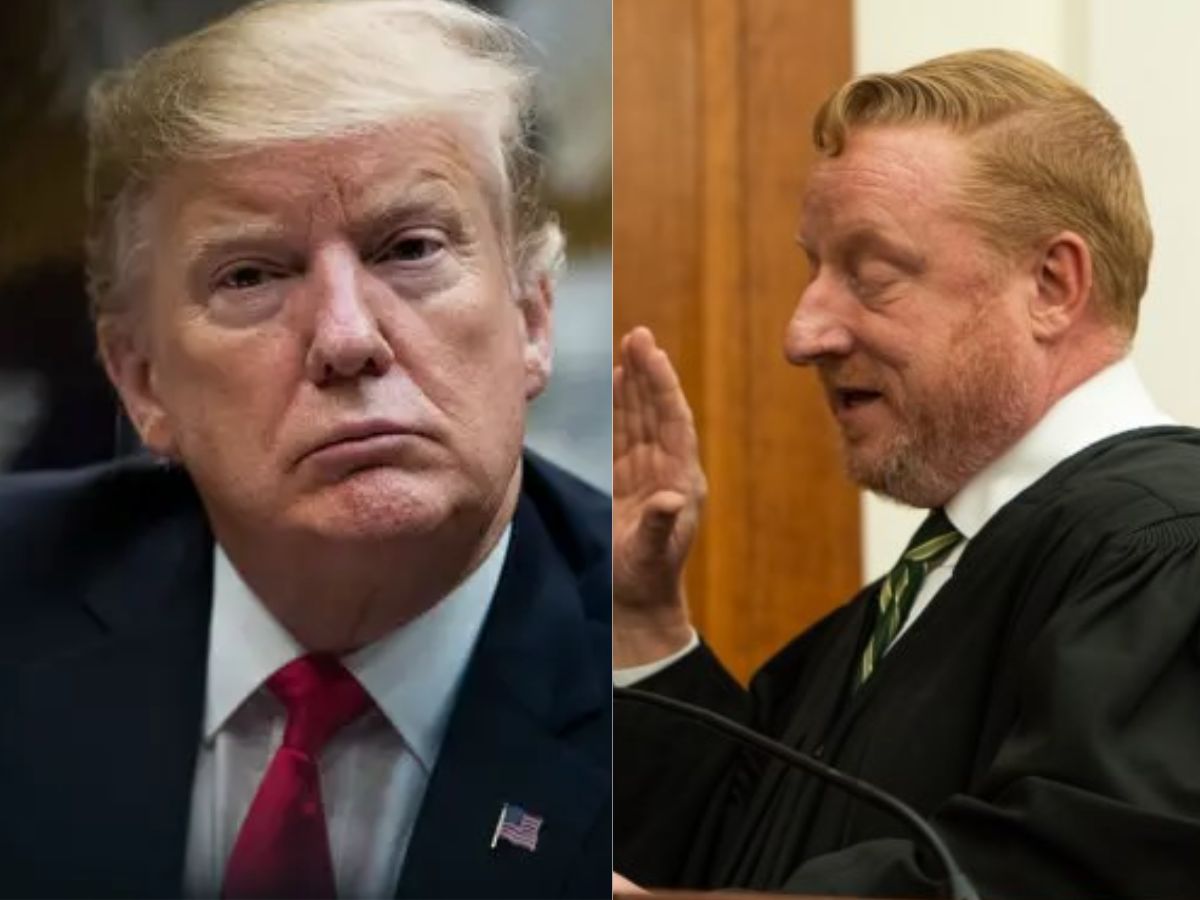

President Donald Trump’s executive order aimed at ending US birthright citizenship for certain children born in the United States faces another challenge as a federal judge in New Hampshire has temporarily blocked. The ruling, delivered on July 10 by Judge Joseph LaPlante, prevents the Trump’s executive order from taking effect while its legality is reviewed in the US courts.
BREAKING: Judge Joseph Laplante BLOCKS Trump’s executive order ending birthright citizenship DESPITE Supreme Court ruling restricting the ability of judges to block Trump’s policies. pic.twitter.com/w3ViXhkPTJ
— Libs of TikTok (@libsoftiktok) July 10, 2025
Court Gives Donald Trump’s Adminstration 7 Days To Challenge US Birthright Citizenship Ruling
Judge LaPlante announced he would certify a class-action lawsuit on behalf of all children impacted by the order. He also issued a temporary injunction, ruling that allowing the Trump administration to proceed with the policy would cause “irreparable harm” to children who would be denied US citizenship.
Also Read: Donald Trump Picks Sean Duffy To Lead NASA, Dumps Elon Musk Recommended Jared Isaacman
LaPlante gave the Trump administration seven days to challenge his decision in the federal appeals court. If the appeals court does not intervene, his ruling will take effect next week—just ahead of July 27, when Trump’s executive order is scheduled to become active in 28 states. These states, led by Republican attorneys general, have chosen not to challenge the order in court.
What Is The Current Status of US Birthright Citizenship?
Currently children born on US automatically receive citizenship, regardless of their parents’ legal status. This principle is running for over 150 years with certain limited exceptions, such as children born to foreign diplomats.
The New Hampshire court ruling ensures that, for the time being, children born to immigrant parents in the United States continue to receive citizenship and allied benifts to it.
However, legal experts and immigrant advocates caution that this protection is only temporary and can be taken away if the executive order is not taken down.
Trump administration has repeatedly said that it remains committed to ending automatic citizenship for some children born to immigrant parents in US.
Donald Trump’s Executive Order On US Birthright Citizenship?
After coming back to White House House for his seccond term, President Trump signed the US birthright citizenship executive order within hours, calling it a “big one.”If courts do not strike it down, it would effectively end a constitutional right that has been a cornerstone of US law for over hundred years.
The executive order faced legal challenges in supreme cout as wells as federal courts however, the final decision is yet to come.
Last month, Supreme Court struck down the nationwide injunctions that had previously blocked the executive order leaving many immigrant families in a state of uncertainty.
Impact Of US Birthright Citizenship Executive Order
The executive order, titled “Protecting the Meaning and Value of American Citizenship,” seeks to exclude two groups of newborns from receiving US birthright citizenship.
First, the infants born to a mother who is unlawfully present in US and a father who is neither a US citizen nor a permanent resident of the country. Second, the infants born to a mother who is in the US on a temporary legal status And a father who is not a US citizen or permanent resident of the country.
In effect, the executive order would affect not only undocumented US immigrants but also people who are legally in the country for a temporary period.
Also Read: ICE Raids Rock Camarillo: Cannabis Workers Detained, Clashes Erupt With Protesters | VIDEO
Zubair Amin is a Senior Journalist at NewsX with over seven years of experience in reporting and editorial work. He has written for leading national and international publications, including Foreign Policy Magazine, Al Jazeera, The Economic Times, The Indian Express, The Wire, Article 14, Mongabay, News9, among others. His primary focus is on international affairs, with a strong interest in US politics and policy. He also writes on West Asia, Indian polity, and constitutional issues. Zubair tweets at zubaiyr.amin




