

The Directorate General of Civil Aviation (DGCA) has taken swift and serious action against three senior Air India officials for repeated violations in flight crew scheduling.
The airline is accused of neglecting critical safety protocols, including assigning unlicensed or insufficiently rested crew members to flights—a discovery that emerged following an internal review prompted by a systems transition.
Internal Audit Reveals Startling Oversight
Air India’s own records revealed that crew members were rostered for flights without fulfilling basic regulatory requirements.
These included current licenses, sufficient rest hours, and mandatory recency standards. The issue became apparent after the airline transitioned from the ARMS system to a new platform—CAE Flight and Crew Management System—exposing multiple scheduling flaws during the changeover.
Top Officials Held Accountable
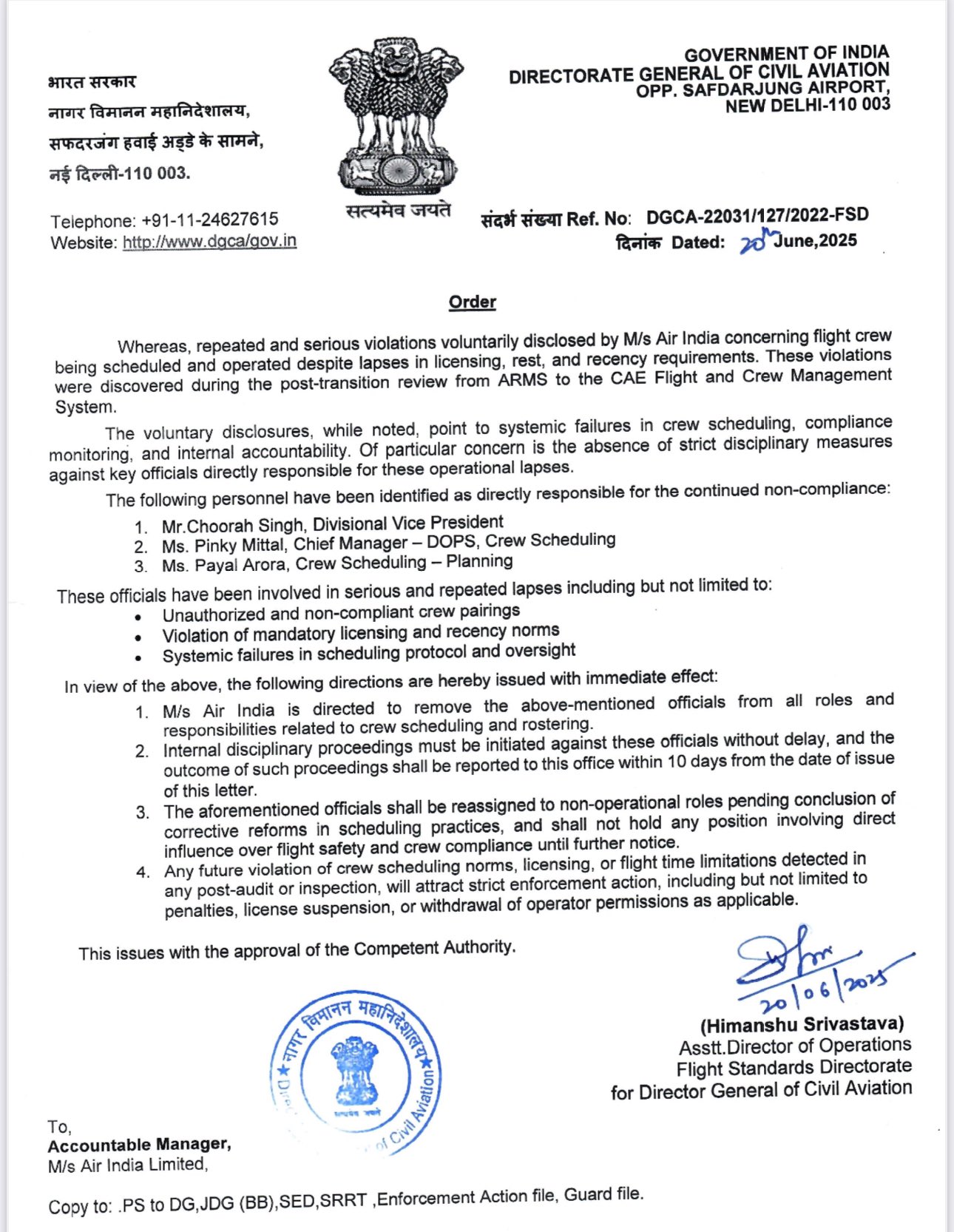
The DGCA’s investigation has identified three key officials responsible for the irregularities: Choorah Singh (Divisional Vice President), Pinky Mittal (Chief Manager of Crew Scheduling), and Payal Arora (Crew Scheduling – Planning).
They have been accused of enabling non-compliant crew pairings that posed serious risks to flight safety.
On June 20, the aviation watchdog ordered all three officials to be immediately removed from roles related to crew scheduling. The DGCA also directed Air India to initiate internal disciplinary proceedings, with a detailed report due within 10 days.
These individuals will be reassigned to non-operational roles until the airline institutes systemic reforms.
Grounded from Safety-Related Duties
Until further notice, the suspended officials are barred from involvement in any activity that could influence flight safety or crew compliance. The DGCA emphasized that their future roles must be entirely separate from operational oversight.
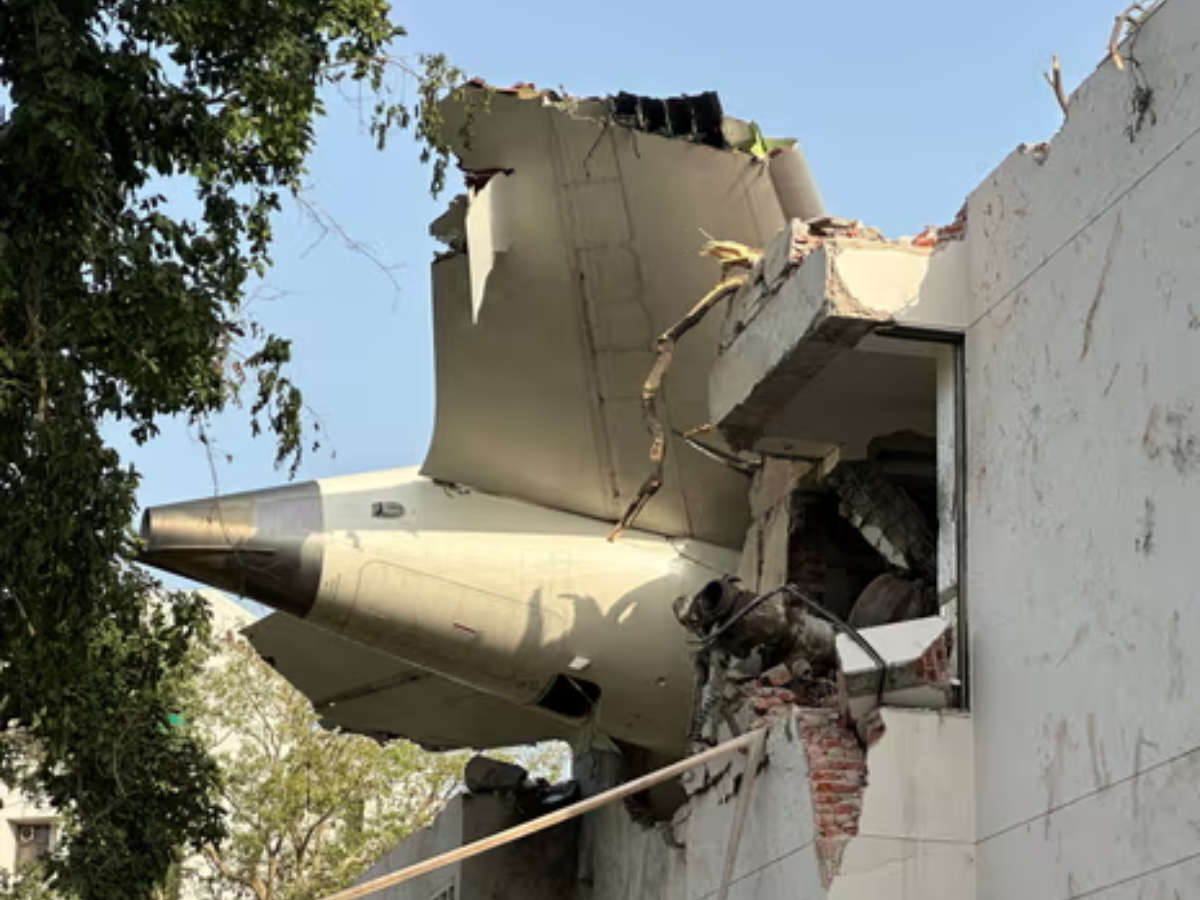
The timing of the enforcement action is notable, coming just days after the fatal crash of Air India Flight 171 in Ahmedabad, which claimed 241 lives. Although unrelated to the incident, the regulatory crackdown reflects growing scrutiny of Air India’s internal practices in light of the tragedy.
In its final remarks, the DGCA made it clear: any future violation—whether in licensing, crew scheduling, or flight time limitations—will attract harsh consequences, including fines, license suspensions, or even revocation of Air India’s operating rights.
With safety concerns mounting and public trust on the line, the latest revelations mark a pivotal moment for Air India. The airline now faces the dual challenge of managing fallout from a national tragedy and overhauling flawed operational systems under the strict gaze of the DGCA.




