
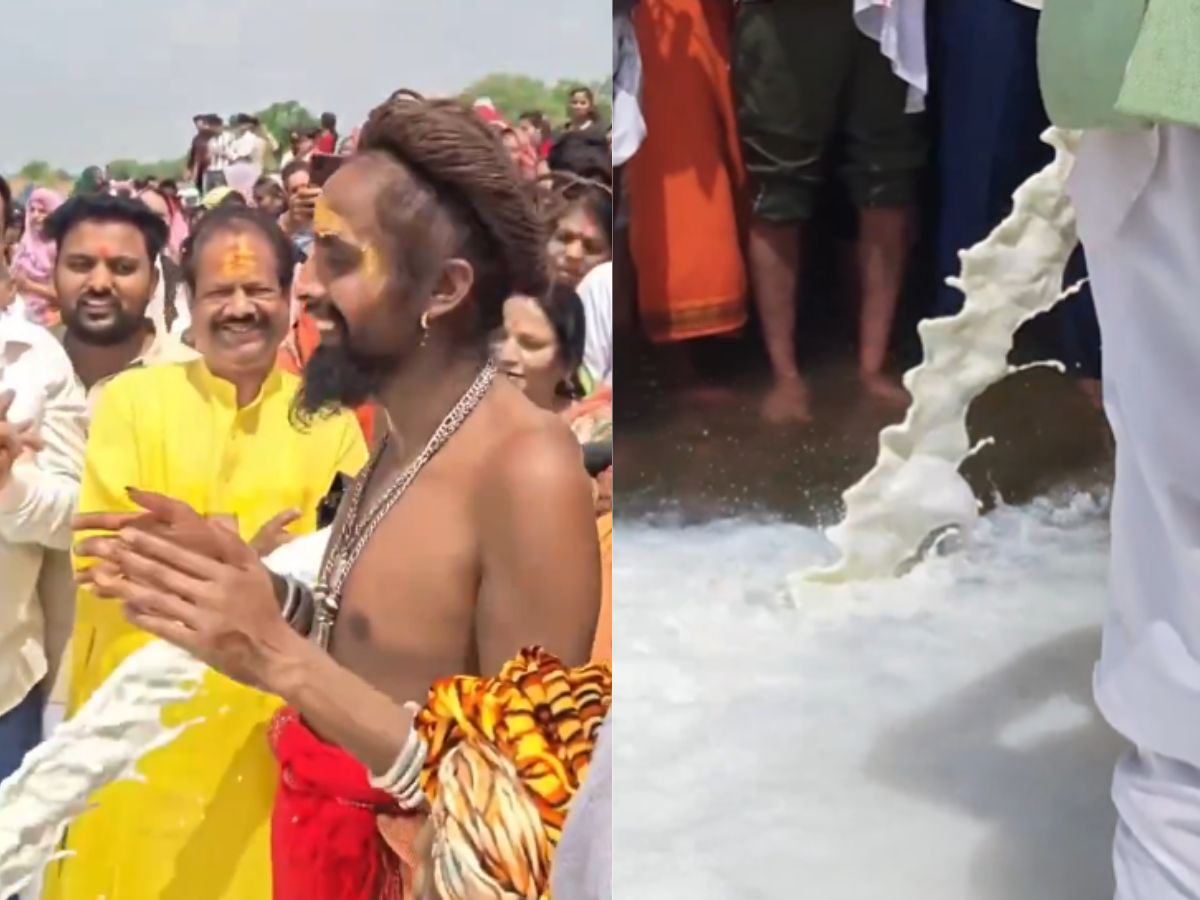

The story, which has become a viral sensation, shows its power to divide people through social media platforms because it describes how a tanker truck released 11000 liters of milk into the Narmada River.
People performed the act, which some observers described as a major religious sacrifice, to fulfill their spiritual vows because they wanted the river’s fish to experience the pleasure of “drinking milk.” The devotees saw white waves that create increasing conflicts.
Dumping such an enormous volume of milk into a freshwater system has ecological consequences that extend beyond visible effects. When milk exists in high concentrations, its organic nature turns into a pollutant that bacteria consume to decompose it, thus creating an environment that prevents marine creatures from accessing oxygen.
The human impact of this situation creates a stronger emotional response than any other aspect. The country faces a nutritional crisis because its children sleep without food while milk remains an expensive item for families who work in agriculture and labor.
If the people had dedicated 11 liters of their offering as a sacred act while distributing the remaining 10989 liters to those in need, their spiritual worth would have increased through the joy of those who received help.
Ecological Consequences of Milk Dumping in Narmada River
The river ecosystem experiences a biological disaster when 11,000 liters of milk enter its waters because this process results in nutrient loading. The process of milk decomposition uses up water and oxygen, which scientists measure through the biochemical oxygen demand (BOD) method.
Sad for the marine life but more sad for the kids in India who sleep without getting milk in the night…
What’s the use of this? pic.twitter.com/rCCvV8CIKG
— Mohammed Futurewala (@MFuturewala) April 9, 2026
The sudden increase in BOD levels leads to an oxygen shortage that fish and other aquatic organisms need for their survival, resulting in the death of entire populations. The fats and proteins present in milk create a water surface film that blocks fish gills and prevents them from breathing.
The natural gift to nature results in an environmental toxin that disrupts the Narmada River ecosystem’s delicate biodiversity balance.
Ethical Redistribution Of Milk Resources
The incident demonstrates that people experience severe nutritional inequalities between different social groups. The volume of milk wasted could have provided a daily serving to thousands of children in rural communities where stunting and anemia are prevalent.
Modern society requires people to demonstrate their dedication through social investment instead of material sacrifice. Religious acts enable communities to tackle systemic hunger problems by distributing resources to laborers and impoverished farmers while preserving their traditional practices.
The ritual gains greater significance as a compassionate act through which 99% of the offerings assist human welfare while maintaining the vow’s sacred nature.
A recent media graduate, Bhumi Vashisht is currently making a significant contribution as a committed content writer. She brings new ideas to the media sector and is an expert at creating strategic content and captivating tales, having working in the field from past four months.




