
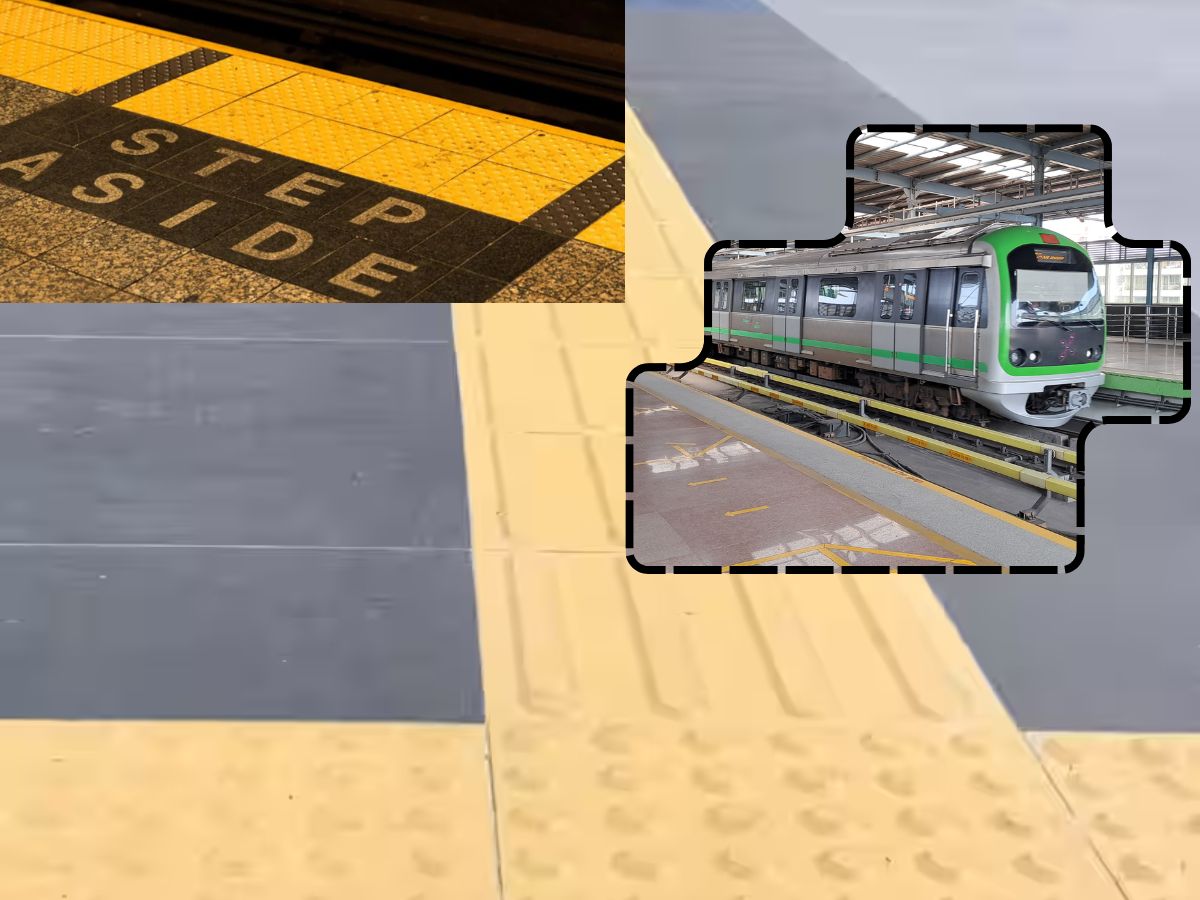

Yellow tiles in the metro stations are not ornamental; they are a safety and navigation system that mainly depends on the visually impaired passengers.
What Are These Yellow Tiles
The tactile tiles or tactile paving are the yellow routes you observe on the platforms and sidewalks. Their raised bumps or lines create a texture that can be felt underfoot or with a white cane, thus helping people navigate without relying on sight entirely.
Safety And Warning Role
Tiles with raised circular bumps are mostly positioned at the edges of platforms, stairs, escalators, and curbs to indicate “danger” or “stop and be careful.” When a visually impaired commuter touches these bumps, it signifies that they are near a dropping spot or hazard and thus should reduce their pace or be reoriented.
Direction And Guidance
The tiles with long, straight raised lines serve as guides leading the commuters through safe paths to exits, lifts, ticket counters, or interchange corridors. Following this line with a cane or by touch under shoes enables a sight-impaired person to navigate independently through complex stations.
Why Always Yellow?
The yellow colour is a choice because it creates a very strong visual contrast with most of the floor colours and is also easier for a lot of people with partial sight to detect. This bright hue benefits even the fully sighted commuters to identify the safe standing areas and to keep away from the edge of the platform.
A Symbol Of Accessibility
These tiles began in Japan in the 1960s and have become the norm in subways across the globe as part of disability-access laws and guidelines. Besides the function, they also serve as an indication that public transport needs to be inclusive, thus providing independence and dignity to people with visual impairments.
Shubhi is a seasoned content writer with 6 years of experience in digital media. Specializing in news, lifestyle, health, sports, space, optical illusions, and trending topics, she crafts engaging, SEO-friendly content that informs and captivates readers. Passionate about storytelling, Shubhi blends accuracy with creativity to deliver impactful articles across diverse domains.




