
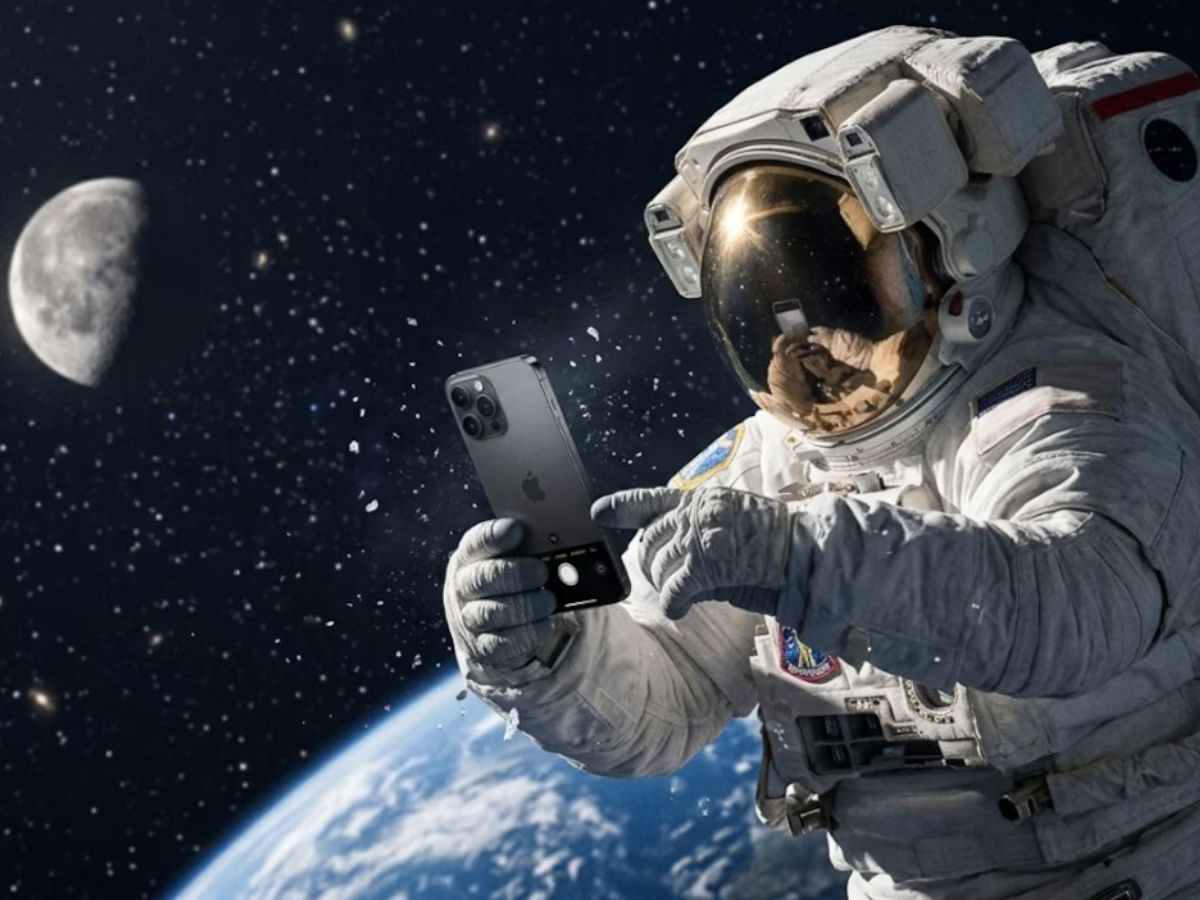

In a quiet but significant shift, NASA has allowed astronauts on Artemis II to carry iPhones, marking the first time personal smartphones are being taken on a crewed mission beyond Earth’s orbit. The mission itself is historic, as it sends humans into deep space for the first time in more than 50 years.
iPhones on Board, But With Strict Limits
For the first time, astronauts have been given limited freedom to document their journey using personal devices. Unlike earlier missions that depended entirely on fixed, mission-controlled cameras, the crew can now capture photos and short videos themselves.
However, the iPhones are not being used like regular phones. They remain in airplane mode throughout the mission and cannot be used for calls, messages, or internet access. Before liftoff at Kennedy Space Center, the devices were securely fitted into the astronauts’ suits and passed through extensive safety checks to ensure they do not interfere with navigation, communication, or flight systems.
Officials say the goal is simple: allow astronauts to record meaningful moments and share them with family and friends, while also giving people on Earth a more personal look at the mission.
Policy Shift Reflects Changing Approach
The move signals a broader shift in how space missions are experienced and shared. NASA leadership, including Administrator Jared Isaacman, has emphasised the importance of making space exploration more relatable.
Instead of relying only on official visuals, the agency now wants to include moments captured directly by astronauts. While similar devices have been used on private spaceflights, this is the first time NASA has allowed them on a crewed mission beyond low Earth orbit.
First Deep Space Mission Since Apollo Era
The Artemis II mission is being carried out by four astronauts: Reid Wiseman, Victor Glover, Christina Koch, and Jeremy Hansen.
They are the first humans to travel beyond Earth’s orbit since the Apollo Program in 1972. The mission will last 10 days, during which the crew will travel nearly 685,000 miles, looping around the Moon before returning to Earth.
Flying aboard the Space Launch System and Orion spacecraft, the astronauts will test all major systems, carry out trajectory correction manoeuvres, and practise manual navigation. They will also conduct experiments related to crew health and deep-space conditions.
Key Step Towards Future Moon Missions
Unlike earlier lunar missions, Artemis II will not land on the Moon. It is a test flight designed to check whether NASA’s latest systems are ready for future missions, including those aimed at landing humans on the lunar surface again.
The findings from this mission will play a crucial role in shaping upcoming plans and long-term goals, including missions to Mars.
A Small Device, A Big Shift
While carrying iPhones may seem like a small addition, it reflects a bigger change in how space missions are approached. Beyond engineering milestones, there is now a clear focus on how these journeys are recorded and shared.
By allowing astronauts to capture their own experiences, NASA is opening a new window into life in deep space. For millions watching, it means seeing space not just through official footage, but through the eyes of the crew themselves.
ALSO READ: Artemis II Astronauts Shares Stunning Image Of Earth From Deep Space; NASA Says ‘That’s Us!’




