
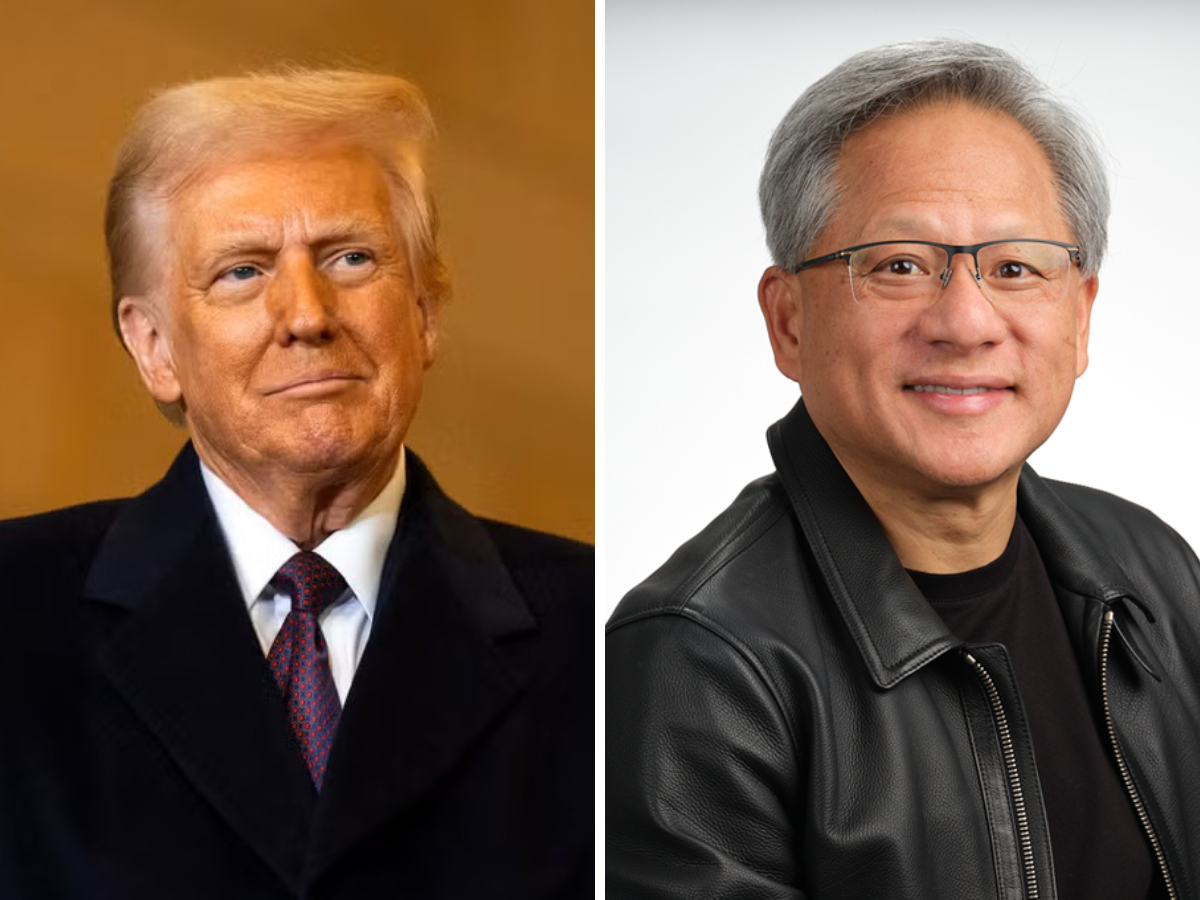

Jensen Huang, the CEO of Nvidia, is set to meet with former US President Donald Trump a day before his scheduled visit to China. This meeting holds significant importance, as Nvidia recently surpassed a $4 trillion valuation, making history as one of the most valuable companies on Wall Street.
Nvidia’s Huang Has Criticized Trump Over Export Restrictions
The topics of discussion between Huang and Trump have not been publicly announced. However, the meeting comes amid growing tensions between the US and China over tariffs. The ongoing trade war has significantly impacted the export of Nvidia’s AI chips to China.
Previously, Huang has called U.S. export controls a failure. He made this statement to the media during the Computex show in Taipei in May 2025.
He said, “The local companies are very, very talented and very determined, and the export control gave them the spirit, the energy, and the government support to accelerate their development. I think, all in all, the export control was a failure,” he added.
Financial Impact of Export Curbs on Nvidia
In the first quarter of this year, export limitations have had a significant financial impact on Nvidia. The company lost billions of dollars in sales as a consequence. Additionally, Nvidia has since removed China from its revenue and profit forecasts and expects further losses in sales for the second quarter.
Also Read: Nvidia Becomes First Company To Hit $4 Trillion Valuation
Ankur Mishra is a journalist who covers an extensive range of news, from business, stock markets, IPOs to geopolitics, world affairs, international crises, and general news. With over a decade of experience in the business domain, Ankur has been associated with some of the reputed media brands. Through a sharp eye on global marketplaces along with deep insights and analysis of business strategies, Ankur brings simplicity to the complex economic matrix to decode market trends and empower people.
He is committed to entrenched data, facts, research, solutions, and a dedication to value-based journalism. He has covered trade tariff wars, international alliances, corporate policies, government initiatives, regulatory developments, along with micro- and macroeconomic shifts impacting global fiscal dynamics.




