
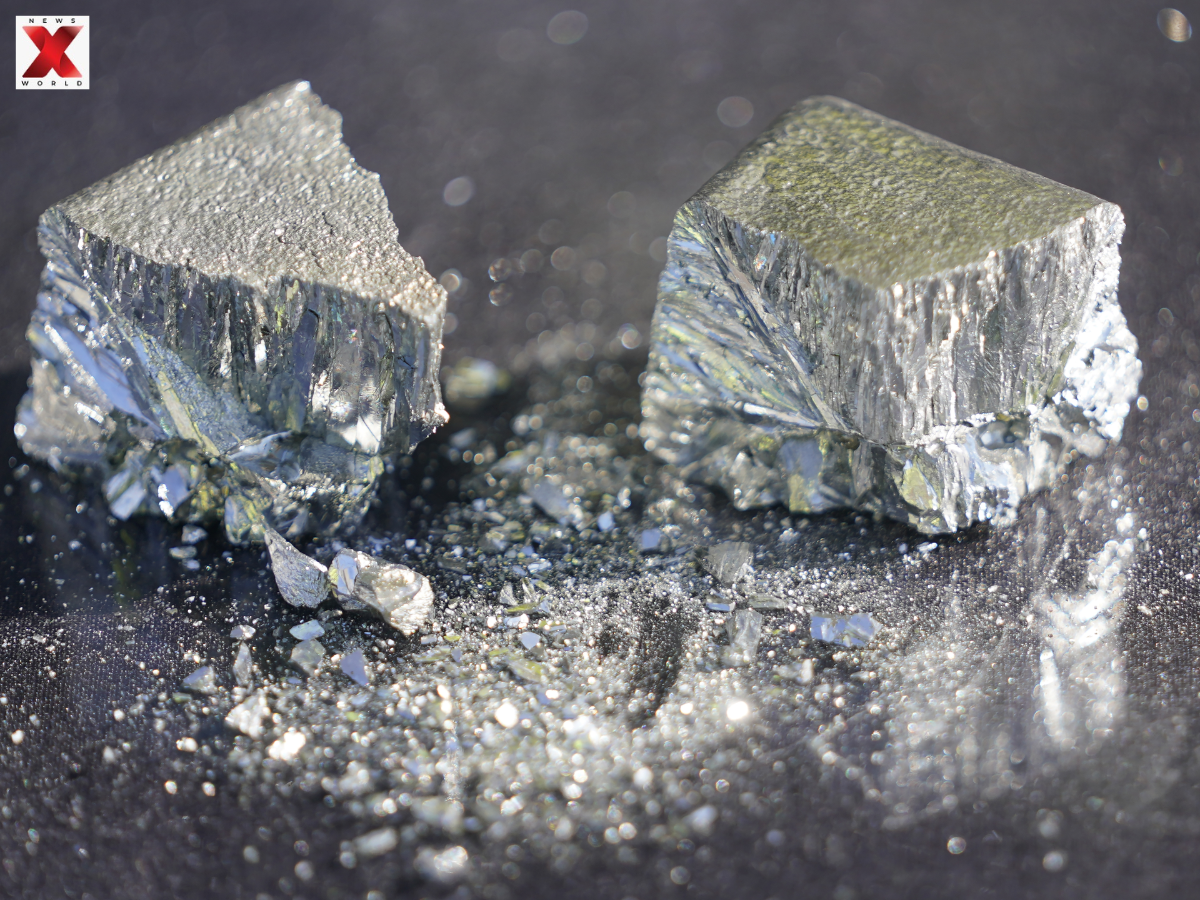

A near-monopoly is dominated by China in the production of rare earth magnets. Beijing dominates about 90 percent of the world market, which has become geopolitical leverage to the dominance of Beijing.
India has now launched a new scheme. The proposal of the government amounting to Rs 7, 280 crore is timed when the tightening export standards of rare earths by China are likely to increase the supply pressure to Indian industries.
This project seeks to create a local supply chain that would convert NdPr (neodymium–praseodymium) oxide to high-performance sintered NdFeB (neodymium–iron–boron) magnets, which are utilized in large amounts in electric vehicles (EVs), wind turbines, defence, consumer electronics and medical imaging equipment.
According to the IEA, China produces around 60 percent of the rare earths, and has 92 percent of the world processing. It has frequently utilized the minerals as a bargaining instrument on the trade issues.
China announced additional restrictions on rare earths sales in the early part of October, only weeks before Trump was to meet with Chinese leader Xi Jinping, further filling the new conflict between the two nations.
What are rare earth minerals?
The rare earth minerals, most of them being named like prescription drugs (cerium, promethium, terbium), are not that rare.
One of the NATO Review videos was named Rare earths: the new oil, which said, “Rare they aren’t. Probably, you would find some rare earth, were you to take a shovel and dig a hole in your backyard.
What is uncommon, the video pointed out, is the presence of these elements in the amount needed to produce the devices that the elements are contained in: vehicles, batteries, consumer electronics, etc.
The video was produced in 2011. However, 14 years later, to most of us, we only have now discovered about these fundamental ingredients, the principal components in the current technology and clean-energy use, and in defense and aerospace systems, including jet engines, radar, and night vision.
They are not particularly abundant, but they are hard to extract and it is an expensive process and the mining process emits toxic chemicals into the environment.
The consumer electronics manufacturing, medical equipment supplies like MRI scanners, government defense initiatives, and AI are some of the sectors that rely on the rare earth minerals, which will take almost 20 years to open a new mine.
An analysis of rare earth minerals by the Bipartisan Policy Center confirms that these minerals are a national security issue given the vast number of applications. The problem: Most of the rare earth elements are imported- most of them being Chinese.
The BPC wrote that it is vital to onshore the supply chain of critical minerals due to its national and energy security issues, especially when taking its application in energy and defense. High-tech applications including F-35 fighter jets and Virginia-class submarines are made today by rare earth minerals that make them lighter, faster, and more useful, such as batteries, magnets, microwaves, lasers, and others.
One of the examples of the important dependence of the government on rare earth minerals, Las Vegas based MP Materials, which runs the only rare earth mine in the U.S., and the second-largest in the world, entered into a public-private partnership with the Department of Defense in July 2025.
The move by the U.S government to become a large stakeholder in a critical minerals firm was one deal that government officials claimed would be the start of many more deals.
Rare earths are divided into two groups:
Light Rare Earth Elements (LREEs).
Cerium
Lanthanum
Neodymium
Praseodymium
Samarium
Heavy Rare Earth Elements (HREEs).
Dysprosium
Terbium
Ytterbium
Lutetium
Europium
Gadolinium
(and others)
Where are rare earth minerals found?
Even though there are numerous countries that are present with rare earth deposits, few of them control the world production.
China -Largest Manufacturer.
Owns the greatest portion of world production and processing facility.
Large mining area: Bayan Obo mine, located in Inner Mongolia – the largest rare earth mine in the world.
The fact that China has strong control of the state provides her with strategic control over the supply chain of REE.
United States
Field of primary source: Mountain Pass mine in California.
It was formerly the largest producer in the world but it is now spreading its operations to avoid over-dependence on China.
Australia
It is one of the biggest non-Chinese suppliers.
Key projects include:
Mt Weld mine was run by Lynas Rare Earths.
One of the largest processors of rare earth concentrates.
Myanmar (Burma)
Considerable heavy rare earths source.
Most of the operations are small scale and hazardous to the environment yet they contribute a significant percentage of the imports in China.
India
Carries huge deposits of monazite with rare earths.
Key mining areas include:
Kerala
Tamil Nadu
Odisha
India is looking to increase domestic processing to enhance the security in supply.
Russia
Has large reserves and is to produce more especially because of the geopolitical necessity to lessen reliance on imports.
Brazil
Is a large producer of rare earth minerals particularly monazite sands, but none have been extracted.
Vietnam
It has one of the largest reserves of rare earth in the world.
Expansion of production gradually by international joints.
Other notable countries
Greenland: Greenland is an emerging exploration centre.
Canada- various deposits being developed.
South Africa -abundant in monazite.
Thailand, Malaysia- smaller scale production.




