
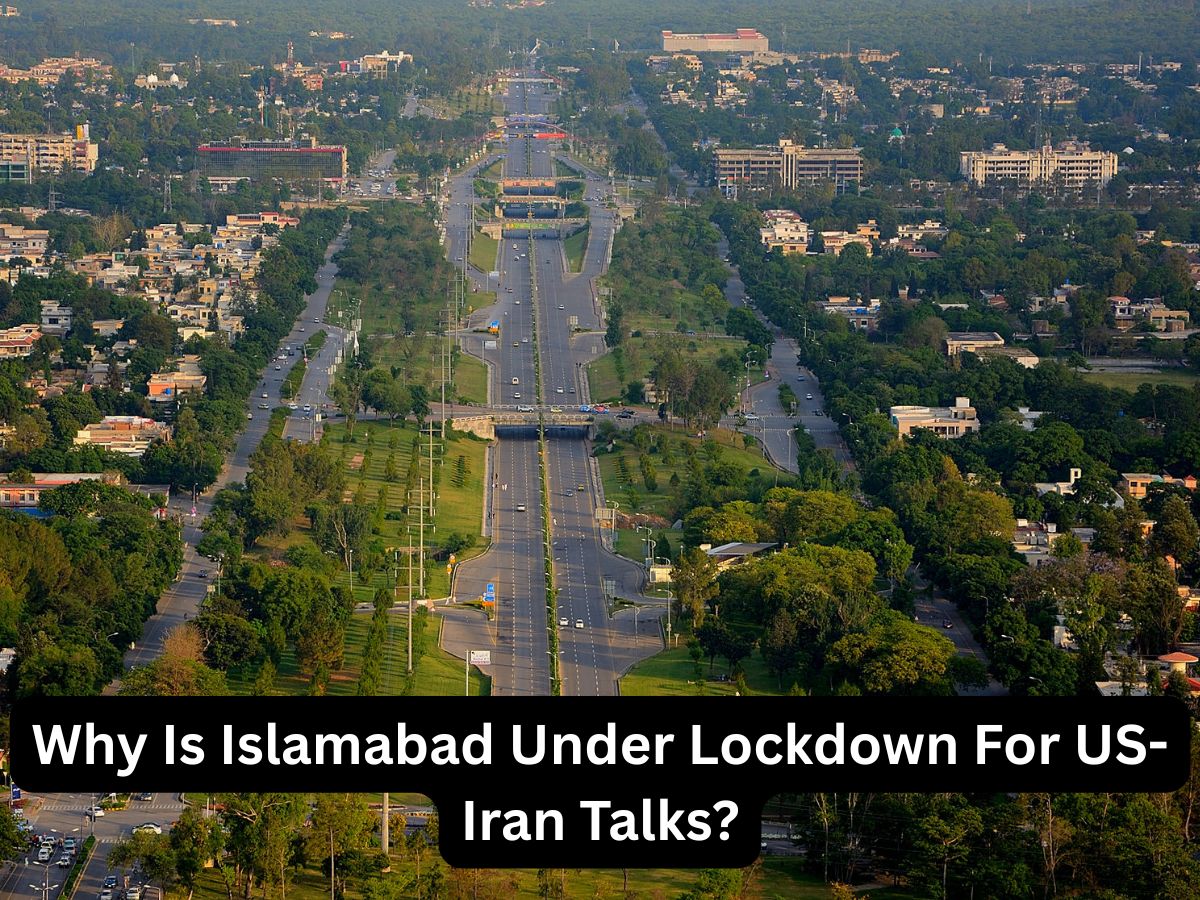

Pakistan has put Islamabad under a high security lockdown because the United States and Iran are also having vital ceasefire talks that will determine a long term peace framework in the Middle East. The talks are timely, and a two week long ceasefire is a delicate compromise following over a month of fierce fighting. Security has been increased in the capital to guarantee continuous diplomatic activity, protect any visiting delegations, and any kind of disruption in what is being termed as one of the most closely monitored peace initiatives in the past years.
Why Is Islamabad Under Lockdown Amid US-Iran Peace Talks? Real Reason Explained
The war intensified allegedly following a military operation adopted by the US and Israel on February 28 that hit Iranian targets, including top leadership posts, leading to a sharp escalation in the region. Iran has since been accused of retaliating with attacks in various Gulf countries, UAE, Saudi Arabia, Kuwait, Bahrain, and Israel, as tensions escalated in the region. The rise had the United States and Iran on the brink of indirect confrontations threatening the stability of the wider region, and the back channel diplomacy was ultimately driven back into a form by the growing international concern. It would subsequently agree to a temporary ceasefire weeks later after escalating pressure and allegedly after threats and diplomatic talks between the US President Donald Trump and Iranian leaders over strategic hot spots like the Strait of Hormuz. The truce, which came shortly before a deadline, set up a 15 day ceasefire to facilitate negotiations. The truce is however very delicate with both parties still harboring very strong mistrust and accusing each other of breaches and aggression, casting uncertainty on whether peace can ever be lasting.
Role Of Pakistan In US-Iran Peace Talks
The hosting of the talks in Pakistan has put Islamabad in the limelight of international diplomatic talks. Security has been boosted much especially in the Red Zone where road closures, diversions and restrictions on movement of people have been enforced. There has also been a two day holiday that has been declared as temporary to promote the easy flow of foreign delegations. The civil and military leaders of Pakistan have been working together to achieve maximum security and international delegations of the United States and Iran are likely to hold a discussion that will include sanctions relief, assurances to regional security, and nuclear and missile programs of Iran. Nonetheless, the diplomatic momentum does not overrule the heavy mistrust that is still a characteristic of the US-Iran relations, both parties being wary of promises that are possibly made under coercion. It has been reported that Iran is working on a 10 point plan which includes the lifting of sanctions, security assurances and the establishment of maritime passage, whereas the US delegation is working on a wider regional stability infrastructure. The world is keenly looking at the outcome of these talks as the success or failure of these talks can greatly affect the security of the Middle East, energy market and global geopolitical alliances.




