
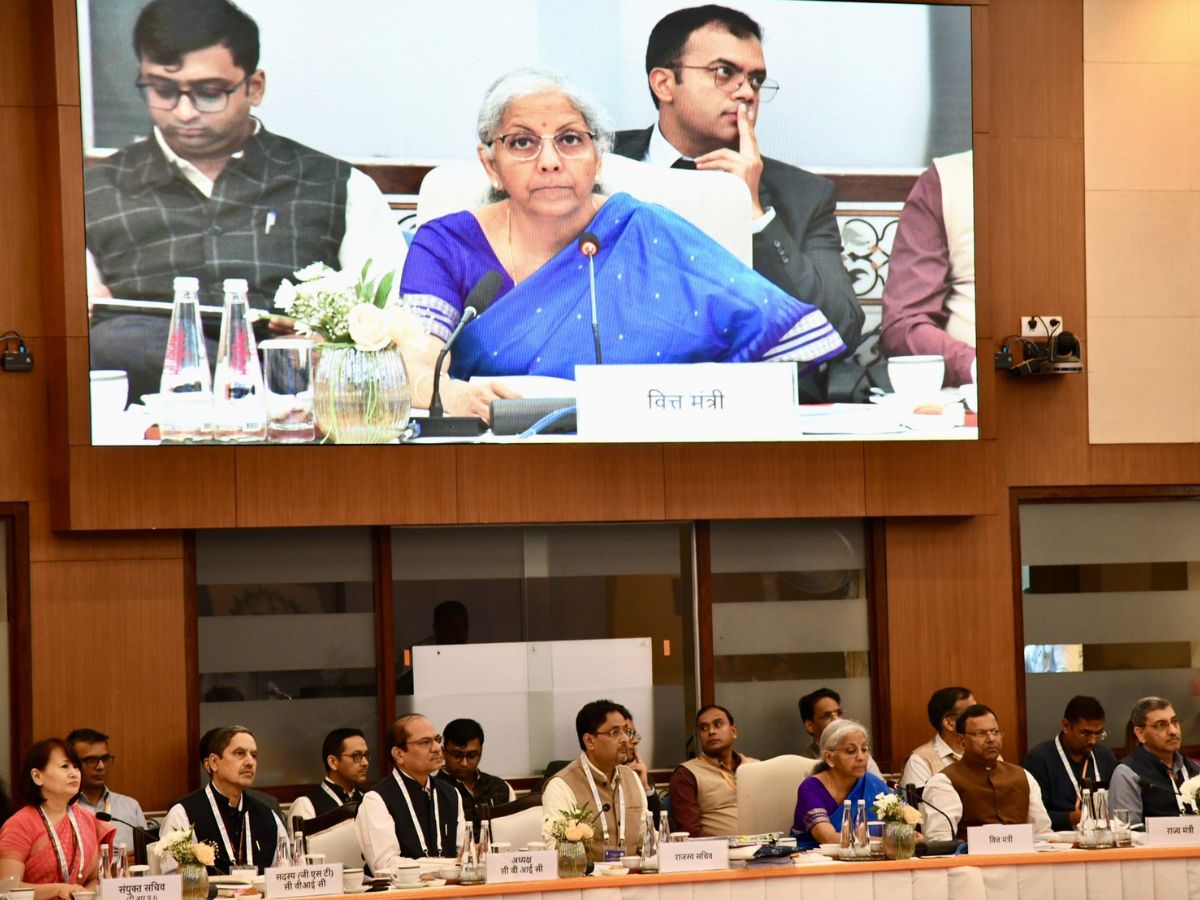

56th GST Council Meeting Begins in Delhi
The 56th meeting of the Goods and Services Tax (GST) Council has formally started in the national capital under the chairmanship of the Union Finance Minister, Nirmala Sitharaman. The two-day meeting, which will be held on September 3 and 4, is likely to pave the way for a major change in the Indian indirect tax system.
At the centre of the discussions is a suggestion to rationalise the current GST system with fewer tax slabs. According to government sources, the Council is already looking to do away with the 12% and 28% brackets altogether. Most services and goods would be subject to either the 18% or the 5% tax bracket should it pass. The motive of the Indian Government behind this move is to ease compliance and establish an efficient tax regime for day to day consumers, Adding overall easy transactions for everyone.
The festive season is approaching, and hopes are that the Council will present reforms that would reduce the tax burden on consumers without compromising the revenue balance between the Centre and the states.
Union Minister for Finance and Corporate Affairs Smt. @nsitharaman chairs the 56th meeting of the GST Council, in New Delhi, today.
The participants included Union Minister for State for Finance Shri @mppchaudhary, Chief Ministers of Delhi, Goa, Haryana, Jammu and Kashmir,… pic.twitter.com/pqz8upYg1U
— Ministry of Finance (@FinMinIndia) September 3, 2025
Proposed Restructuring Of GST Slabs
According to government sources, the proposal under consideration aims to eliminate the 12 per cent and 28 per cent brackets. Instead, most goods would be placed under either a 5 per cent or an 18 per cent slab. At present, there are four GST rate slabs, which are 5 per cent, 12 per cent, 18 per cent, and 28 per cent.
Nearly 99 per cent of items currently taxed at 12 per cent are likely to be moved into the 5 per cent slab, while around 90 per cent of items in the 28 per cent category could shift to the 18 per cent slab. Goods considered “sin” products would continue to draw a higher 40 per cent levy.
As per the proposals approved by the Group of Ministers (GoM) last month, almost all items in the 28 per cent slab, barring sin goods, would move to the 18 per cent slab, and those in the 12 per cent slab would move to the 5 per cent slab. Another slab of 40 per cent would exist, which will be levied on 6 to 7 items, largely sin and demerit goods.
PM Modi’s Hint at Festival Season Relief
The relevance of the meeting grew after Prime Minister Narendra Modi, in his Independence Day address, hinted at a “big reform of GST,” calling it a major step ahead of the festival season. He had said people could expect a “very big gift” during Diwali.
State Compensation and Long-Term Impacts
The Council is also likely to discuss a short-term compensation mechanism for states, which will lose revenue due to rate cuts. However, the compensation cess structure, as it exists today, is unlikely to be extended.
The compensation cess, introduced in July 2017, was designed to make up for state revenue losses during the initial five years of GST implementation. The GST (Compensation to States) Act, 2017, was enacted to ensure that the Centre should provide compensation to states for a period of five years from the implementation of GST on July 1, 2017, to make sure that each state’s tax revenue grows by 14 per cent annually over the base year of 2015-16.
The Council’s discussions are expected to continue tomorrow, with decisions likely to be announced after deliberations conclude.
(Disclaimer: This story has been syndicated from ANI and has a little inputs from our editorial team.)
Also Read: ALERT INVESTORS! Key Details To Watch Ahead Of FM Nirmala Sitharaman-Led 56th GST Council Meeting
Aishwarya is a journalism graduate with over three years of experience thriving in the buzzing corporate media world. She’s got a knack for decoding business news, tracking the twists and turns of the stock market, covering the masala of the entertainment world, and sometimes her stories come with just the right sprinkle of political commentary. She has worked with several organizations, interned at ZEE and gained professional skills at TV9 and News24, And now is learning and writing at NewsX, she’s no stranger to the newsroom hustle. Her storytelling style is fast-paced, creative, and perfectly tailored to connect with both the platform and its audience. Moto: Approaching every story from the reader’s point of view, backing up her insights with solid facts.
Always bold with her opinions, she also never misses the chance to weave in expert voices, keeping things balanced and insightful. In short, Aishwarya brings a fresh, sharp, and fact-driven voice to every story she touches.




