
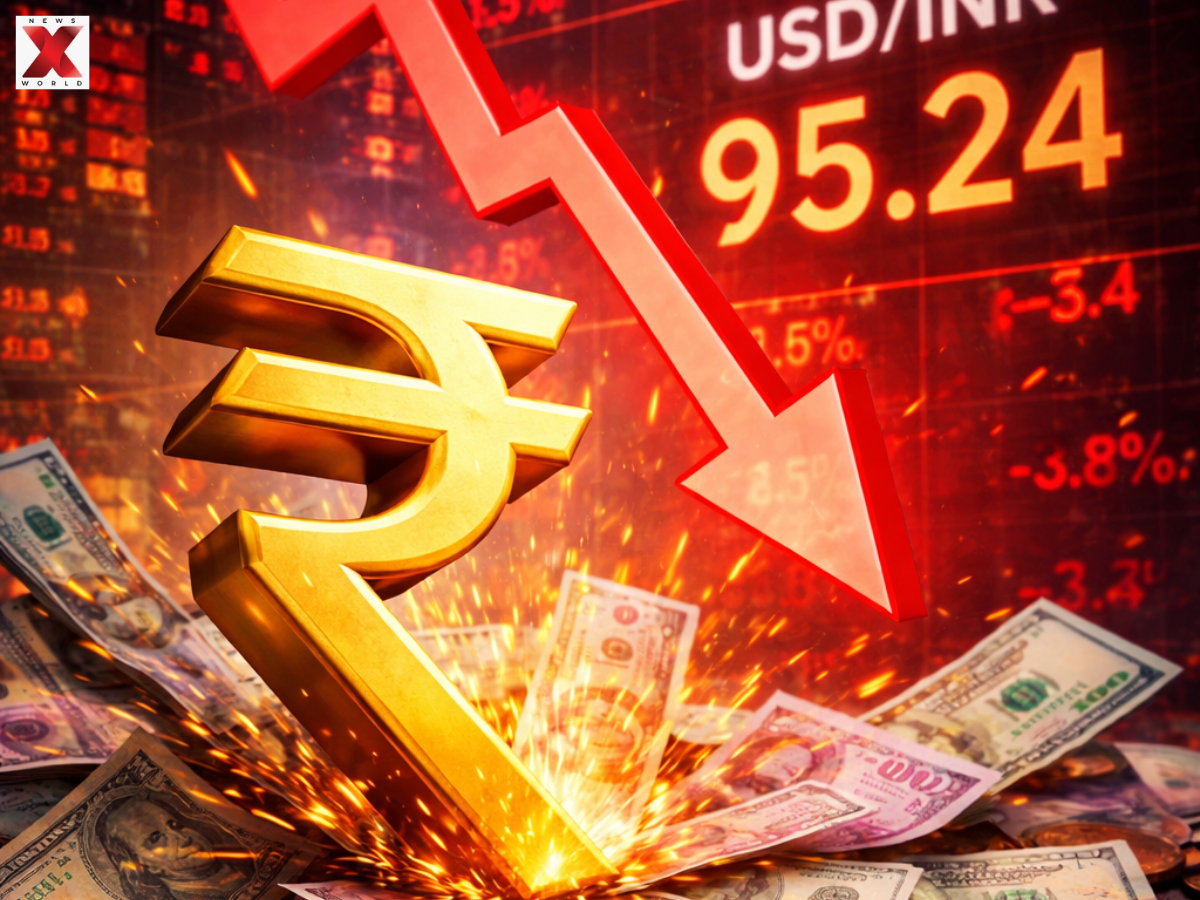

The Indian rupee fell to a record low in a volatile trading session on Monday, marking the end of a rough fiscal year in which trade frictions, geopolitics and unfavourable capital flows pummelled the South Asian currency.
The central bank’s surprise cap on forex positions gave the battered rupee a fleeting reprieve on the day, but also left traders nursing losses as they rushed to unwind arbitrage positions.
The rupee INR=IN kicked off the trading session at a one-week high of 93.59 per dollar before shedding gains to touch a low of 95.21.
The currency was shored up by likely central bank intervention, ending the session at 94.83, little changed from its previous close.
“The rupee’s moves today were hard to predict and even harder to trade. Had the RBI not stepped in past 95, the rupee’s fall could have extended deeper,” a trader at a foreign bank said.
The rupee declined 11% over India’s fiscal year which runs from April to March, its steepest fall since 2011-12.
The rupee has endured significant pressure in the last 12 months as foreign investors relentlessly sold Indian stocks and U.S. President Donald Trump’s policies rocked financial markets globally.
Overseas investors net sold over $19 billion of Indian stocks over the last 12 months, touching a record monthly pace in March as a sharp surge in oil prices in the wake of the war in the Middle East left investors fretting over risks to net energy importer India.
Meanwhile, analysts say that while the Reserve Bank of India’s move to tighten FX position limits may help steady the currency near-term, a depreciation bias is likely to linger.
“The bottom line is that the RBI’s cap does not change the underlying dynamics that fuelled pressure on the currency,” analysts at Barclays said in a Monday note.
“The INR remains particularly vulnerable to an oil supply shock, while India’s balance of payments position may deteriorate further, and capital and financial account pressures are increasing.”
OIL ON THE BOIL
Indian shares were under pressure on Monday and the benchmark Nifty 50. NSEIfell l1% in March, its steepest monthly drop since the Covid selloff in March 2020.
The yield on India’s 10-year benchmark bond rose above 7% for the first time in 21 months as Brent crude oil futures LCOc1 climbed to $115 per barrel after Yemeni Houthis launched attacks on Israel, widening the U.S.-Israel war against Iran and its proxies.
Global stocks also fell as investors dug in for a Gulf conflict they fear will bring an inflation spike and the risk of recession to much of the globe.
Over the course of the crisis, the rupee has been a middle-of-the-pack performer among Asian peers, supported by central bank interventions and measures to support the currency.
(With Inputs From Reuters)




