
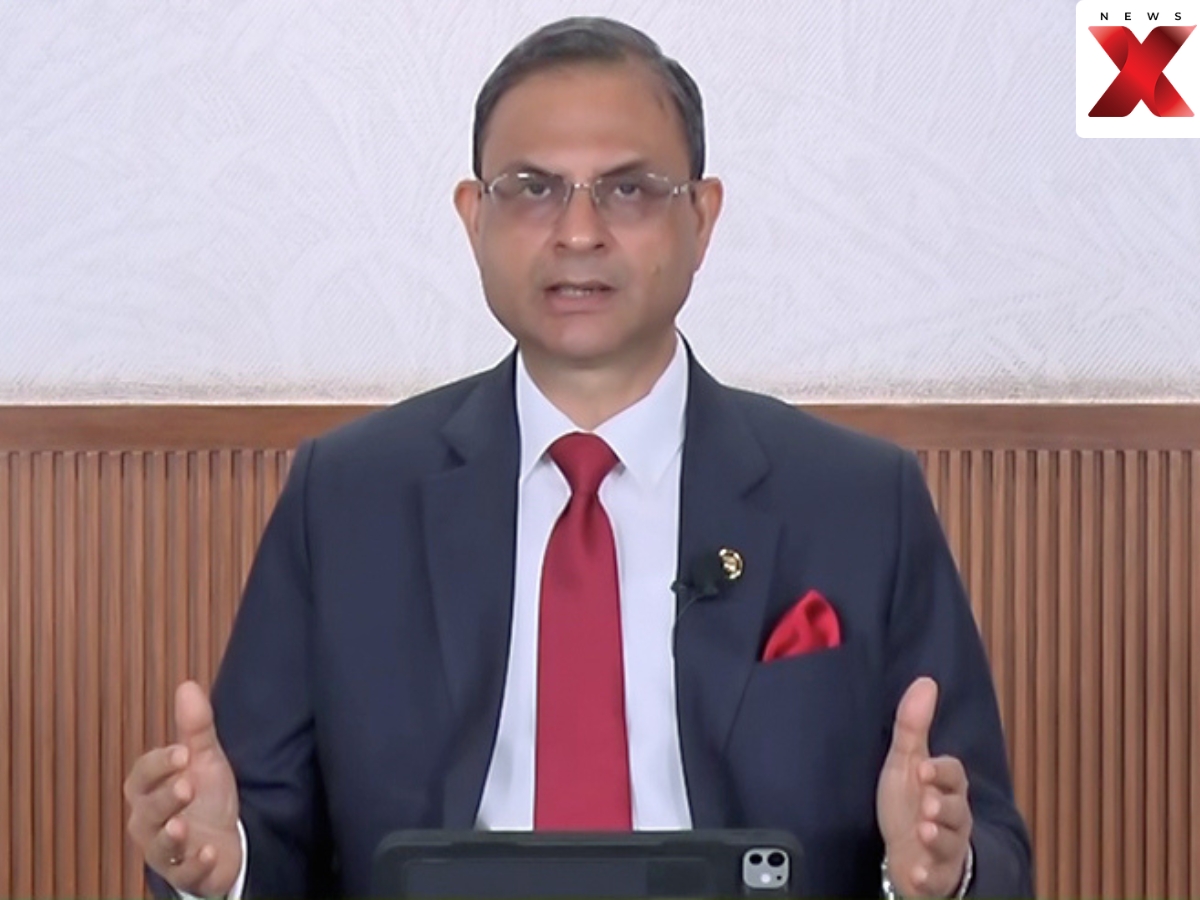

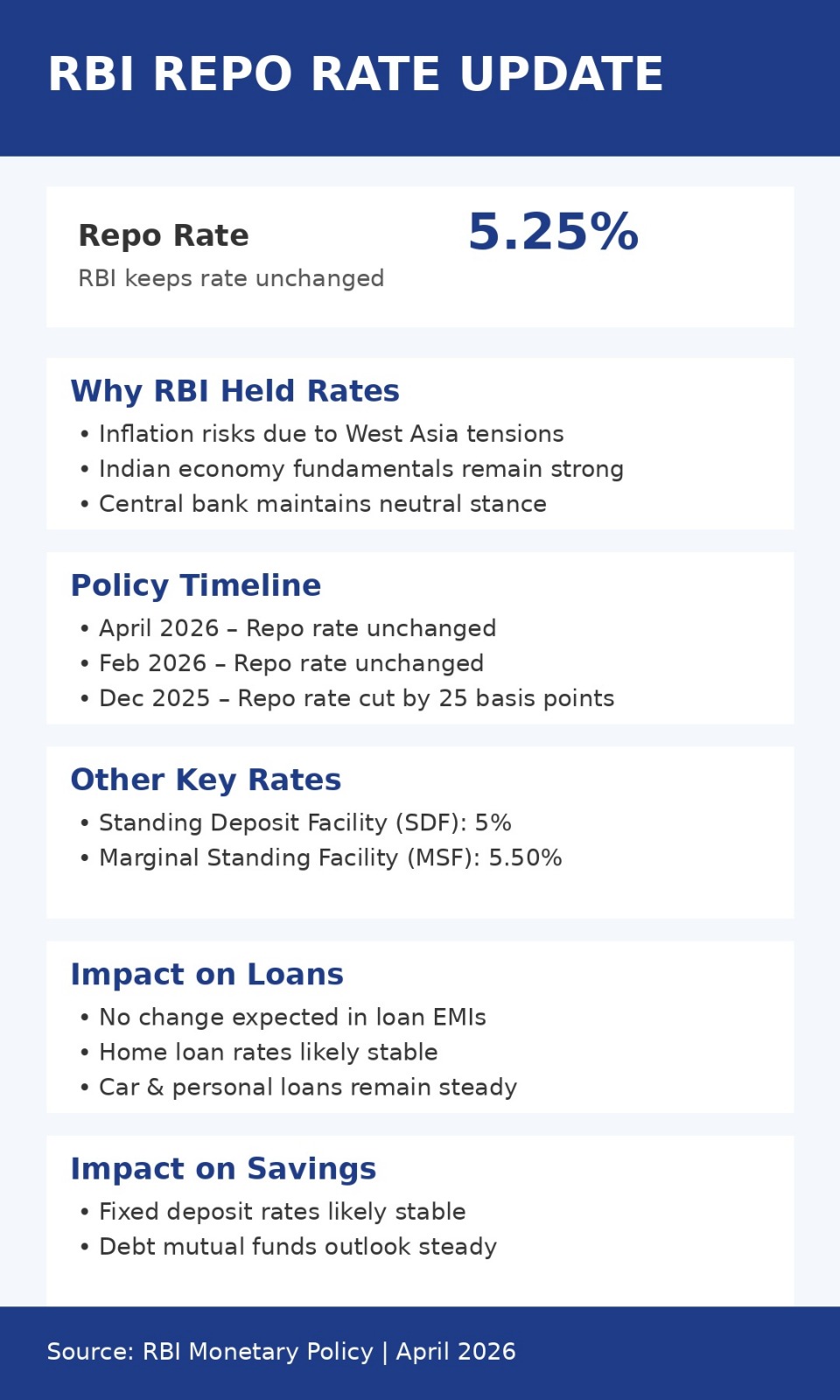
Reserve Bank of India (RBI) on Wednesday, April 8, maintained the neutral monetary policy stance, keeping the repo rate unchanged at 5.25%. The RBI governor, Sanjay Malhotra mad the announcement citing risks of inflation due to the war in West Asia. Even though the fundamentals of the Indian economy remain strong, the RBI took a status quoist stance.
This is the second time the central bank has kept the rep rate unchanged. Last time, in February, the RBI held repo rates steady and maintained a neutral stance. Last year, in December, the RBI cut the rate by 25 basis points.
The standing deposit facility (SDF) rate remains at 5%. SDF is the rate at which banks can deposit excess funds with the RBI. The marginal sanding facility (MSF) rate remains at 5.50%. MSF is the rate at which banks borrow money from the RBI.
What is Repo Rate?
Repo rate is the interest at which the RBI lends money to the banks in India. If the rate is increased, banks find it hard to borrow money from the RBI, which in turn transfers to the consumers, making loans costlier.
On the flip side, if the RBI cuts down the repo rate, banks are able to take more loans, which in turn makes loans cheaper for the customers.
RBI Repo Rate: What It Means For Your Loans, EMIs
As the RBI maintains a “wait-and-watch” approach by keeping the repo rate at 5.25 %, it means there would be no change in your loan EMIs. According to analysts, there will be no change in home loans. Car and personal loans are likely to remain stable.
Loans are directly linked to the repo rate. So, if there is no change in the rates, it means there would be no immediate impact on the loan EMIs.
What RBI’s Unchanged Repo Rate Stance Means For Your Savings
According to market analyst the fixed deposit rates are likely to remain stable. There would be no immediate jump in returns. Similarly, market analysts are predicting a stable outlook for debt mutual funds.
What the RBI’s Monetary Policy Decision Means for Investors And Borrowers
Market observers state that investors should expect a stable return in fixed income. However, they advise remaining cautious about the impact of inflation.
For borrowers, the analysts advise securing the loans at the current rates as immediate rate cuts are not expected.
Zubair Amin is a Senior Journalist at NewsX with over seven years of experience in reporting and editorial work. He has written for leading national and international publications, including Foreign Policy Magazine, Al Jazeera, The Economic Times, The Indian Express, The Wire, Article 14, Mongabay, News9, among others. His primary focus is on international affairs, with a strong interest in US politics and policy. He also writes on West Asia, Indian polity, and constitutional issues. Zubair tweets at zubaiyr.amin




