
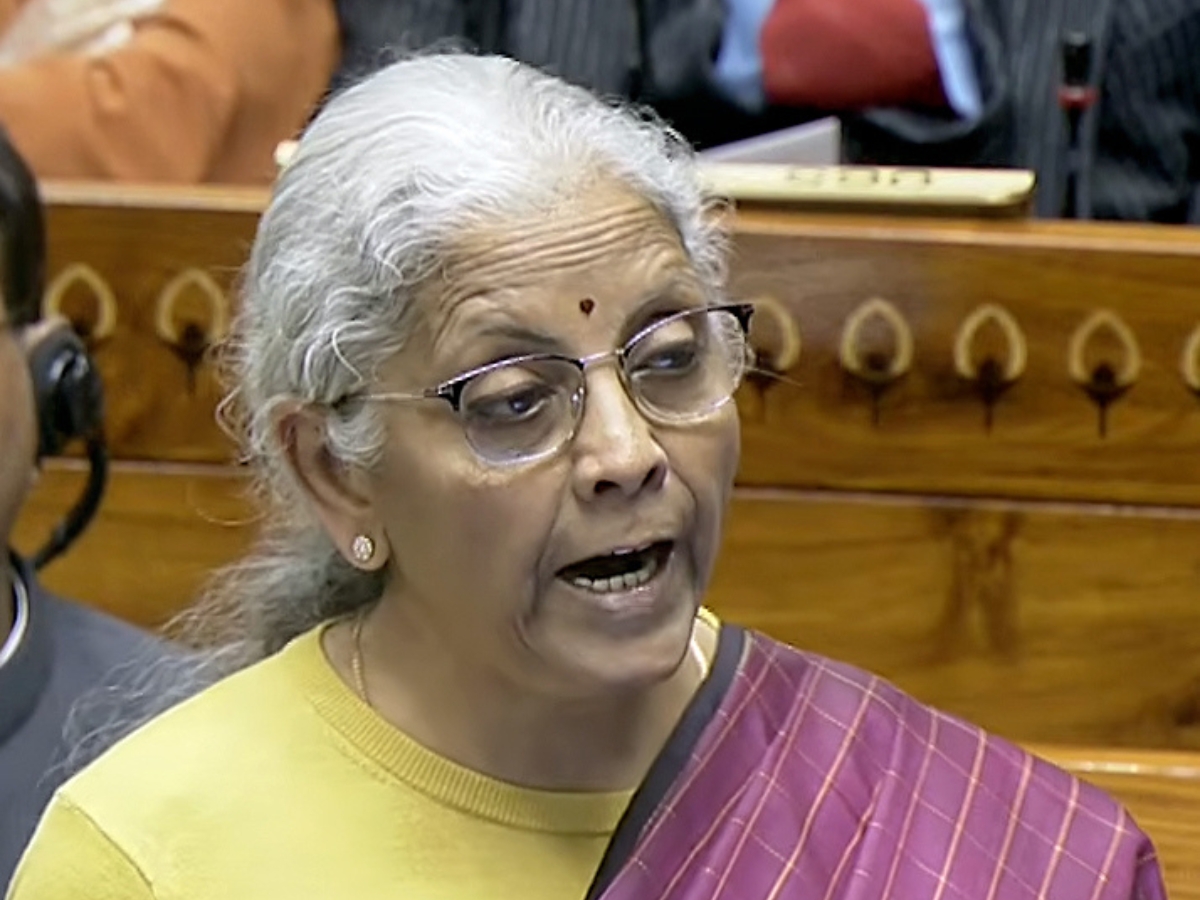

Presenting her ninth consecutive Union Budget on Sunday, February 1, Finance Minister Nirmala Sitharaman laid out an ambitious roadmap aimed at sustaining economic growth while cushioning India against global trade shocks. Anchored in the government’s vision of ‘Sabka Sath, Sabka Vikas’, Budget 2026 places a strong emphasis on capital expenditure, manufacturing competitiveness, export growth, and ease of trade.
From a significant hike in government capex to high-speed rail corridors and sweeping customs reforms, the Budget attempts to balance domestic priorities with external pressures, particularly the lingering impact of Trump-era tariffs and global geopolitical volatility.
Union Budget 2026: Government Capex Raised to ₹12.2 Lakh Crore
Highlighting the steady rise in public investment over the years, Sitharaman proposed increasing the Centre’s capital expenditure to ₹12.2 lakh crore in FY27, up from ₹11.2 lakh crore in FY26. The capex push is intended to stimulate infrastructure-led growth and crowd in private investment.
Among the major infrastructure announcements, the Finance Minister also proposed the addition of seven new high-speed rail corridors, reinforcing the government’s long-term focus on modern transport networks and regional connectivity.
Union Budget 2026 Responds to Global Trade Shocks and Tariff Pressures
Union Budget 2026 has been framed against the backdrop of sustained trade disruptions triggered by US tariff actions and broader geopolitical uncertainty. With export-oriented sectors facing headwinds, the government has doubled down on measures to simplify tariffs, reduce customs friction, and strengthen domestic manufacturing.
Sitharaman outlined a wide-ranging set of customs and excise reforms aimed at improving export competitiveness and correcting duty inversions.
“My proposals for Customs and Central Excise aim to further simplify the tariff structure, support domestic manufacturing, promote export competitiveness and correct inversion in duty,” the Finance Minister said.
She added that the government would continue phasing out long-standing customs exemptions on items already being manufactured in India or where imports are negligible. To further streamline compliance, certain effective duty rates will now be incorporated directly into the tariff schedule instead of being scattered across multiple notifications.
Union Budget 2026: Sector-Wise Incentives to Support Exports and Manufacturing
To support seafood exporters, the duty-free import limit for specified inputs used in processing seafood will be increased from 1% to 3% of the FOB value of the previous year’s export turnover.
In the leather and footwear sector, duty-free imports will now extend to shoe uppers, while the export timeline for final products will be expanded from six months to one year.
In a push towards energy transition, customs duty exemptions for capital goods used in lithium-ion cell manufacturing have been extended to cover battery energy storage systems. Additionally, sodium antimonate, a key input for solar glass manufacturing, has been exempted from customs duty.
To encourage deeper value addition in consumer electronics, Sitharaman announced a basic customs duty exemption on specified parts used in the manufacture of microwave ovens.
“To deepen value addition in the consumer electronics sector, I propose to exempt basic customs duty from specified parts used in the manufacture of microwave ovens,” she said.
Special Economic Zones Announcements In Union Budget 2026
The Union Budget 2026 also introduces regulatory changes for Special Economic Zones (SEZs). Eligible SEZ units will be allowed to sell goods in the domestic market at concessional duties, with sale volumes capped in proportion to exports. The government said these changes are aimed at ensuring a level playing field between SEZ units and domestic tariff area manufacturers.
Customs Modernisation and Trade Facilitation Measures in Union Budget 2026
To improve logistics efficiency and reduce clearance delays, Budget 2026 introduces a series of trust-based, technology-driven reforms across customs operations.
Key measures include:
Extension of duty deferral for Tier 2 and Tier 3 Authorized Economic Operators from 15 days to 30 days, with manufacturers also made eligible
Extension of advance ruling validity from three years to five years
Increased automation of cargo clearance, replacing officer-dependent approvals with risk-based audits and electronic tracking
Integration of approvals for 70% of regulated goods into a single digital window, to be operational by April 2026
Expansion of non-intrusive scanning and AI-based risk assessment across major ports
Trump-Era Tariffs and Their Impact on Indian Exports
Budget 2026 comes at a time when US tariff pressures, first imposed during the Trump presidency, continue to weigh on Indian exports. In late 2025, duties on certain Indian goods rose as high as 50%, impacting sectors such as gems and jewellery, apparel, and auto components.
In December 2025, gems and jewellery exports declined by nearly 5% year-on-year, a drop analysts attributed to geopolitical uncertainty and tariff-related disruptions.
The US had also warned of additional tariffs if India continued importing Russian oil, prompting New Delhi to scale down purchases shortly before the Budget.
Despite these challenges, officials say India has managed to hold ground in the US market.
“India has held fort on US exports despite tariffs,” Commerce Secretary Rajesh Agrawal said, pointing to an emerging “framework” agreement between the two countries.
Zubair Amin is a Senior Journalist at NewsX with over seven years of experience in reporting and editorial work. He has written for leading national and international publications, including Foreign Policy Magazine, Al Jazeera, The Economic Times, The Indian Express, The Wire, Article 14, Mongabay, News9, among others. His primary focus is on international affairs, with a strong interest in US politics and policy. He also writes on West Asia, Indian polity, and constitutional issues. Zubair tweets at zubaiyr.amin




