
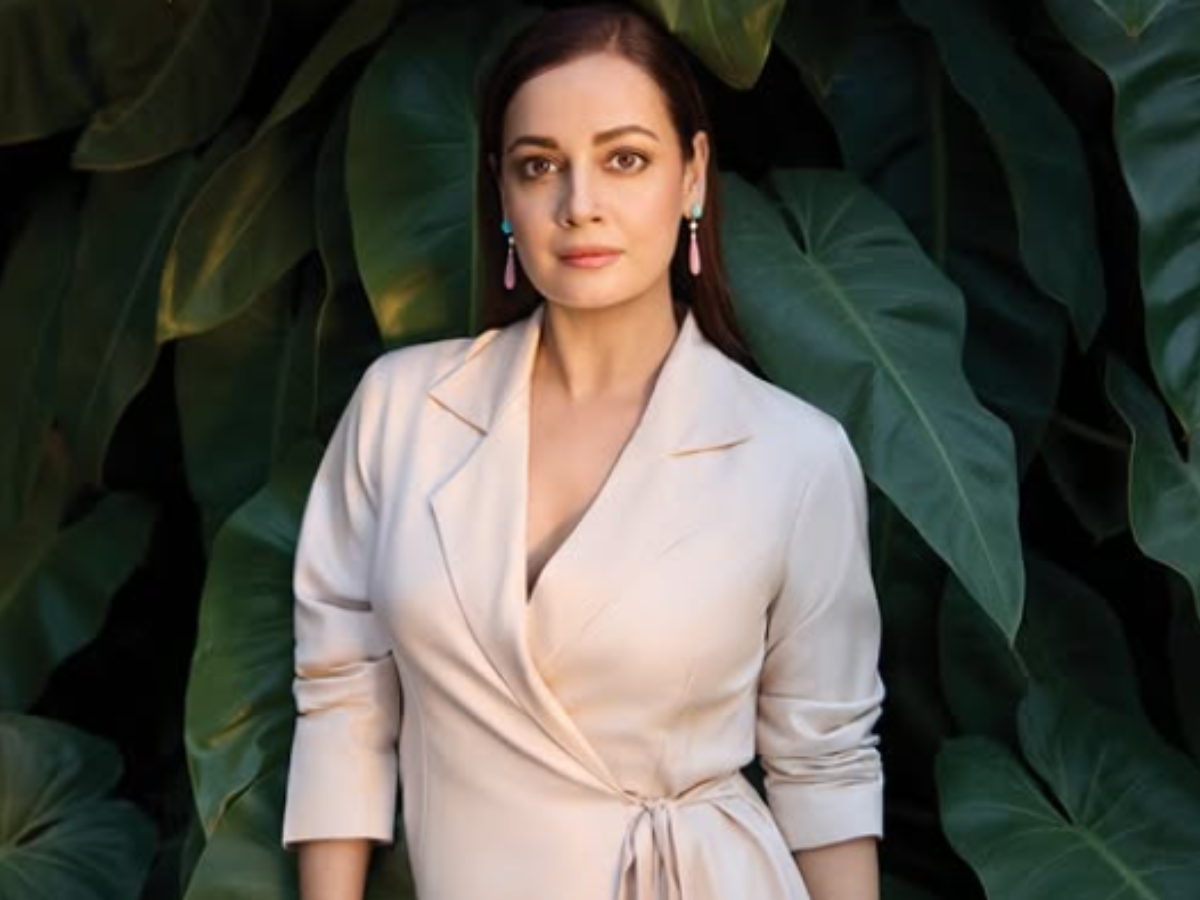

Actor and activist Dia Mirza has sparked a heated debate across social platforms following her recent public statements regarding two of India’s most significant proposed legislative reforms: the Uniform Civil Code (UCC) and the “One Nation, One Election” initiative. On March 29, 2026, Mirza expressed her opposition to the UCC and raised pointed concerns regarding the fairness and logistical implementation of simultaneous elections.
Her remarks quickly went viral, drawing both sharp criticism and vocal support from various sectors of the public.
The Core of the Controversy
In her statement, Mirza voiced apprehension about the Uniform Civil Code, which aims to replace diverse religious personal laws with a single set of rules for all citizens.
Furthermore, she questioned the One Nation, One Election proposal, focusing on whether such a massive structural change could be executed without compromising democratic integrity.
The primary points of her critique included:
Opposition to UCC: Questioning the necessity and impact of a singular civil code on India’s pluralistic society.
Implementation Concerns: Doubts regarding the “fairness” of rolling out simultaneous national and state elections.
Systemic Readiness: Raising the alarm on whether the current administrative infrastructure is prepared for such transitions.
Pidiot Kirti Azad- UCC means Uniform Food for All. 🤷♂️
Fake Environmentalist Dia Mirza- UCC means ‘One Nation, One Election’ 🤦♀️
I call them part of ‘Uniform Chut!ya Cell’ 😂😂😂 pic.twitter.com/5Vgx7TMOo7
— BhikuMhatre (@MumbaichaDon) March 30, 2026
A Divided Digital Landscape
The reaction to Mirza’s comments was swift, reflecting a deeply polarized online environment. On X, the discourse was split between those who view her as an informed citizen and those who see her as overstepping.
Perspective Argument
The Critics argue that the UCC and simultaneous elections are distinct legal and administrative issues that should not be “mixed up” or conflated in public discourse. The Supporters defend the right of public figures to weigh in on policy matters, stating that concerns over implementation are valid for any citizen to raise.
Political and Legal Context
The timing of Mirza’s comments is particularly sensitive. As of March 2026, the Indian government has been actively pushing for the implementation of both reforms. The UCC remains a cornerstone of the current legislative agenda, while the “One Nation, One Election” plan has been a subject of intense deliberation by high-level committees.
“Discussion continues around legal reforms and democratic processes as public figures increasingly weigh in on national policy,” noted a report by Genzdigest.
While Mirza has not issued a further clarification since the backlash began, the incident underscores the increasingly influential—and scrutinized—role that celebrities play in India’s political and legal conversations.
ALSO READ: Bigg Boss 18 Fame Vivian Dsena And Wife Nouran Aly Welcome Baby Boy, Say ‘Kingdom Got Bigger’
Olivia Sarkar is a Senior Content Producer on the Entertainment and Lifestyle desk with 6 years of experience. In 6 years, she worked with ANI, IANS, Zee News. Known for covering trends and engaging storytelling, she covers a wide spectrum of topics including entertainment news, fashion, fitness, health, food, travel, astrology. From major film announcements to industry controversies. Throughout her career, she has interviewed several notable personalities such as Femina Miss India World 2022 Sini Shetty, Miss World 2024 USA contestant Victoria DiSorbo, Miss France 2020 Clémence Botino.Her interview portfolio also includes celebrities like Milind Soman, Tiger Shroff, and Vikrant Massey, along with acclaimed singers Shubha Mudgal and Padma Shri awardee Dr. Jaspinder Narula. Beyond work, Olivia enjoys exploring new food joints, being wanderlust, and writing poetry. You can reach her out on X: @OliviaSarkar11




