
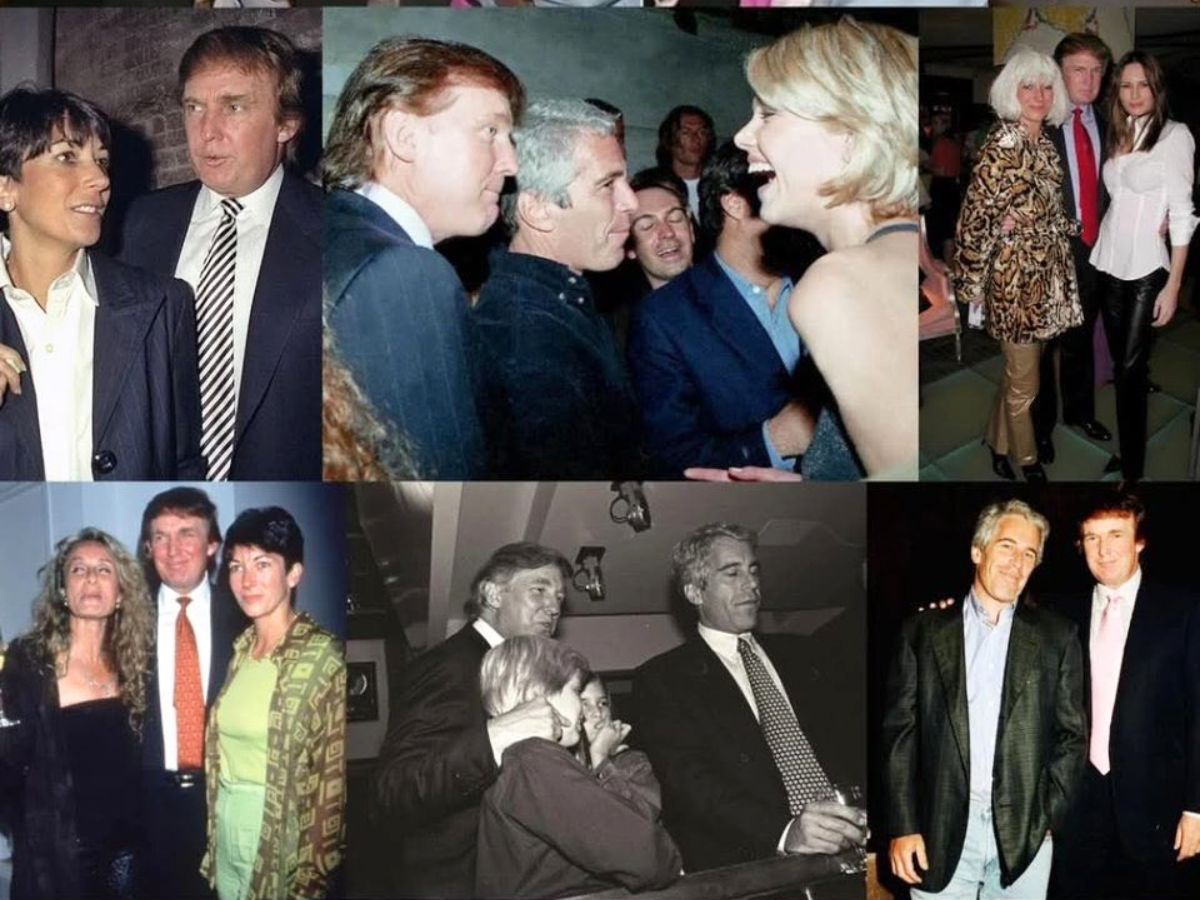

A newly emerged controversy over the Jeffrey Epstein files has sparked political and public debate after the Department of Justice (DOJ) quietly removed a photo showing President Donald Trump, First Lady Melania Trump, and Epstein associate Ghislaine Maxwell from its public website.
The image, part of a collection labelled File 468, became the focus of scrutiny just days after the first tranche of Epstein-related documents was released under the Epstein Files Transparency Act.
What Is File 468?
File 468 was among hundreds of documents made public by the DOJ on Friday, December 19, containing images, emails, and other materials related to convicted sex offender Jeffrey Epstein. Less than 24 hours after their release, at least 16 files disappeared, including File 468.
Photos and other materials will continue being reviewed and redacted consistent with the law in an abundance of caution as we receive additional information. https://t.co/xXngYQ4Qaw
— U.S. Department of Justice (@TheJusticeDept) December 21, 2025
Reports indicate the removed file contained a photograph showing Trump alongside Epstein, Melania Trump, and Maxwell, placed in a drawer among other images and paintings. While the photo does not appear to show illegal activity, its sudden removal has fueled allegations of a cover-up and raised questions about political influence over the release process.
Why Was the Photo Removed? DOJ Responds
The Justice Department has not provided a detailed explanation for the removal. In a statement on X, the DOJ said, “Photos and other materials will continue being reviewed and redacted consistent with the law in an abundance of caution as we receive additional information.” The department emphasized that redactions and deletions are standard practice to protect sensitive information, including victims’ identities.
Despite this, the timing of the removal shortly after the release has drawn criticism from Democrats on the House Oversight Committee, who argued that the public is being denied transparency on documents tied to Epstein and his powerful associates. “What else is being covered up? We need transparency for the American public,” the committee wrote on social media.
Political Fallout and Accusations of Cover-Up
The disappearance of File 468 has reignited scrutiny over Trump’s historical ties to Epstein. Trump and Epstein were known to socialize frequently in the 1990s and early 2000s, attending parties at Trump’s Mar-a-Lago resort in Florida and Epstein’s residences. Flight logs also confirm that Trump flew on Epstein’s private jet multiple times during that period.
Trump has consistently denied any knowledge of Epstein’s criminal activities. He has described allegations linking him to Epstein as politically motivated, calling them a Democrat hoax. Maxwell, in contrast, said in 2025 that Trump was not a “close friend” of Epstein and that she never witnessed inappropriate behavior by Trump. No criminal charges have been filed against Trump in connection with Epstein’s crimes.
Despite the lack of legal implications for Trump, the photo in File 468 has taken on symbolic significance, especially amid accusations that the Trump administration controlled the release of the Epstein files in ways that could protect high-profile figures.
The Epstein Files Transparency Act
The Epstein Files Transparency Act, signed into law by President Trump in November 2025, required the DOJ to release unclassified records concerning Epstein and his associates within 30 days. The initial release included thousands of documents, emails, and photographs, but critics argue the DOJ has failed to fully comply by redacting or removing material without clear explanations.
The Act was passed to provide accountability and clarity regarding Epstein’s crimes and connections to influential individuals. However, the disappearance of key files, including File 468, has raised concerns among lawmakers and transparency advocates about selective disclosure.
Public and Media Reaction
The removal of File 468 has generated significant public and media attention. News outlets, including the Associated Press, reported that the deleted materials included images of paintings depicting nude women and other sensitive content. The photo of Trump and Melania, although not incriminating, was singled out as particularly newsworthy due to its political implications.
Democratic lawmakers and advocates argue that these actions undermine public confidence in the DOJ’s commitment to transparency. Meanwhile, some Republicans have also expressed concern over procedural issues, emphasizing that the Act’s deadlines and disclosure requirements are not being fully met.
Ongoing Scrutiny and Legal Implications
The controversy surrounding File 468 shows the ongoing tension between public transparency and legal caution in high-profile investigations. As the DOJ continues to review and redact materials, lawmakers, media, and the public are calling for clarity on why certain files, especially politically sensitive ones, are being removed.
While no new evidence has implicated Trump or Melania in criminal wrongdoing, File 468’s disappearance highlights the political and ethical challenges of handling sensitive documents connected to one of the most notorious sex traffickers in recent history.
As the Epstein files continue to surface, public scrutiny and calls for accountability are expected to intensify in the coming weeks.
Sofia Babu Chacko is a journalist with over five years of experience covering Indian politics, crime, human rights, gender issues, and stories about marginalized communities. She believes that every voice matters, and journalism has a vital role to play in amplifying those voices. Sofia is committed to creating impact and shedding light on stories that truly matter. Beyond her work in the newsroom, she is also a music enthusiast who enjoys singing.




