
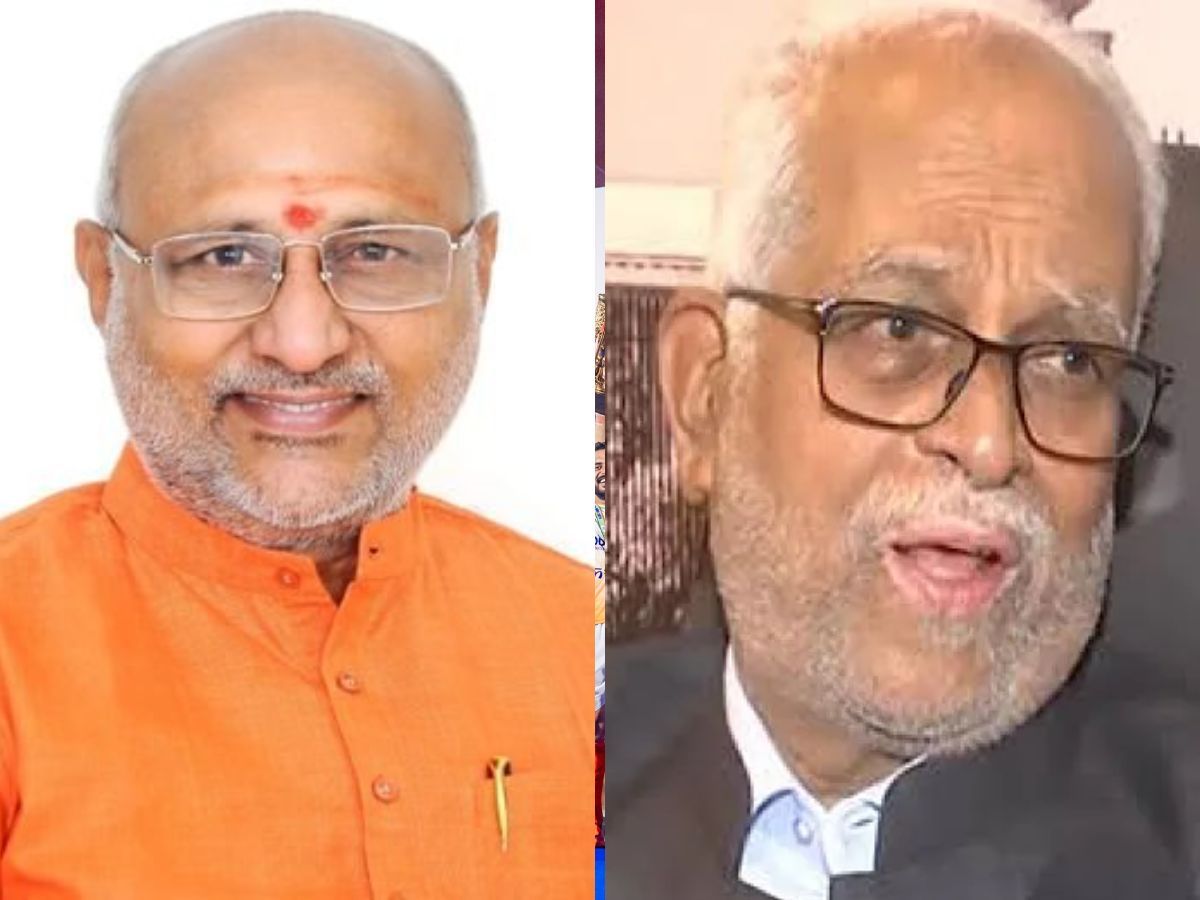

The Election Commission of India has fixed the schedule for the vice presidential elections 2025 on Sept 9. All formalities, including nominations and their scrutiny, have been completed. Maharashtra Governor CP Radhakrishnan, as the National Democratic Alliance’s candidate and former Supreme Court judge Justice (Retd.) B. Sudershan Reddy, as an INDIA bloc candidate, is on the electoral battleground to be the next vice president.
The post remains vacant after the sudden resignation of Jagdeep Dhankhar, citing health issues.
As the poll is scheduled on September 9 to choose the new Vice President, here’s a look at the election process.
Who Elects The Vice President of India?
As per the constitutional provision, the Vice President is elected by an Electoral College, which consists of the members of the Lok Sabha and Rajya Sabha (both elected and nominated members).
In contrast, like the presidential elections, members of state assemblies are not included.
Article 66 of the Indian Constitution gives details of the election process of the Vice President, as follows.
The Vice President shall be elected by the system of proportional representation using a single transferable vote and voting by secret ballot.
It clarifies the eligibility of a person to be elected as the vice president. The person must be a citizen of India and have completed the age of thirty-five years. He should be qualified for election as a member of the Council of States, and he should not hold an office of profit.
Under the provisions of sub-section (3) of section 4 of the Presidential and Vice-Presidential Elections Act, 1952, the election can be issued by the Election Commission on or after the sixtieth day before the expiry of the term of office of the outgoing Vice President.
The Constitution also empowers the Election Commission under Article 324 to conduct elections to the Office of Vice President.
Apart from these, Form 3 appended to the Presidential and Vice-Presidential Elections Rules, 1974 must be subscribed by at least twenty electors as proposers and at least twenty electors as seconders.
To contest in the election, the security deposit for the election of Rs 15000 should also be deposited.
As per the Election Commission, the candidate is also required to furnish a certified copy of the entry showing his name in the current electoral roll for the Parliamentary Constituency in which the candidate is registered as an elector.
A Room in the Parliament House in New Delhi is generally fixed as the place of poll.
All members of both Houses of Parliament, including Nominated members, are members of the Electoral College. Therefore, nominated members can vote.




