
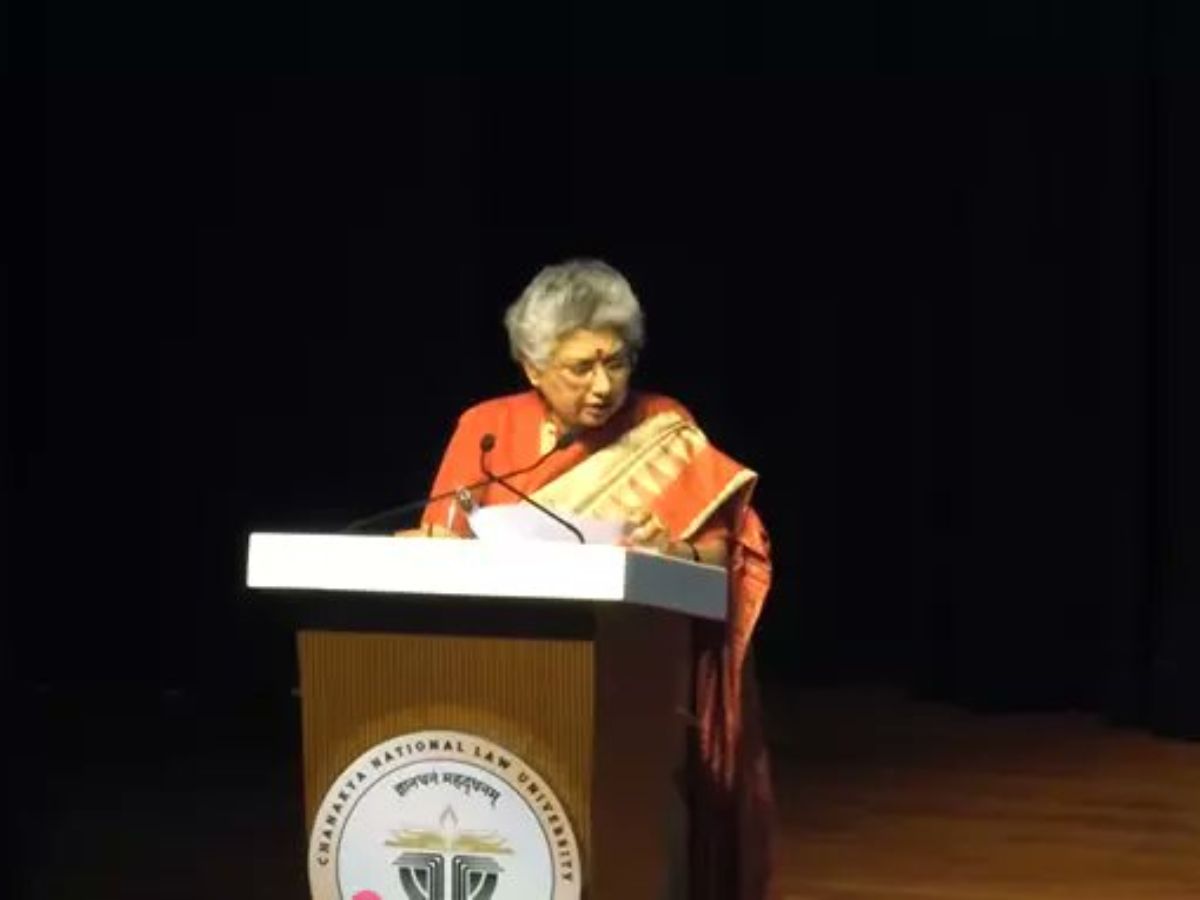

During a review of petitions related to Sabarimala temple entry, the Supreme Court remarked on the practice of exclusion of women due to menstruation as a form of discrimination, and the Court’s nine-judge bench will review the broader issue of discrimination in places of worship and religious freedoms in general.
Justice BV Nagarathna stated that “a woman cannot be considered ‘untouchable’ for three days in the month and then no longer be viewed as untouchable on the fourth day”. This statement highlights the question of whether there is equal treatment of women regarding religious doctrine.
Sabarimala Row Returns to Top Court for Wider Constitutional Review
The Sabarimala Court has taken the issue back up for a broader review of the constitutional rights of women under the Constitution, including but not limited to their right to equal protection and religious freedom, as related to entry to the Sabarimala temple or other religious institutions that have historically excluded women from participating in religious ceremonies.
The Chief Justice of India, Surya Kant, along with eight other justices make up this nine-judge bench which will hear a number of challenges to the various restrictions placed on women across different religions and customs.
Centre Raises Objection to Earlier ‘Untouchability’ Observation
Tushar Mehta, appearing on behalf of the Centre, voiced strong reservations against the earlier suggestion made in the earlier 2018 Sabarimala judgment that the practice of restricting women’s attendance could be classified as a type of ‘untouchability’ under Article 17 of the Constitution. Article 17 prohibits ‘untouchability’ and prohibits the practice of ‘untouchability’ in any form.
The current question is if the prohibitions that are based on either menstruation or gender would fall within Article 17 as defined above. Justice Nagarathna’s comments provide a new avenue for future discussion as this legal matter continues to be discussed.
Debate Over Faith, Equality and Women’s Rights Continues
The Sabarimala case has been one of the focal points of an ongoing discussion about how to balance India’s religious customs and constitutional rights. In 2018, the Supreme Court ruled that women can enter the temple, stating that barring entry on the basis of biological differences contravenes India’s constitution.
However, after that ruling more review petitions were filed and, subsequently, the case was referred to a larger bench of justices who will examine larger questions regarding religious freedoms and gender equality. The current hearings are part of this ongoing process.
Court Signals Need to Revisit Social Practices
Justice Nagarathna’s comments reflect the court’s awareness that there are some social practices that treat women unfairly based solely on biological differences, which seems to be inconsistent with the equality and dignity requirements of India’s constitution.
During the current proceedings, the Supreme Court will likely address all aspects of the case, including how to balance the right to practice one’s faith with other basic rights. The court’s decision will have repercussions not only for Sabarimala but for similar social customs practiced by other faiths in India.
Khalid Qasid is a media enthusiast with a strong interest in documentary filmmaking. He holds a Master’s degree in Convergent Journalism from AJK MCRC. He has also written extensively on esports at Sportsdunia. Currently, he covers world and general news at NewsX Digital.




