
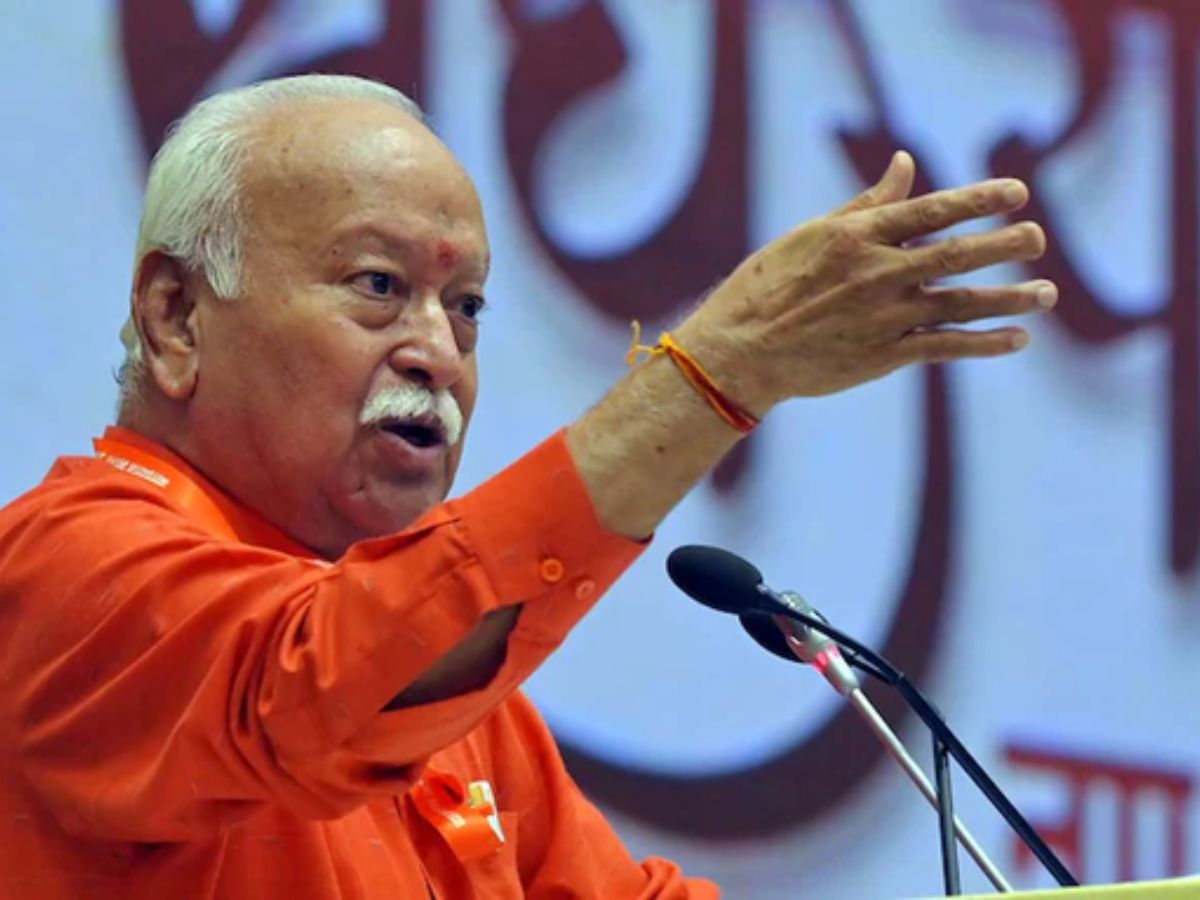

In the latest development, Rashtriya Swayamsevak Sangh (RSS) Chief Mohan Bhagwat urged Indian families to have at least three children, stressing that demographic stability depends on a fertility rate of 2.1 or above. Speaking in Delhi on August 28, he said this translates into “three children per family” as one cannot have fractional children. Bhagwat warned that population decline is a serious issue, noting that societies with fertility rates below 2.1 eventually perish. He stated that such decline leads to the disappearance of languages, traditions, and cultural identities, weakening communities and nations in the long run.
#WATCH | On the speech given by RSS Chief Mohan Bhagwat on the celebration of 100 years of the organisation, Indian playback singer Sukhwinder Singh says, “… He is a very nation-oriented personality.” pic.twitter.com/qlcfNh2Qbx
— ANI (@ANI) August 28, 2025
Population Science and National Policy
Bhagwat referred to India’s population policy formulated during the late 1990s and early 2000s. He highlighted that no community should allow its growth rate to fall below 2.1 children per family, as this threshold is crucial for societal balance. He urged families to recognise their responsibility towards the country’s demographic stability and national strength. Bhagwat explained that population science links directly to India’s future growth and stability. By maintaining the demographic dividend, he said India could preserve social harmony and continue building national resilience for the coming generations.
Integration of Gurukul Education with Modern System
Shifting focus from population concerns, Bhagwat emphasised integrating Gurukul education with mainstream schooling. He clarified that Gurukul learning is not limited to ashram living but involves teaching traditions, history, and culture. Praising the National Education Policy (NEP), he drew comparisons with Finland’s educational model, which prioritises mother tongue learning and specialised teacher training. Bhagwat called for a blend of Gurukul values with modern education, ensuring students receive both traditional wisdom and advanced knowledge. He said this integration would help India preserve its identity while moving forward with global competitiveness in education and skills.
Colonial Disruptions and Rebuilding Education
Bhagwat remarked that colonial rulers disrupted India’s traditional education system to weaken the country. He said independence restored India’s chance to rebuild pride in its heritage and revive its rich traditions. Stressing the importance of instilling confidence in children, Bhagwat noted that teaching India’s glorious past would inspire self-respect and national unity. He urged educators to link heritage-based knowledge with modern achievements, so the new generation can stand on its own with awareness of India’s historical strengths and contributions to global progress.
Bhagwat On Islam in India
Mohan Bhagwat reiterated that Islam has been part of India since its arrival and will remain in the country. Bhagwat said, “From the day Islam came to India, it has been here and it will remain here. I had said this earlier, too. Those who think Islam will not remain are not guided by Hindu thought. Hindu philosophy does not think this way. Only when there is trust on both sides will this conflict end. First, we must accept that we are all one.”
Rise In Infiltration
Bhagwat addressed the issue of infiltration and said it must be stopped to protect jobs for Indian citizens, including Muslims. He explained, “Infiltration must be stopped. The government is making some efforts and moving ahead gradually. Muslims living in our country are also citizens. They too need employment. If you want to provide jobs to Muslims, give them to our own citizens. Why should we give it to those who come from outside? Their own countries should take responsibility for them.” Bhagwat stressed that infiltration directly affects India’s economy and job opportunities for local communities.
RSS Marks Its 100th Year Anniversary
The RSS marked its 100th anniversary this year with nationwide events. As part of the centenary, Bhagwat launched the celebrations with a three-day lecture series at Vigyan Bhawan, New Delhi, on August 26. Each evening featured discussions on different themes, ending on August 28. On the first day, speakers focused on the 100-year journey of the RSS. The second day examined the organisation’s vision for the future. On the third day, Bhagwat interacted with the audience in a detailed question-and-answer session, sharing views on the organisation and clarifying several public misconceptions.
Speaking on the theme “100 Years of RSS Journey: New Horizons,” Bhagwat said the organisation wanted to present a comprehensive picture of its work to society. He explained how Swayamsevaks see themselves and emphasised outreach to groups that had previously distanced themselves from the RSS. The centenary events aimed to showcase the evolution of the Sangh, its principles, and its current role. Bhagwat underlined that the Sangh remains committed to strengthening society through unity, discipline, and values. He said the RSS continues to inspire volunteers to take responsibility for building the nation’s future.
Bhagwat On 75 Year Retirement Age
Age doesn’t matter, even if I’m 80 and someone says, go run sakha, I’ll have to go: RSS chief Mohan Bhagwat ji
It can be seen as a clarification that the 75-year retirement thing was taken out of context.
Ecosystem should find something else now. pic.twitter.com/tyRJ2jWaCf
— Mr Sinha (@MrSinha_) August 28, 2025
He clarified, “In Sangh we are all volunteers, we all have to do what we are asked to do, we cannot cite our age to refuse any work.” Addressing a press conference, he said, “I never said I would retire or someone should retire. In Sangh, we are given a job, whether we want it or not. If I am 80 years old and Sangh says go and run a ‘shakha’, I will have to do it. We do whatever the Sangh tells us to do.”
Must Read: National Sports Day 2025: History, Significance And One Hour Sports Campaign, Explained
Swastika Sruti is a Senior Sub Editor at NewsX Digital with 5 years of experience shaping stories that matter. She loves tracking politics- national and global trends, and never misses a chance to dig deeper into policies and developments. Passionate about what’s happening around us, she brings sharp insight and clarity to every piece she works on. When not curating news, she’s busy exploring what’s next in the world of public interest. You can reach her at [swastika.newsx@gmail.com]




