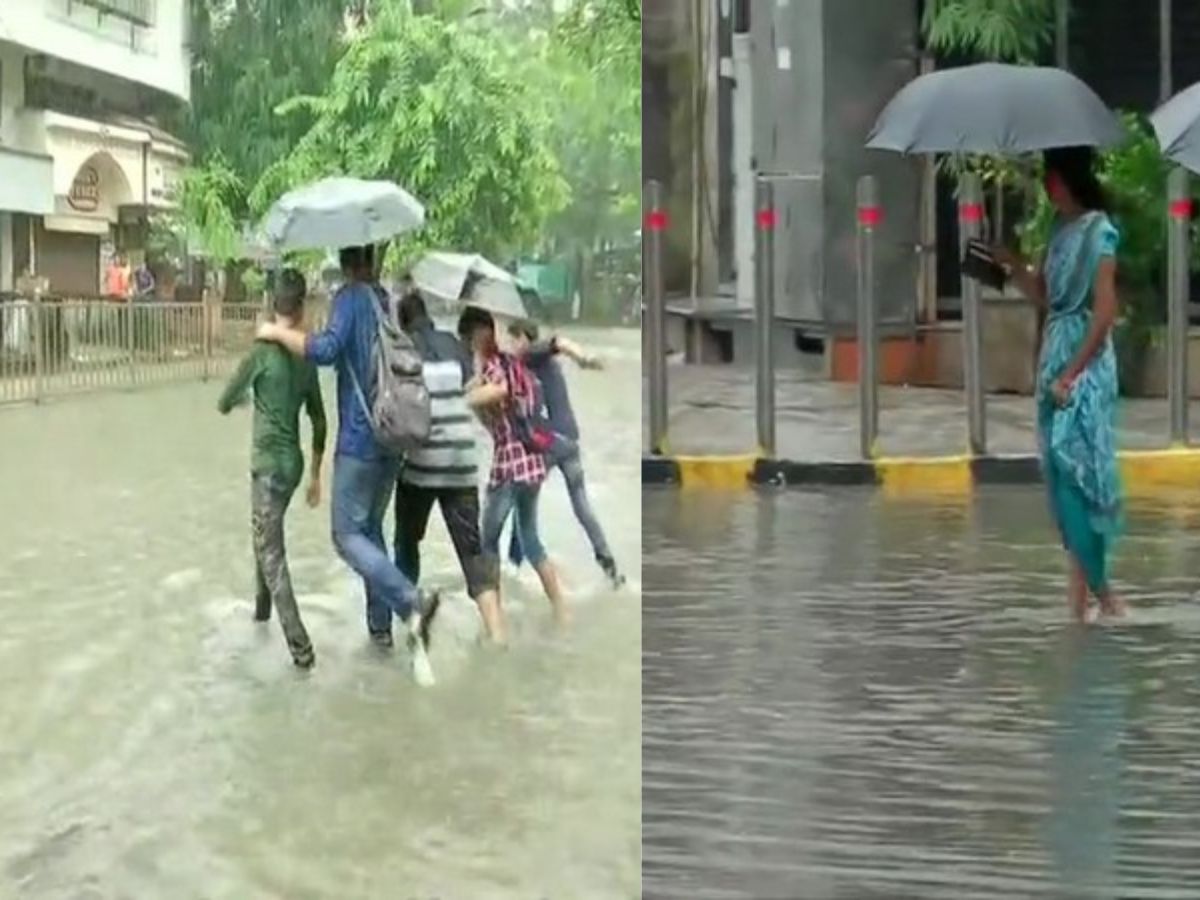

Mumbai Rains: As a result of the heavy rains all schools and colleges have been shutdown today in the Mumbai region on Tuesday. The Maha gov’t declared a holiday for all schools, anganwadi centres, and colleges due to the continuing rain. Closures apply for the Mumbai, Thane, Panvel, Kalyan, Dombivali, and Palghar, Raigad, Mira-Bhayandar, Ratnagiri, and Sindhudurg districts. IMD has taken the step of issuing a red alert for Konkan, which includes Mumbai, and predicting extremely heavy rain for Mumbai.
According to IMD, some areas of Mumbai received more than 100 mm rain within a nine hour window on Monday. Santacruz received 129.1 mm, Juhu 128.5 mm, and Chembur received 125 mm. Low lying areas of Dadar, Worli, Sion, and Vikhroli experienced heavy rain, with more than 150 mm rain falling from 8:30 am to 2:30 pm. Significant rain became torrential and heavy waterlogging occurred from Nalasopara and Virar, where many buildings had water pour in, trapping the occupants inside.
Flights have been delayed in Mumbai amid rains
Following the heavy rains, 250 flights being delayed at Chhatrapati Shivaji Maharaj International Airport as per the reports. Statistics also revealed that 155 outgoing flights and 102 incoming flights are postponed due to bad weather condition. Harbour Line was also adversely affected by waterlogging conditions though trains continued to run. Police asked individuals in Andheri West not to move on foot as traffic was halted.
IndiGo airlines also came up with a passenger advisory attributing waterlogging and road traffic jams to causes of delays at the airport. The airline updated travelers on arrival and departure delays and asked travelers to have extra traveling time at their disposal.
While this, Mumbai has seen more than 80 cases of wall collapses, tree collapses, and short circuits in the last two days. One death and one injury were reported from these rain-related accidents.
What Causes Heavy Rainfall In Mumbai?
Ever think about what could cause extreme heavy rain in Mumbai? Well, it primarily has to do with their coastal position of the Arabian Sea and the Southwest Monsoon Zone. The Western Ghats act as a natural barrier where moisture-laden wind rises and cools, causing condensation, called orographic rainfall. This pattern of climate, along with monsoon patterns, allows Bombay to be one of the wettest cities in the world between June – September, along with being one of the wettest cities in India in urban environments.
ALSO READ: Mumbai On High Alert: IMD Warns Of Flash Flood Risk Amid Heavy Rainfall
Sofia Babu Chacko is a journalist with over five years of experience reporting on Indian politics, crime, human rights, gender issues, and stories about marginalized communities. She believes journalism plays a crucial role in amplifying unheard voices and bringing attention to issues that truly matter. Sofia has contributed articles to The New Indian Express, Youth Ki Awaaz, and Maktoob Media. She is also a recipient of the 2025 Laadli Media Awards for gender sensitivity. Beyond the newsroom, she is a music enthusiast who enjoys singing. Connect with Sofia on X: https://x.com/SBCism