
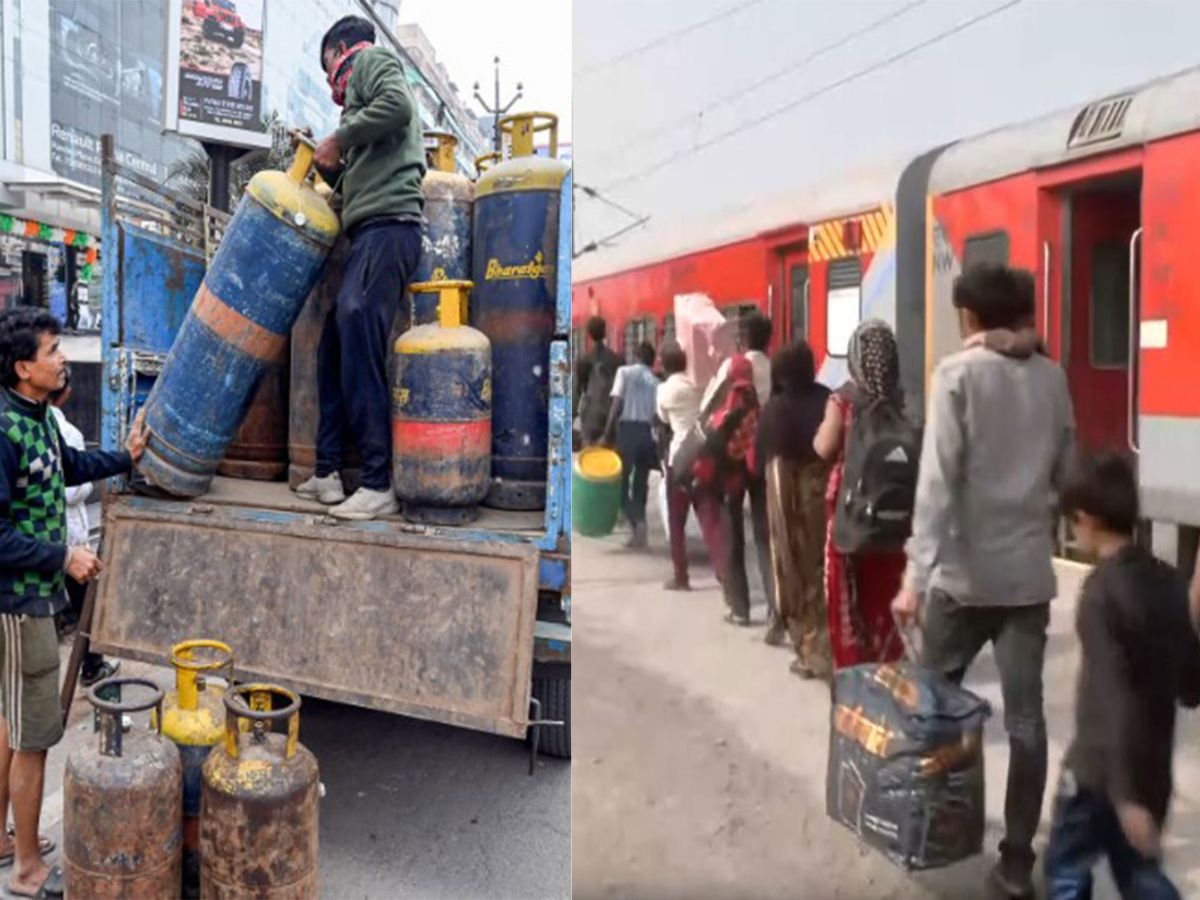

Three years since the COVID-19 pandemic caused one of the largest internal migrations in India, another crisis is forcing migrant workers to leave cities and go back to their villages. The current situation, however, is a drastic shortage of LPG (liquefied petroleum gas), which is associated with the current US-Israel-Iran War. With supply chains struck and cooking gas becoming scarce and expensive, everyday life in urban centres is becoming less sustainable to low-income workers. It is starting to resemble the panic observed during the 2020 lockdowns, as employees are shipping their items and walking back home en masse.
LPG Crisis: How Is It Reshaping Urban Workforce?
This has been especially devastating on migrant workers of Bihar, most of whom are working in restaurants, hotels and small eateries that are largely reliant on LPG in their day to day running. Thousands of people are losing their livelihoods as businesses are scaling down or closing down due to the irregular supply of gas which means that businesses have to scale down or close down temporarily. Several workers were observed in Danapar Railway Station in Patna waiting to board trains back to their native places and claiming that they could not afford to eat or cook with the gas shortage. The situation was described by many as being one where survival in cities was almost impossible. Employees complained that LPG cylinders are not available or late and those that are available are either not full or are extremely costly. This has seen to it that many have been compelled to change back to traditional cooking techniques such as use of firewood, which is not only inconvenient but also not sustainable in an urban setting.
LPG Crisis: Rise In Passengers, Large Number Of Migrant Workers
It is not only the state of Bihar that is experiencing the crisis but many cities such as Mumbai, Surat and Delhi also feel the effects. Mumbai migrants have begun to move out because they are finding it difficult to cope with the increase in cooking expenses and the declining availability of employment. The trains to states such as Uttar Pradesh, Bihar and West Bengal are experiencing a rise in passengers, with a large number of them being migrant labourers. The magnitude of the issue was shown by a survey of major route passengers who largely attributed the LPG shortage to be one of the major reasons why they left.
We have returned home as we were not getting LPG to cook food.
— Bihar Migrant workers
BJP double engine govt in Bihar and 3 engine govt in Gujarat and Delhi from where they have returned.
Anyway, women in their family would’ve become businesswomen with ₹10,000 so no problem. pic.twitter.com/oGgYCa5gpY
— Shantanu (@shaandelhite) April 4, 2026
Migrant Workers Of Mumbai
But quiet reverse migration is also underway in Mumbai as an ongoing LPG shortage disrupts the lives of migrant workers. A ground report by Indian Express found that a significant number of workers at major railway stations are choosing to return to their hometowns, not due to sudden panic but because of worsening living conditions. Many migrants reported difficulty in accessing LPG cylinders, with supplies either unavailable or sold at inflated prices in the black market. For workers living in shared accommodations without proper documentation, securing official gas connections has become even more challenging. The crisis has made basic survival difficult. With cooking gas scarce, workers are unable to prepare meals, and rising food prices have made eating outside unaffordable. As daily expenses rise and incomes remain uncertain, many are exhausting their savings. Unlike the chaotic exodus during the COVID-19 lockdown, this migration is gradual and driven by practical concerns. Workers say they intend to return once the LPG supply stabilises and living conditions improve in the city.
LPG Crisis: Rishikesh And Char Dham Yatra
Rishikesh is currently experiencing acute shortage of LPG due to the ongoing conflict in West Asia, which is seriously affecting the hospitality industry in this town on the eve of the Char Dham Yatra, As reported by ANI. Hotels and dhabas are finding it hard to operate and most of them are turning to using wood and coal as their source of heating because of inconsistent or no supply of gas.
#WATCH | Rishikesh, Uttarakhand: Dhaba owner Suresh says, “We are facing a lot of problems because gas cylinders are getting expensive. If someone is selling on the black market, they are charging Rs 2,500. The situation is bad at the agency as well. They say that the gas will be… pic.twitter.com/NJefduRcO6
— ANI (@ANI) April 3, 2026
According to the restaurant owners the supply of commercial LPG is much less than the demand and they have had to make hard decisions such as increasing the food prices or closing down. There is a growing worry that the pilgrimage season might be affected by the crisis. Meanwhile, Defence Minister Rajnath Singh has emphasised on constant monitoring and preventive actions in order to reduce the effects of the conflict in India.
LPG Prices: The Significant Rise
The acute increase in the LPG prices has contributed significantly to the escalation of the crisis. Cylinders of 5 kg which were priced about Rs 500 a few years back are now selling between Rs 1,100 and 2000. There is a reported increase in price of standard 14.2 kg cylinders to up to Rs 3, 200 to Rs 4,000 in certain areas. The situation has been worsened by the reports of black market sales with prices reaching up to Rs 500 per kg. To employees who earn modest wages on a daily basis, such expenses are merely unaffordable, and they have no choice but to abandon urban areas.
LPG Crisis And US-Israel-Iran War
The basis of the crisis is the continued war in West Asia that has caused a disruption in the energy supply chains across the globe. Almost 60 per cent of its LPG needs are imported by India, most of that by this region. Blockage or congestion of major shipping routes has slowed down shipments which has created shortages in supplies and delays. The ripple effect is now being experienced not only in households but in industries as well as restaurants are reducing their operations and businesses are incurring losses. The crisis has also not only been economic in nature but has also impacted the lives and stability of millions of people on a daily basis. The government in its turn has declared a set of actions in order to stabilise the situation and guarantee further supply. The Petroleum Ministry has mentioned that it is struggling to keep a constant supply of LPG, petrol and diesel and is discouraging panic buying. Governments have ensured that they supply the basic needs like households, hospitals and schools, and promote the consumption of alternative fuels like PNG, kerosene and electric cooking devices.




