

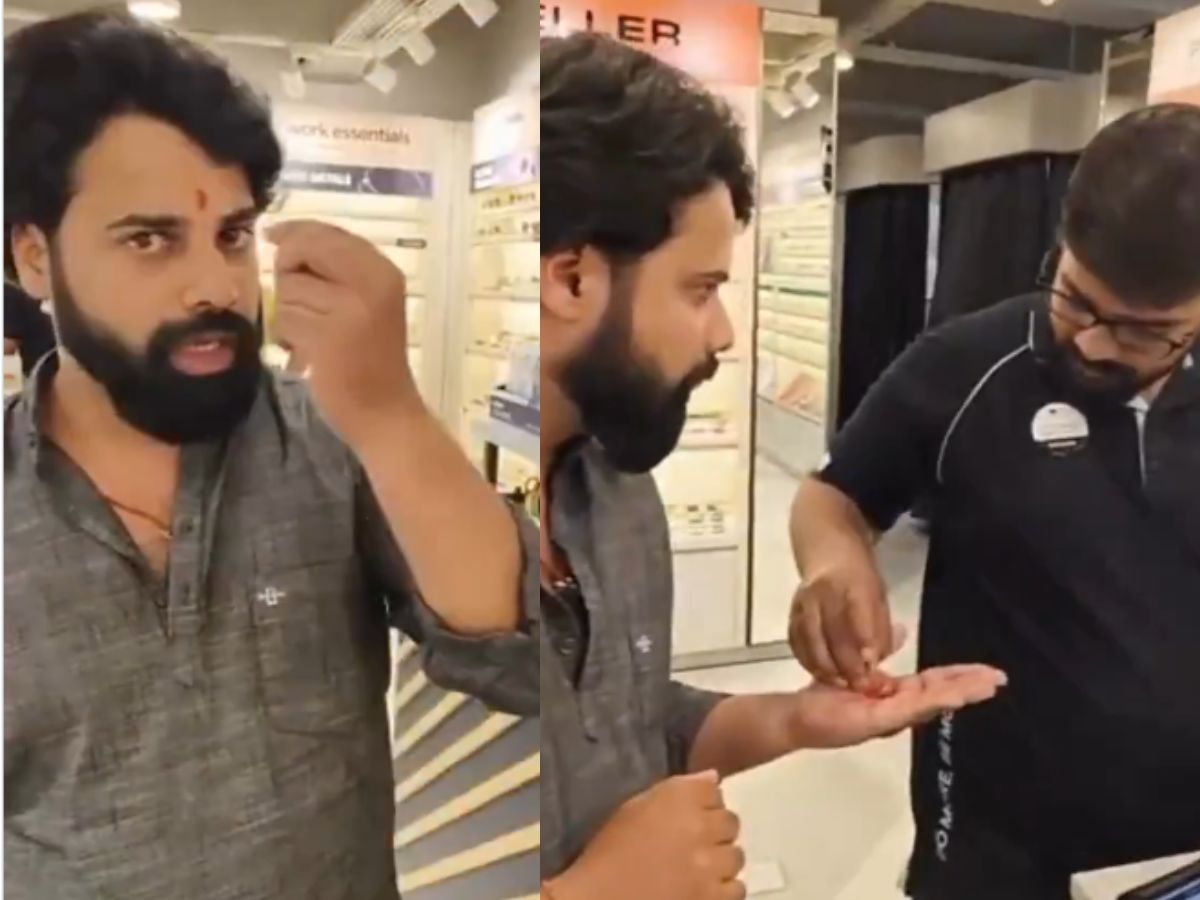
A controversy around eyewear brand Lenskart has triggered a wider conversation on workplace policies and religious expression, after an alleged internal grooming guide went viral on social media.
The document suggested that employees could wear black hijabs and turbans, but not symbols like bindis, tilaks, chooda, or kalawa threads. The perceived contradiction quickly drew criticism online, with many questioning whether the company was applying rules selectively.
The row began when screenshots of what appeared to be a “Staff Uniform and Grooming Guide” started circulating online. The document reportedly stated that “bindi/sticker” and “religious tilak” were not allowed, while specifying guidelines for hijabs and turbans.
The issue struck a nerve, with users debating fairness, inclusivity, and whether companies should regulate visible markers of faith at all. Many argued that corporate policies must treat all religious expressions equally, rather than appearing to favour one over another.
Founder Peyush Bansal Issues Clarification
Responding to the outrage, Lenskart founder Peyush Bansal said the viral document was outdated and did not reflect the company’s current policy.
He admitted there had been a “language lapse” in the earlier material but stressed that Lenskart does not restrict any form of religious expression. According to him, employees are free to wear symbols such as bindis and tilaks, and the company has already removed the incorrect wording from internal documents.
Bansal also said the company continues to review its policies to ensure they align with its values of inclusivity.
Store Incident Adds Fuel to Online Debate
Amid the ongoing controversy, another incident grabbed attention online. A man visited a Lenskart store and asked employees to apply tilak, seemingly as a reaction to the policy row. The episode quickly went viral, with social media users linking it to the broader debate around religious identity at workplaces.
Peyush Bansal or an HR of Lenskart could have easily gone to a showroom and done this and put an end to all controversy. But they kept busy in posting false tweets. Whereas a common man goes and does what the whole internet wanted to see. Chad guy🔥 pic.twitter.com/KsVx7BHorL
— SwatKat💃 (@swatic12) April 17, 2026
Many users said such a situation could have been avoided if the company had addressed the issue earlier and more clearly. Some even remarked that Bansal himself should have stepped in sooner to prevent confusion and public backlash.
Debate on Corporate Neutrality Continues
Even after the clarification, the discussion shows no signs of slowing down. While some accepted the company’s explanation, others continue to question how such guidelines were drafted in the first place.





