
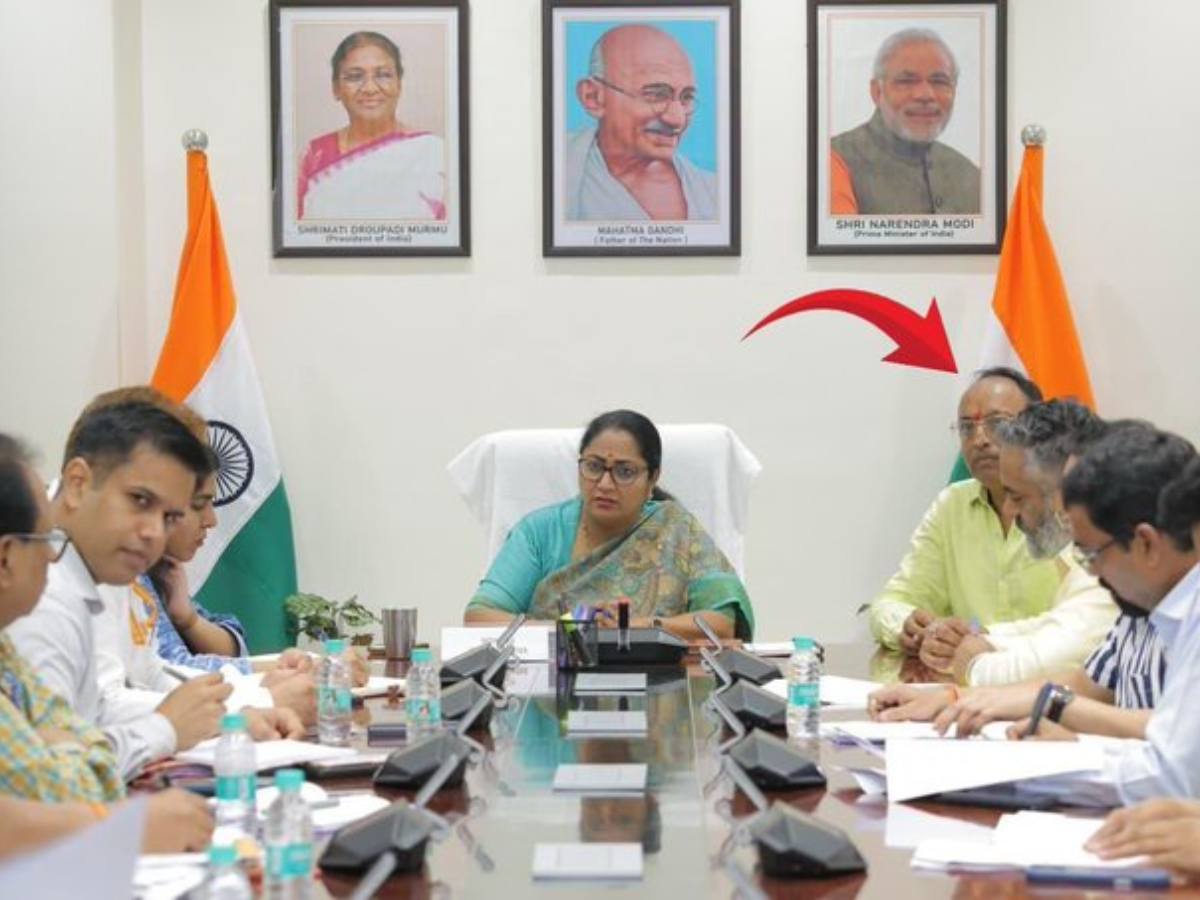

Delhi AAP President Saurabh Bharadwaj accused Chief Minister Rekha Gupta of allowing her husband to take part in government functions. He claimed that Gupta’s husband attended official meetings, carried out inspections, and issued instructions to officers.
Bharadwaj said this was a violation of the oath of secrecy taken under the Constitution. He further questioned the BJP over the role of Gupta’s husband, stating that no law allows a family member without an official position to intervene in state matters.
AAP Seeks Clarification from BJP
Bharadwaj demanded that the BJP clarify what official position Rekha Gupta’s husband holds. He alleged that an industrialist cannot run or influence government activities. According to him, the situation reflects unethical and unconstitutional practices. Bharadwaj said the party raised these concerns to safeguard democratic accountability and ensure that only elected representatives exercise authority. He urged the BJP to address the matter publicly and explain the legitimacy of Gupta’s husband’s involvement in government affairs.
BJP Responds Through Amit Malviya
BJP leader Amit Malviya countered the allegations in a post on X. He said the Aam Aadmi Party should raise stronger points instead of targeting Rekha Gupta. Malviya clarified that Gupta was conducting a review meeting in her constituency, which her husband managed, similar to how former Chief Minister Sheila Dikshit’s constituency was managed by her sister Rama Dhawan. He added that Sunita Kejriwal also looked after Arvind Kejriwal’s constituency in the past.
The Aam Aadmi Party should find something more substantive to target Delhi Chief Minister Rekha Gupta. She was holding a review meeting of her constituency, which is managed by her husband—just as Smt. Sheila Dikshit’s constituency was managed by her sister Rama Dhawan, and… https://t.co/pXp5ctck8e
— Amit Malviya (@amitmalviya) September 8, 2025
Defending CM, Malviya said Rekha Gupta’s husband neither occupied her chair nor issued illegal directions to officers. He argued that comparisons with previous leaders prove that family involvement in constituency management is not new. Malviya urged AAP to stop attacking Gupta for being a woman leader performing effectively. He added that Gupta’s leadership has highlighted weaknesses in Arvind Kejriwal’s political standing, making her a target for criticism from the opposition. BJP leaders said Gupta continues to focus on governance despite these allegations.
Who is running the Government of Delhi? Is it Madame Rekha Gupta or her husband? pic.twitter.com/zMh1lHAmyZ
— Congress Kerala (@INCKerala) September 7, 2025
Can Relatives, Spouses Attend Such Meetings? The RULE
The Aam Aadmi Party alleged that Delhi Chief Minister Rekha Gupta’s husband attends meetings with government officials. AAP leaders shared pictures of Gupta’s meeting on social media and claimed the Delhi government was functioning like a Phulera Panchayat, where the Chief Minister’s husband played an active role in place of the elected leader. This raised the question of whether relatives of a Chief Minister can take part in official meetings.
Meetings chaired by a Chief Minister hold great significance. In these sessions, policies are framed, budgets are reviewed, and key decisions about the state’s development are taken. Citizens often ask whether family members of a Chief Minister can sit in such discussions. The answer is straightforward relatives cannot attend unless they hold an official post.
Rules for Official Meetings
As per government rules, only ministers, departmental officers, or subject experts can participate in official meetings led by the Chief Minister. Personal acquaintances or family members are not permitted. If a relative serves as an MLA, minister, or officer, then their presence is allowed in that official capacity.
Cabinet meetings are among the most confidential gatherings in governance and hence NO family member or outsider is allowed to attend. The Cabinet Secretariat Manual and the Business Rules clearly state these restrictions.
When a Chief Minister visits districts or holds departmental review sessions, only concerned officials and technical experts are called. Relatives may join only if they hold an authorized role at that time. Otherwise, their presence is not allowed.
The Chief Minister can meet relatives privately, but such interactions are considered personal, not official. Their participation in government meetings may lead to questions of conflict of interest and transparency.
Must Read: Guwahati Guest House Murder: Missing Teen Found Hanging In Locked Room
Swastika Sruti is a Senior Sub Editor at NewsX Digital with 5 years of experience shaping stories that matter. She loves tracking politics- national and global trends, and never misses a chance to dig deeper into policies and developments. Passionate about what’s happening around us, she brings sharp insight and clarity to every piece she works on. When not curating news, she’s busy exploring what’s next in the world of public interest. You can reach her at [swastika.newsx@gmail.com]




