
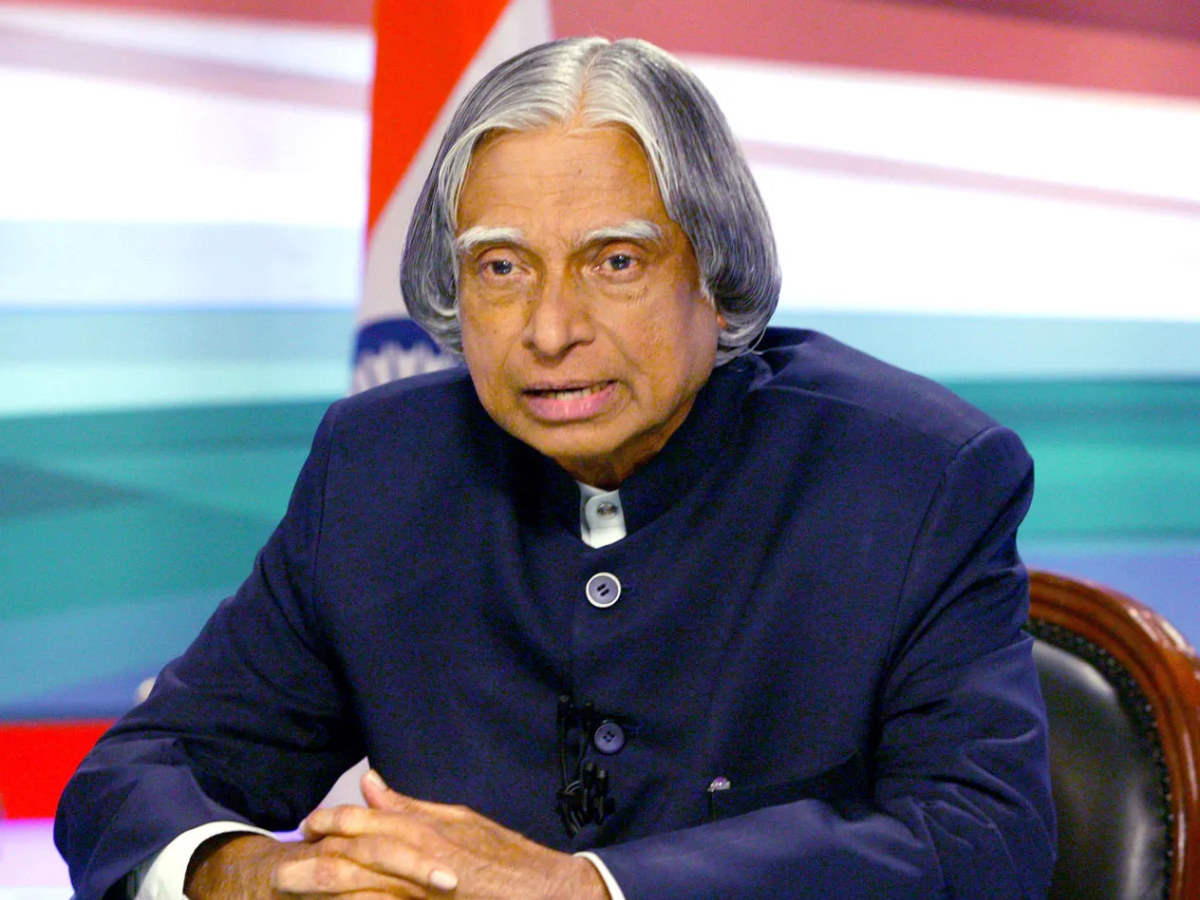

India lost its 11th President and celebrated scientist Dr. APJ Abdul Kalam on July 27, 2015. He collapsed while delivering a lecture at IIM Shillong and passed away at the age of 83. Kalam, also known as the “Missile Man of India”, led several landmark scientific projects in India. The Government declared a seven-day state mourning. Kalam was buried with full state honours in his hometown Rameswaram. Over 3.5 lakh people, including scientists, political leaders, and citizens, attended his funeral. His passing marked the end of a unique era that combined science, education, and leadership.
EaKalam’s Early Life of a Visionary
APJ Abdul Kalam was born on October 15, 1931, in Rameswaram, Tamil Nadu. His father worked as a boatman and imam, while young Kalam sold newspapers to support the family. Despite limited resources, he showed strong interest in learning. He studied physics at St. Joseph’s College, Tiruchirappalli, and pursued aerospace engineering at Madras Institute of Technology. Although he ranked 9th in the Air Force pilot test (with only 8 slots available), Kalam entered the Defence Research and Development Organisation (DRDO) in 1958, starting his lifelong contribution to India’s scientific and defence advancements.
Kalam’s Contributions to ISRO and DRDO
In 1969, Kalam joined the Indian Space Research Organisation (ISRO). As the project director of India’s first Satellite Launch Vehicle (SLV-III), he led the successful launch of the Rohini satellite in 1980. He later returned to DRDO and spearheaded the Integrated Guided Missile Development Programme (IGMDP).
Under his leadership, India developed key missiles like Agni and Prithvi. His efforts earned him the title “Missile Man of India.” He also played a major role in Pokhran-II nuclear tests in 1998, which established India as a nuclear power. Kalam’s work left a permanent mark on India’s defence capability.
Presidency and Youth Engagement
In 2002, APJ Abdul Kalam became the 11th President of India. He was the first scientist and bachelor to occupy the position. His time in Rashtrapati Bhavan was marked by active engagement with youth. Known as the “People’s President,” he regularly met students, encouraged scientific thinking, and promoted education and innovation.
Kalam’s simple lifestyle and approachable nature made him widely respected. After his presidency, he continued teaching as a visiting professor at various institutions like IIM Shillong, IIM Ahmedabad, and IISc Bangalore. He remained active in public life until his last day.
Books, Ideas, and Global Recognition
Dr. Kalam authored many books, including Wings of Fire, India 2020, Ignited Minds, and My Journey. His writings continue to influence students, educators, and policymakers. He received the Bharat Ratna, Padma Bhushan, and Padma Vibhushan. Over 40 universities awarded him honorary doctorates.
His house in Rameswaram is now a memorial, and DRDO named its missile complex in Hyderabad after him. UN Secretary-General Ban Ki-moon called him a “great statesman and visionary.” Kalam’s thoughts like “Dream, dream, dream. Dreams transform into thoughts and thoughts result in action,” remain etched in classrooms and hearts across the world.
Swastika Sruti is a Senior Sub Editor at NewsX Digital with 5 years of experience shaping stories that matter. She loves tracking politics- national and global trends, and never misses a chance to dig deeper into policies and developments. Passionate about what’s happening around us, she brings sharp insight and clarity to every piece she works on. When not curating news, she’s busy exploring what’s next in the world of public interest. You can reach her at [swastika.newsx@gmail.com]




