
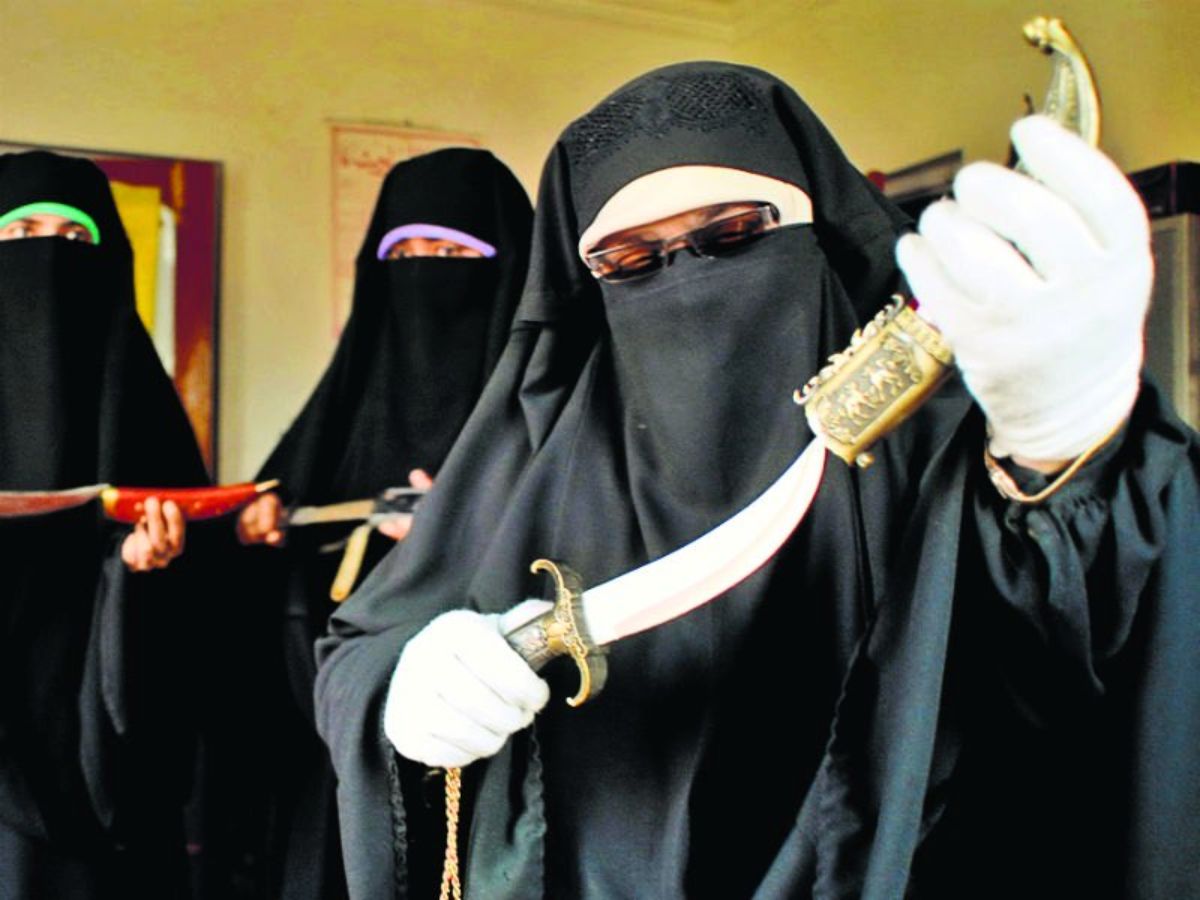

A Delhi court on Tuesday sentenced Kashmiri separatist leader Asiya Andrabi to life imprisonment in a case under the Unlawful Activities (Prevention) Act (UAPA), marking a significant development in a long-running terror conspiracy case. Two of her associates, Sofi Fehmeeda and Nahida Nasreen, were sentenced to 30 years in prison each.
Asiya Andrabi: Delhi Court Verdict and Sentencing Details
The verdict was pronounced by Additional Sessions Judge Chander Jit Singh after hearing arguments on the quantum of sentence. The trio had earlier been convicted on January 14, 2026, under multiple provisions of the UAPA and the Indian Penal Code (IPC), including charges of criminal conspiracy and waging war against the state.
The court’s decision comes following strong submissions by the National Investigation Agency (NIA), which sought life imprisonment for Andrabi, arguing that her actions amounted to waging war against India and required the strictest punishment.
Asiya Andrabi: Arrest and Charges Under UAPA
Asiya Andrabi was arrested in April 2018 and charged with conspiracy to carry out terrorist activities, membership in a banned organisation, and supporting secessionist movements in Jammu and Kashmir.
The case against her and her associates included allegations of promoting anti-India activities and involvement in efforts aimed at destabilising the region.
Asiya Andrabi: Founder of Dukhtaran-e-Millat
Asiya Andrabi is best known as the founder of Dukhtaran-e-Millat (DeM), an all-women separatist organisation established in the mid-1980s. The group was initially formed with a focus on social and religious reform but later became associated with hardline Islamist positions.
In 2018, the Government of India declared Dukhtaran-e-Millat a terrorist organisation and imposed a ban under anti-terror laws.
Asiya Andrabi: Early Life and Ideological Shift
Born in 1963 in Srinagar, Asiya Andrabi pursued a degree in home science before turning towards Islamic literature, which reportedly shaped her ideological leanings.
She later joined the women’s wing of Jamaat-e-Islami, another organisation that was banned by the Centre in 2019. Andrabi eventually broke away to establish her own group, which gained prominence in the early 1990s.
Asiya Andrabi: Rise of Dukhtaran-e-Millat in Kashmir
Under Andrabi’s leadership, Dukhtaran-e-Millat rose to prominence in 1991, particularly during its controversial campaign advocating the enforcement of the veil in Jammu and Kashmir.
Over the years, the organisation became a key player in separatist politics in the region, often drawing attention from security agencies.
NIA Pushes for Maximum Punishment
Following her conviction, the National Investigation Agency argued in court that Andrabi’s actions were not merely ideological but constituted active involvement in anti-national activities.
The agency stressed that awarding life imprisonment would send a strong message against attempts to conspire against the Indian state.
A Landmark Verdict in UAPA Cases
The sentencing of Asiya Andrabi is being seen as a significant ruling in cases involving separatist leaders under the Unlawful Activities (Prevention) Act.
With this verdict, the court has reinforced the legal consequences of engaging in activities deemed as threats to national security, while also bringing closure to a case that has been under investigation for several years.
Sofia Babu Chacko is a journalist with over five years of experience reporting on Indian politics, crime, human rights, gender issues, and stories about marginalized communities. She believes journalism plays a crucial role in amplifying unheard voices and bringing attention to issues that truly matter. Sofia has contributed articles to The New Indian Express, Youth Ki Awaaz, and Maktoob Media. She is also a recipient of the 2025 Laadli Media Awards for gender sensitivity. Beyond the newsroom, she is a music enthusiast who enjoys singing. Connect with Sofia on X: https://x.com/SBCism




