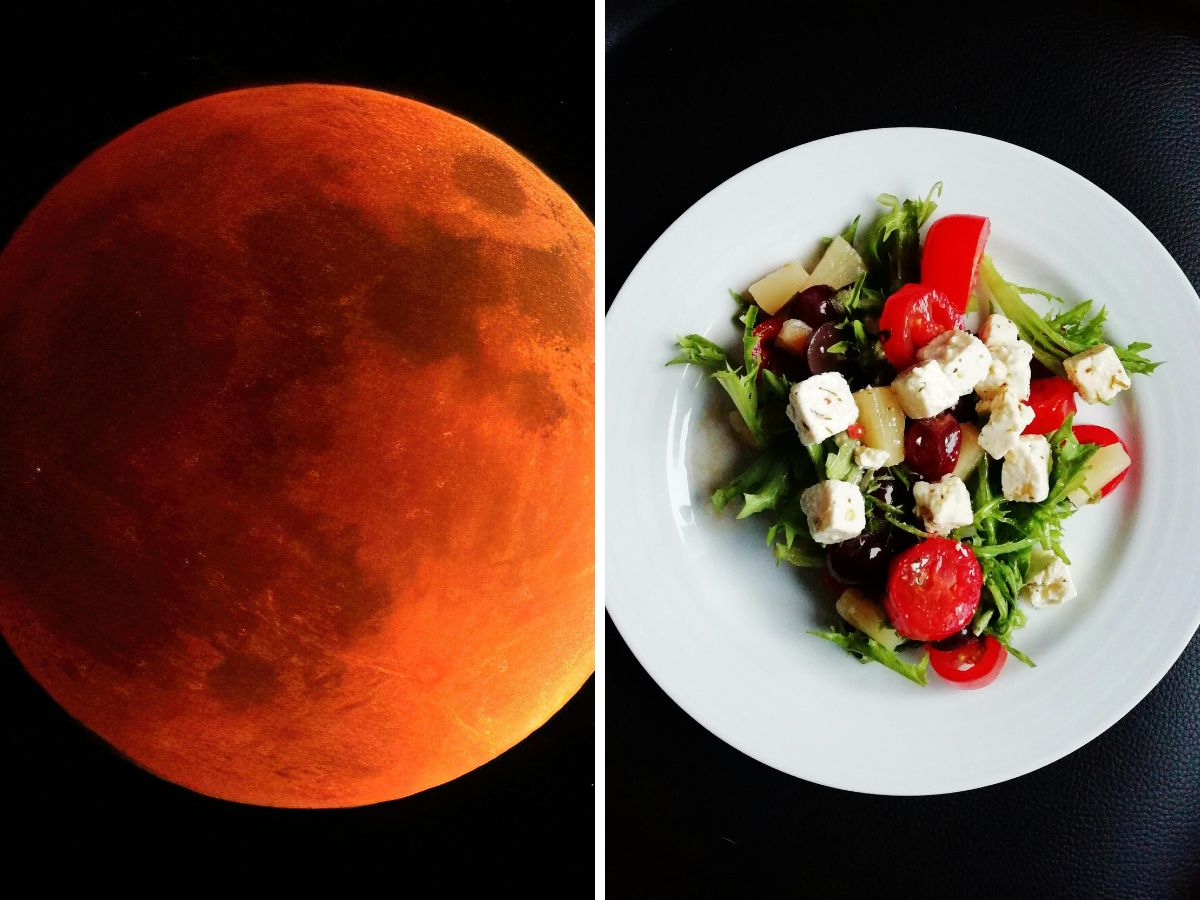

At the time of Chandra Grahan, or lunar eclipse, millions of people across India, Southeast Asia, and some parts of Latin America follow an ancient tradition of avoiding food. The practice, therefore, linked to religious theories and beliefs, has raised questions about its roots and scientific origin.
Factually, the eclipse was seen as a time of cosmic disorder. In Hindu traditions, the period of Sutak, which commences hours before the eclipse, forbids eating, cooking, and even drinking water.
So, of the similar practices are noticed among Buddhist communities in Thailand and Myanmar, as well as some Indigenous groups in Central and South America. This belief is entrenched in the idea that the eclipse spoils food, making it contaminated.
Scientifically, no evidence shows that the food undergoes any chemical or biological change at the time of a lunar eclipse. The Moon’s shadow fleeting over the Earth does not release radiation or harmful energy that can spoil food.
As per, Indian Council of Medical Research (ICMR) and the World Health Organization (WHO), the safety of food is not compromised during any of the astronomical events like lunar eclipse.
Professionals who believe in the customs of fasting, may have had hygienic origins in ancient times. Without refrigeration, uneaten food left out for hours, particularly in tropical climates, might spoil, leading to foodborne disease. All these precautionary measures might have progressed into declared fasting norms.
Currently, most of the people follow these practices out of their tradition and their respect for cultural or religion. Others interpret it as a chance for detox, meditate, or seek spiritual attention.
In spite of the fact that science in modern era contradict the idea of eclipse-related food contamination, these beliefs continue to persist.
However, it leads to replicate a profound juncture of astronomy, health, and heritage across several societies and cultures.
Also Read: Chandra Grahan Baby Birth: What Happens When You’re Born During A Chandra Grahan?
Ankur Mishra is a journalist who covers an extensive range of news, from business, stock markets, IPOs to geopolitics, world affairs, international crises, and general news. With over a decade of experience in the business domain, Ankur has been associated with some of the reputed media brands. Through a sharp eye on global marketplaces along with deep insights and analysis of business strategies, Ankur brings simplicity to the complex economic matrix to decode market trends and empower people.
He is committed to entrenched data, facts, research, solutions, and a dedication to value-based journalism. He has covered trade tariff wars, international alliances, corporate policies, government initiatives, regulatory developments, along with micro- and macroeconomic shifts impacting global fiscal dynamics.