
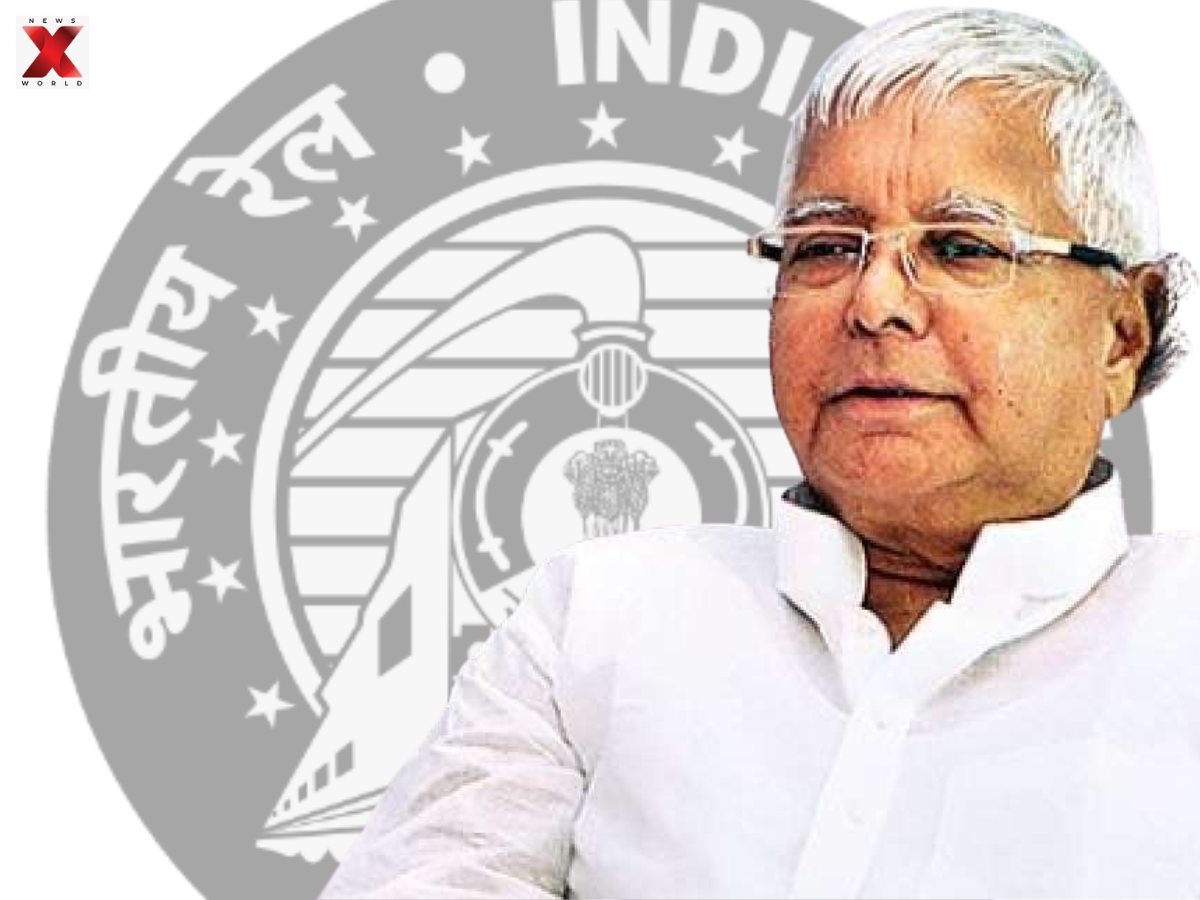

Lalu Prasad Yadav: The Delhi High Court on Monday sent a notice to the CBI after Lalu Prasad Yadav, former Bihar Chief Minister and RJD chief, challenged the charges against him in the alleged IRCTC scam.
Justice Swarana Kanta Sharma asked the CBI to respond and set the next hearing for January 14. Senior Advocate Kapil Sibal showed up for Yadav, while Senior Advocate and SPP DP Singh represented the CBI.
Lalu Prasad Yadav: What’s latest with IRCTC land-for-hotels scam?
Back in October 2025, the trial court framed charges against Yadav, his wife Rabri Devi, his son Tejashwi Prasad Yadav, and 11 others.
The court accused them of cheating and criminal conspiracy. The Prevention of Corruption Act also comes into play here. According to the order, all 14 accused face charges under criminal conspiracy (Section 120B IPC), cheating (Section 420 IPC), and specific sections of the Prevention of Corruption Act.
The trial court didn’t mince words. It called the land and share deals in question “possibly an instance of crony capitalism,” basically hinting that private deals were masked as efforts to bring private players into the management of railway hotels in Ranchi and Puri.
Others who now face charges include Pradeep Kumar Goel, Rakesh Saksena, Bhupendra Kumar Agarwal, Rakesh Kumar Gogia, and Vinod Kumar Asthana.
The court also ordered that Lalu Prasad, Rabri Devi, Tejashwi Yadav, M/s LARA Projects LLP, Vijay Kochhar, Vinay Kochhar, Sarla Gupta, and Prem Chand Gupta be charged with cheating under Section 420 of the IPC.
What is the IRCTC scam case?
The IRCTC land-for-hotels scam centres on accusations that Lalu Prasad Yadav, while he was Railway Minister, and his family got prime land in exchange for handing out hotel maintenance contracts to a private company, sidestepping the rules.
So, here’s how it all unfolded. Between 2004 and 2009, when Lalu ran the Railways under the UPA government, the CBI claims he favored Sujata Hotels owned by Vijay and Vinay Kochhar by giving them contracts for running two IRCTC hotels, BNR Ranchi and BNR Puri. The CBI says the bidding process was twisted, and rules were changed just to fit Sujata Hotels in.
What did Lalu Prasad Yadav’s family get out of it?
According to investigators, a three-acre plot in Patna was acquired by a company called Delight Marketing Company, which later became Lara Projects LLP.
People close to the Yadav family were apparently behind this company. That land was sold way below market rates and, before long, ended up in the names of Rabri Devi and Tejashwi Yadav. The CBI calls this a textbook quid pro quo—public contracts for private gain.
The whole thing came to a head in July 2017 when the CBI filed an FIR. They named Lalu, Rabri, Tejashwi, the Kochhar brothers, and former IRCTC managing director P.K. Goel. After that, raids followed at places tied to the Yadavs in Patna, Delhi, Ranchi, and Gurugram.
By March 2025, the CBI wrapped up its arguments on whether to frame charges. Special Public Prosecutor D.P. Singh said the evidence pointed straight to corruption and conspiracy.
Then, on October 13, 2025, Special Judge Vishal Gogne charged 14 people under criminal conspiracy and cheating sections of the Indian Penal Code, plus the Prevention of Corruption Act.
Lalu, Rabri, and Tejashwi now face charges under sections 120B (criminal conspiracy) and 420 (cheating). Lalu, as a public servant, also faces specific corruption charges.
Of course, everyone accused denies any wrongdoing. Lalu has always said the case is just political vendetta and insists there’s no real evidence. Rabri and Tejashwi—not guilty, they say, and they’re ready for trial.
Now, with the charges set, the case is moving out of pre-trial and into a full trial, where actual witnesses and evidence will take center stage in Rouse Avenue Court.
Here’s a quick timeline:
2004–2009: Alleged scam happens while Lalu is the Railway Minister.
July 2017: CBI files FIR and raids several locations.
March 2025: CBI finishes arguments on framing charges.
October 13, 2025: Court frames charges; all accused plead not guilty.
This isn’t Lalu’s first run-in with corruption charges; he’s already been convicted in other fodder scam cases but is currently out on bail. Now, after eight years of investigation and legal wrangling, the IRCTC scam finally headed into the trial phase.




