
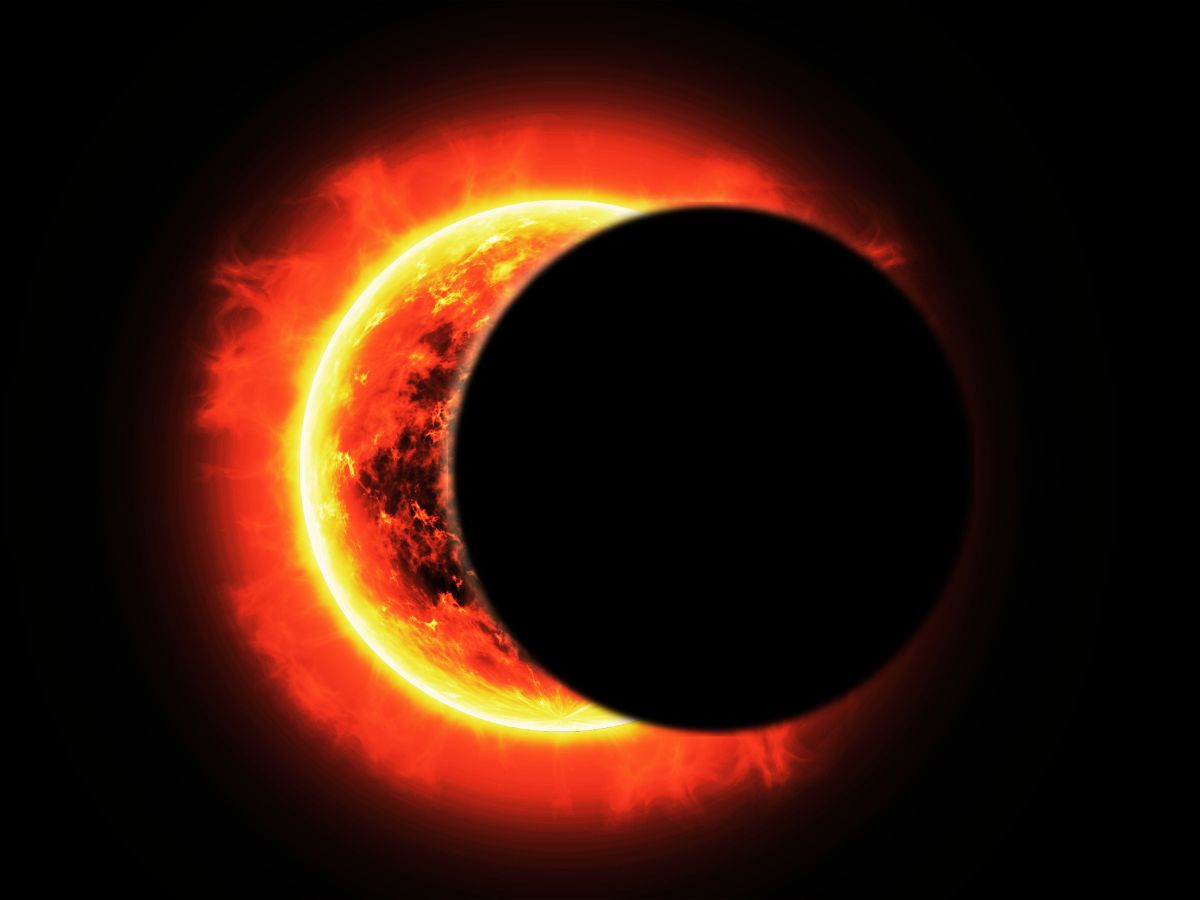

Solar Eclipse 2025: On Sunday, September 21, a partial solar eclipse (Surya Grahan) will take place. According to NASA and EarthSky.org, this will be the last eclipse of the year and will occur at the Moon’s descending node of orbit as a special treat for skywatchers in the Southern Hemisphere, where it will only be visible for some regions.
The September 21 suffix solar eclipse will begin at 17:29 UTC (10:59 PM IST) to arrive at 21:53 UTC (3:23 AM IST on September 22). The ecliptic maximum will occur at 19:41 UTC (1:11 AM IST) when 85.92 % of the Sun will be obscured by the Moon. While this will be a spectacular event to observe inside the distinct web of observation, the time frame will also disadvantage for all skywatchers in India and the Northern Hemisphere.
India, Pakistan, Nepal, Sri Lanka, Afghanistan, North America and the majority of South America will be denied this solar eclipse because the Sun will look perfectly unobstructed in these countries. The nations where the eclipse is visible are New Zealand, in which the city of Dunedin will see as much as 72 percent Sun coverage, portions of eastern Australia, South Pacific islands like Fiji and Samoa, and even Antarctica, in which viewers will have a spectacular sunrise with extensive solar coverage.
The ending of Pitru Paksha
It is interesting to note the timing of the solar eclipse at the very end of Pitru Paksha (a 16-day period in the Hindu calendar to honour one’s ancestors through the Shraddh rites). Although the solar eclipse is not going to be visible from India, and therefore there is no Sutak or period of ritual restraint to follow, some people may still continue to observe token religious rituals during this time of the eclipse perhaps as an action of devotion or ritual purity.
While the Surya Grahan may not be visible from India, people who had an interest in astronomy and also people who merely enjoyed watching the sky would still have a chance to see Surya Grahan by way of live telecasts and webcasts carried by several observatories and space agencies. When an event like this occurs, there will be live telecasts from various observatories and agencies for people to view around the world via the internet.
Precautions should be taken
A word of caution from the experts is that if you want to view a solar eclipse, safety precautions must be adhered to first. Under no circumstances should you look directly at the sun, even during the partial eclipse or long-term permanent damage to your eye is very likely. For viewing a solar eclipse: “you must wear certified solar eclipse glasses or use a telescope with eclipse filters.” “Cameras and binoculars should not be used unless you have a solar filter on.” Telescopes and binoculars magnify sunlight, which damages the eye.
The solar eclipse occurring on September 21, will provide quite a show for people in the Southern Hemisphere. A great opportunity will be in New Zealand, Australia and many locations in the Pacific islands. Those in India are not missing out, though they will not be able to see it physically, since they have the opportunity to view it virtually, and no one will be completely missing this extraordinary celestial event.
ALSO READ: Solar Eclipse 2025: Big Changes Ahead for Every Zodiac Sign – Read to Know How It Affects You
Sofia Babu Chacko is a journalist with over five years of experience reporting on Indian politics, crime, human rights, gender issues, and stories about marginalized communities. She believes journalism plays a crucial role in amplifying unheard voices and bringing attention to issues that truly matter. Sofia has contributed articles to The New Indian Express, Youth Ki Awaaz, and Maktoob Media. She is also a recipient of the 2025 Laadli Media Awards for gender sensitivity. Beyond the newsroom, she is a music enthusiast who enjoys singing. Connect with Sofia on X: https://x.com/SBCism




