

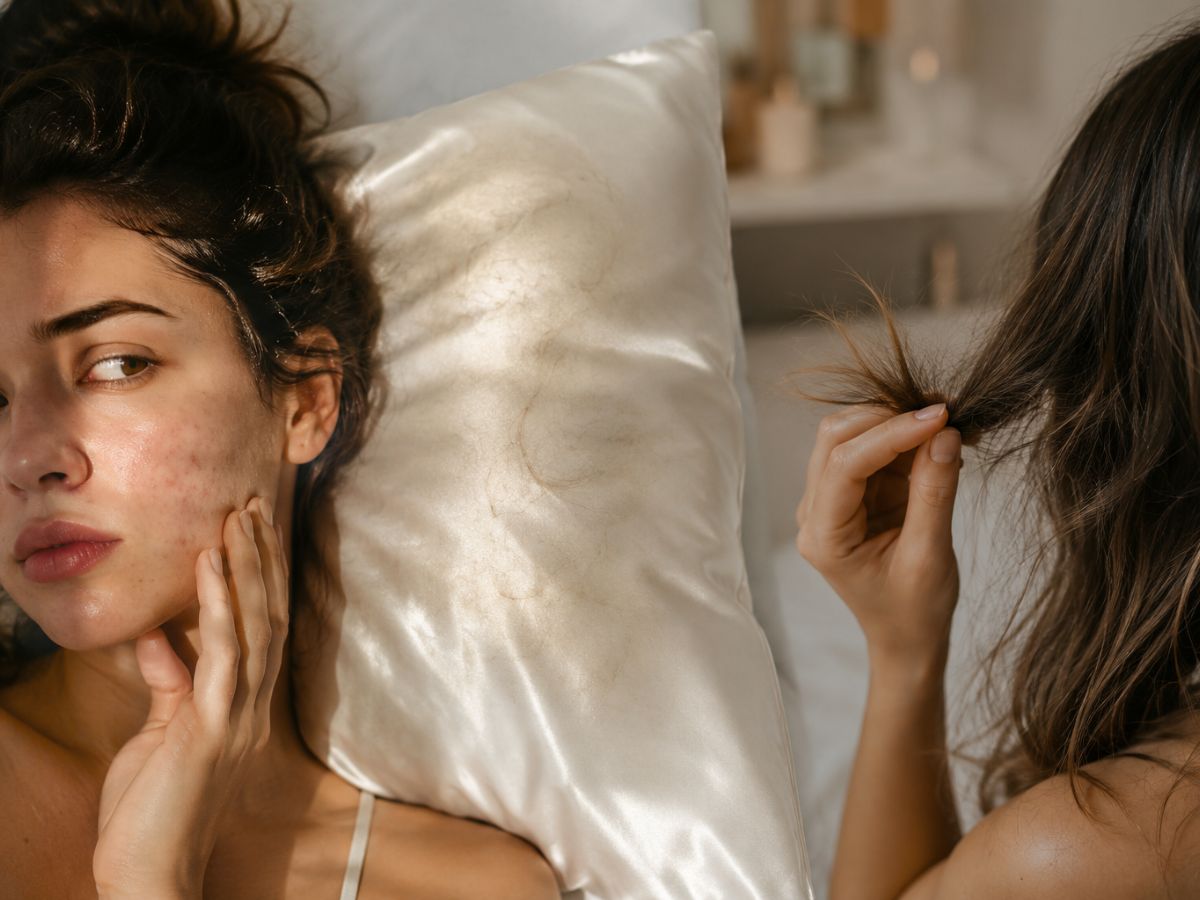
If you have acne or bad hair days, they’re more likely to stem from your pillowcase than your diet or stressful job. It may sound hard to believe that such a simple everyday item can influence your skin and hair, but dermatologists say it can. While it isn’t the main cause, however, it can certainly make existing acne-prone skin and breakage more difficult to manage. Dermatologists explain that your pillowcase can become a breeding ground for sweat, skin oils, skin cells, and germs. And when you sleep on the same pillowcase each night, these harmful elements can get back on your face. If you’ve already had acne flare-ups before, you’ll be more susceptible to clogged pores, breakouts and inflammation.
So, it’s recommended to wash extra often. Pillowcases should be washed every 3 to 4 days at most.
Effects Of Pillowcases On Hair Quality
Hair experts say that it isn’t just the skin. If your hair is prone to splitting and breaking, a rough surface can also be to blame. Every time you sleep, the friction caused by the fabric can actually cause a lot of damage, causing frizz, breakage and split ends. If you have curly or natural hair, this problem is especially significant; a cotton pillowcase is the culprit because it can actually pull moisture from your hair.
In addition to the material of the pillowcase, specialists say there are other options that can help reduce damage. The length of time that a pillowcase is exposed to bacteria can be reduced by washing them more often, ideally, every 3 to 4 days. Larger and thicker pillowcases also tend to reduce damage more than small or thin pillowcases.
Fabric Choice Matters
They’ve often advised switching to smoother materials such as silk and satin. The reduced friction helps both skin and hair retain their natural moisture. It won’t eliminate acne or hair trouble, but it can go a long way to reduce overnight friction on both.
What Experts Say
The professionals want you to understand that pillowcase hygiene is just one component of a larger skincare/haircare routine that includes regular washing, breathable fabrics, and facial cleansing before bed.
Even good sleep hygiene plays a role in good hair and skin. For instance, we recommend keeping hair clean before bed, avoiding heavy or pore-clogging skincare products, and switching up pillowcases more often in hot or humid weather. Small daily routine adjustments can cause build-up and irritation to break down over time.
A pillowcase isn’t a sole cause for acne or hair fall, but can contribute as a hidden irritant along with poor hygiene practices and harsh environmental conditions. Consistency is the biggest factor in seeing long-term benefits.
(Disclaimer: This article is for general informational purposes only and is not a substitute for medical advice. Always consult a qualified dermatologist or healthcare professional for diagnosis and treatment of skin or hair concerns.)
ALSO READ: Why Your Brain Replays Embarrassing Moments At Night And How It Affects Your Sleep Quality?





