
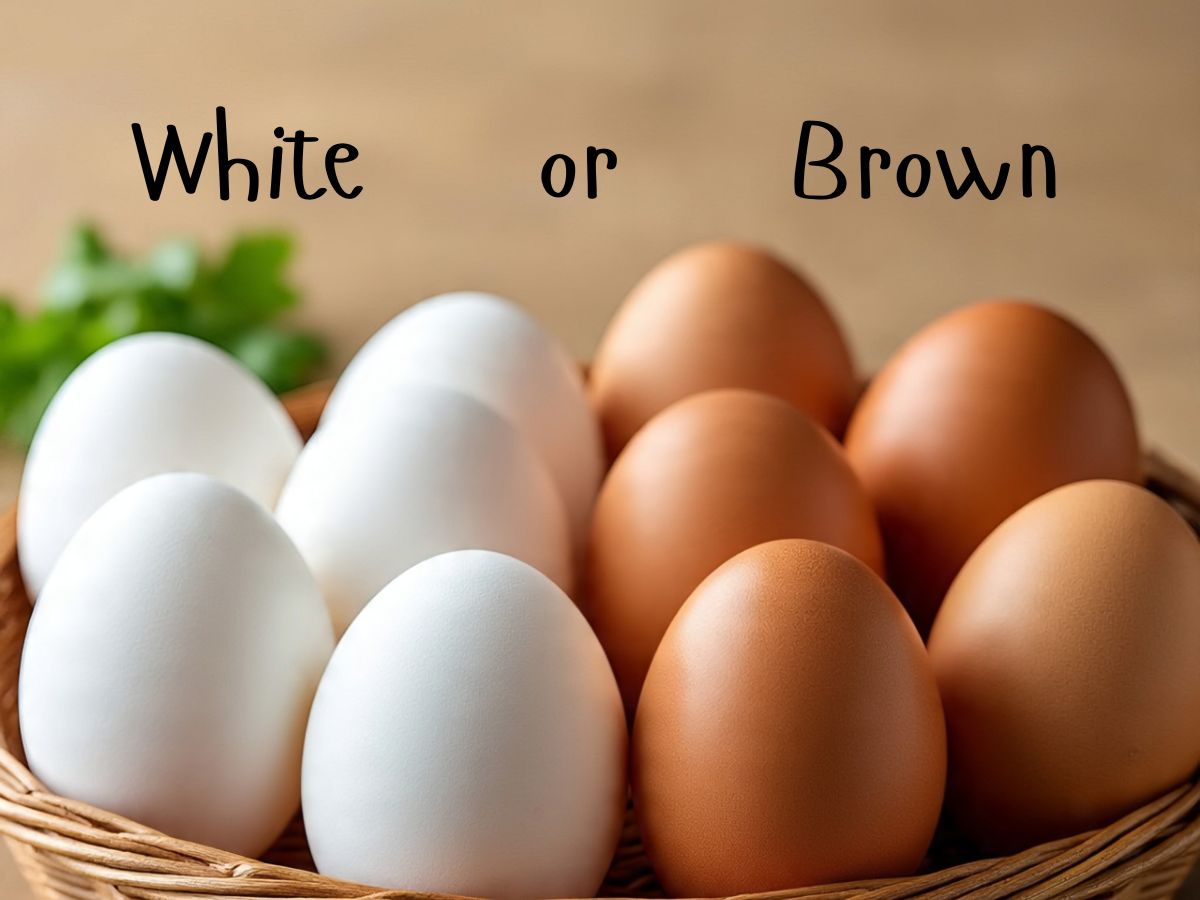

Are brown eggs more nutritious, tasty, or healthier than white eggs in the grocery store? The answer is no! An egg’s shell color broadly affects flavor or nutrition anyway.
What Is The Color of Eggshell?
The egg shell color comes from a hen’s breed. Hens with white feathers and white ear lobes tend to lay white eggs. Hens with brown feathers and red ear lobes tend to lay brown eggs. The eggshell’s color is a marker of how much pigment was laid on the egg during the process of laying the egg. The eggshell color is harmless and a marker of cosmetic nature only (it has nothing to do with the quality or nutrition of the egg).
Do Brown Eggs Have More Nutrition than White Eggs?
The science is in, and eggs (white and brown) are nutritionally similar. Brown eggs and white eggs do have, on average, between 6 – 7 grams of protein, high-quality protein, vitamins A, D, and E, vitamin B12, minerals, and healthy fats. In contrast, eggshell color is less important than the diet/the living and environmental conditions of the hen.
Taste vs Freshness
If you notice a taste difference recently, it’s usually either a egg freshness issue, or the hen’s diet. White eggs taste just as good as brown eggs when pasture-raised hens are able to eat healthy variety of nutritious diet. Therefore, while brown eggs “taste richer” is often stated, when the hens are fresh and fed well, the color does not significantly influence the flavor or texture.
Why Are Brown Eggs More Expensive?
Generally brown eggs are a more expensive egg option than white eggs simple because of the brown hens which lay the eggs are bigger hens that eat more to maintain size, increasing production costs. Since the brown egg is more expensive, it is not due to any value over the white egg due the farm costs being higher, not more nourishing.
Which Should You Choose?
So what should you prefer? Ultimately, the decision to purchase brown instead of white eggs is not a choice of either/or. If you want omega-3 or vitamins A or D, check the grade under the label, such as omega-3 enriched or pasture-raised, which can be either brown or white eggs. Brown or white eggs can be both tasty and healthy if the hens that produce them are healthy and well-fed.
In summary, there is no health-related difference in colors or care (brown eggs vs. white eggs) at a farm store or from traditional supermarket eggs. The nutritional value of chicken eggs by color is subjective and may simply depend on which hen’s laying has the nutritional value that’s unique to their individual form and health. A white egg-laying hen may have better nutrition or taste than another displayed as brown or vice versa. And to make things more complicated, even some egg-laying hens will “improve” the health value of their eggs depending on environment factors, like if they get access to better food. Buy the eggs you want, can afford, and feel good about, regardless if the egg is brown or white.
The nutritional information provided is based on general dietary research. Individual nutritional needs may vary. Consult a certified nutritionist or healthcare provider before making major dietary changes.
Vani Verma is a content writer with over 2 years of experience in lifestyle, entertainment, health and digital media. She has a knack for creating engaging and research-driven content that resonates with readers, blending creativity with clarity. Passionate about media trends, culture, and storytelling, she strives to craft content that informs, inspires, and connects.




