
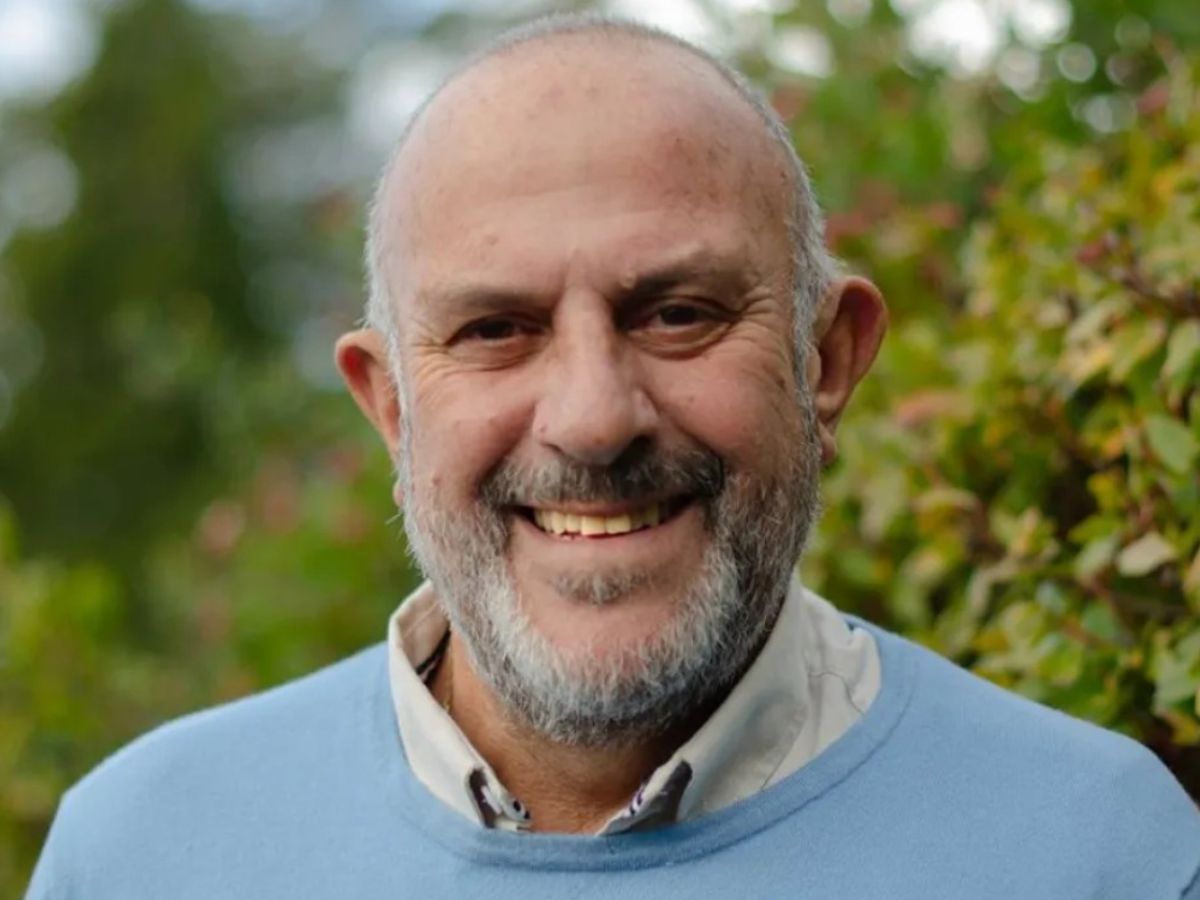

A few days ago, I had the honor of participating in the NXT 2026 Summit in New Delhi, an event that brought together prominent members of the Indian government and politicians and diplomats from more than 25 countries. Before an audience of over 1,500 people, I had the opportunity to speak on various topics related to the commercial, cultural, and technological integration opportunities that Argentina offers the world today.
As a speaker at the event, I focused on positioning our country, and especially Patagonia, as a key player in the new global economy, driven by Artificial Intelligence and clean energy.
Our region presents enormous investment potential, linked to the infrastructure needed for AI data centers and renewable energy projects. To this end, we have a powerful tool at our disposal: the Large Investment Incentive Regime (RIGI) to attract foreign capital, which can undoubtedly strengthen strategic cooperation with India. This is complemented by national and provincial laws offering tax exemptions for over ten years, accelerated depreciation of technological investments, reduced import tariffs for high-efficiency equipment, and the ability to repatriate profits.
Patagonia is no longer just the land of wind and cold; today it is the engine that will cool and power tomorrow. AI demands two things the world is running out of: massive energy and efficient cooling.
We are facing a unique window of opportunity where Patagonia’s natural resources and the technological frontier of AI converge. Investing in the south today is not just a bet on the future; it’s about being part of the new geopolitical map.
One clear sign of Argentina’s appeal today among other things, is OpenAI’s historic investment of USD 25 billion in the “Stargate Argentina” project. This validates the region as a global strategic hub.
Another competitive advantage offered by our region is INVAP, an applied technology company that is already partnered with India in the production of radioisotopes with a plant in Mumbai, but which also offers business opportunities to deepen this strategic partnership between our countries.
The bilateral relationship is no longer just promising; it is already material. Trade between Argentina and India is now approaching USD 7 billion annually, after expanding by 36.77% between January and November 2025. During that period, India became Argentina’s fifth-largest trading partner and fifth-largest export destination, while Argentina posted a USD 4 billion trade surplus with India.
Vaca Muerta, the Oil & Gas sector, was also part of the presentation. The scale of the opportunity is no longer theoretical: in the first quarter of 2026 alone, Argentina shipped 50,000 tons of LPG to India, more than double the 22,000 tons exported to that market during all of 2025. That figure becomes even more significant in context: India imports around 21 million tons of LPG per year and relies on foreign purchases for roughly 60% of its domestic consumption. This is particularly timely, as India, the world’s third-largest economy, announced the purchase of liquefied natural gas as a consequence of the closure of the Strait of Hormuz. Opening this trade channel positions Mercosur as a partner in a market of nearly 1.5 billion people. The fact that India is turning to Argentina amid a global energy squeeze is not just a commercial anecdote; it is a geopolitical signal.
In a second presentation, I participated in a panel discussion on Justice and Technology, focusing on the modernization of legal systems and the implementation of digital governance, alongside international experts and jurists. There, I underscored the importance of ensuring that our legal frameworks keep pace with the rapid transformations driven by artificial intelligence, while preserving legal certainty as the foundation for major investment.
DIPUTADO SERGIO CAPOZZI
About The NXT Summit 2026
Prime Minister Narendra Modi was the main figure at the NXT Summit 2026 in New Delhi on March 12, where he inaugurated the India Progress Report by delivering the guest of honor address at the three-day leadership forum that brought together political leaders, diplomats, scientists, and business executives from around the world.
The three-day summit, organized under ITV Network’s NXT initiative in partnership with the Sunday Guardian Foundation and NewsX, was held at Bharat Mandapam. It featured a speech by the Chief Justice of India, Surya Kant, who shared his views on the ever-evolving interaction between law, governance, and emerging technologies, while Prime Minister Modi presented his vision on technology, governance, and global cooperation.
The summit brought together prominent members of the central and provincial governments, as well as politicians and diplomats from more than 25 countries, including Bhutan, Sweden, New Zealand, Norway, Sri Lanka, Australia, Nepal, the United Kingdom, Mauritius, Maldives, Estonia, Laos, Finland, Denmark, South Africa, Ireland, Argentina, France, Chile, Mexico, the Czech Republic, Oman, and Germany.
Among the prominent international political figures participating in the summit were Scott Morrison, who served as Prime Minister of Australia from 2018 to 2022; Fredrik Reinfeldt, who led the Swedish government from 2006 to 2014; and Baburam Bhattarai, an economist who was Prime Minister of Nepal from 2011 to 2013.
The summit also included high-level diplomats representing India’s key international partners, while leading scientists and technology experts were among the international policy experts and global voices present.
The NXT initiative was launched by Rajya Sabha member Kartikeya Sharma, and the summit is being organized in partnership with the Sunday Guardian Foundation, chaired by Aishwarya Pandit Sharma. The forum aims to provide a platform for dialogue on governance, technology, and economic transformation, while highlighting India’s development model and its growing role in shaping global discussions on innovation, policy, and international cooperation.




